 Historical Figure MBTI
#839 · 6-17-26 · The American Civil War
Richard S. Ewell
Confederate General · Jackson's Reluctant Successor
1817 — 1872
2 min read
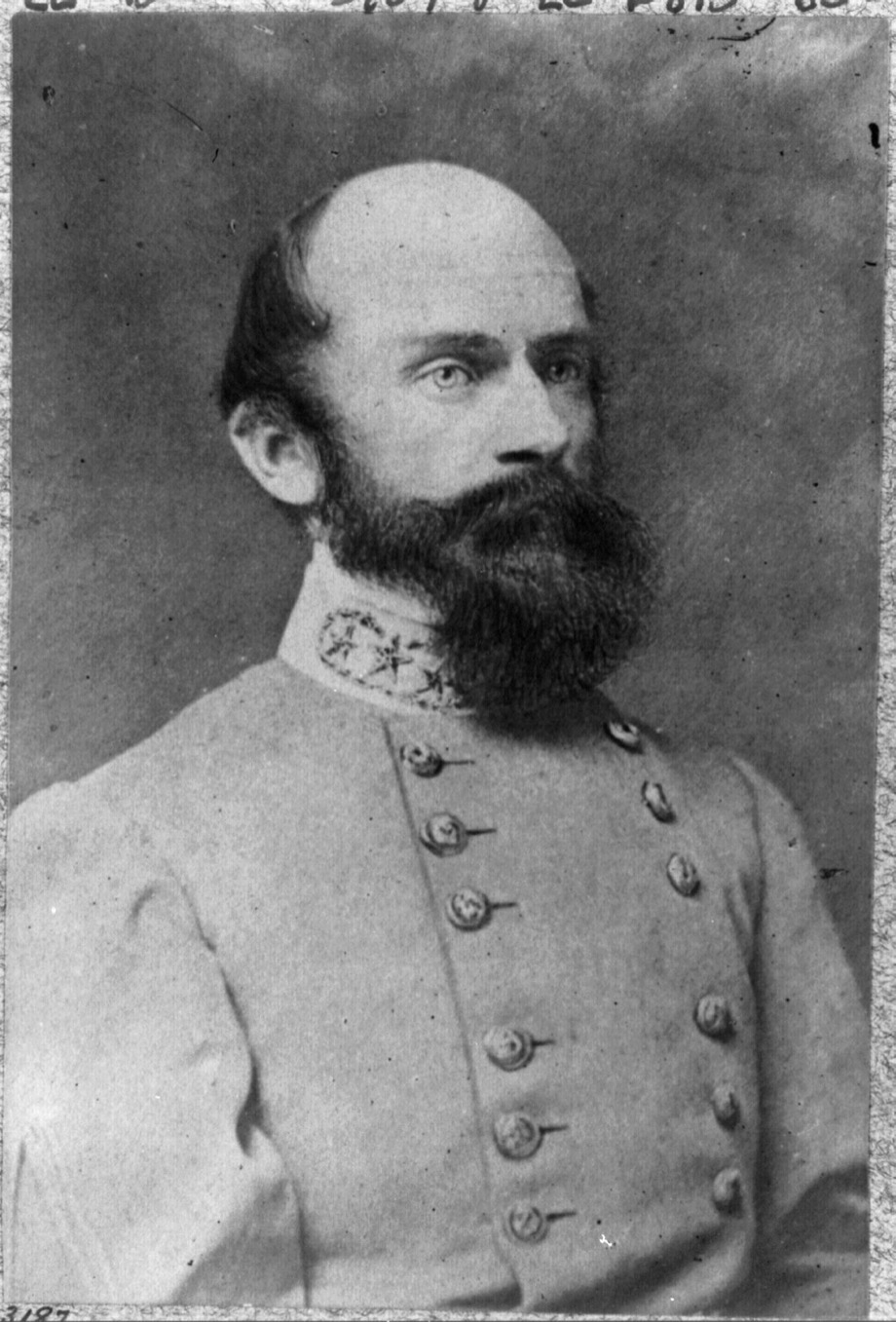
Photograph of Richard S. Ewell, c. 1860s
Old Bald Head
He talked to himself, swore extravagantly, ate almost nothing but boiled wheat on account of his stomach, and cocked his bald, bulging-eyed head like a curious bird when he listened. Confederate soldiers loved him for it — Richard S. Ewell looked and sounded like nobody else in Lee's army, and for most of the war his eccentricity sat comfortably on top of real competence. A career dragoon officer before 1861, he brought a cavalryman's feel for ground and a taste for close, personal command down to division level, where his instincts were sound and his subordinates trusted him.
That was the job Ewell was built for: a sharp, present-tense executor operating inside someone else's plan. He found that plan-maker in Stonewall Jackson, under whom he served as a division commander with real distinction. Then, at Second Manassas in August 1862, a shell shattered his knee and cost him a leg. He recovered, married his wealthy cousin Lizinka Campbell Brown — a match that by most accounts softened his edges and deepened his caution — and returned to the field in 1863 as a ISTP handed a job no ISTP wants: Jackson's old corps, and Jackson's old authority to decide things alone.
Ewell was a superb second — a tactician's tactician who thrived on orders and instinct. Given Jackson's chair, and Jackson's discretion, the ISTP in him hesitated exactly when history needed him not to.
“If Practicable”
On the first day at Gettysburg, Ewell's corps drove Union forces back through the town in a rout that left Cemetery Hill open for the taking. Lee sent word to press the advantage and seize the high ground “if practicable.” Ewell, uncertain of the ground, uncertain of his own flank, uncertain what discretion of that size was actually asking of him, did not attack. The hill held; the Union army dug in on it; the battle, and arguably the war, tipped on that afternoon of hesitation. It is the single moment historians return to whenever Ewell's name comes up, and it reads less like cowardice than like a dominant Ti-Se mind — built to solve the problem directly in front of it — suddenly asked to weigh an ambiguous, high-stakes judgment call with no one above him to confirm the read.
Jackson had covered that gap with his own decisive, close-held Te; Ewell had no equivalent, and it showed again and again once independent command fell to him — at the Wilderness and Spotsylvania he fought hard and locally well, but the corps never again produced the kind of audacious strategic strokes Jackson had made routine. He was a fine lieutenant asked to be a general, and the difference turned out to matter enormously.
Connected Figures
Further Reading
- Richard S. Ewell: A Soldier's Life — Donald C. PfanzThe definitive biography, sympathetic to Ewell's postwar reputation.
- Battle Tactics of the Civil War — Paddy GriffithContext on Civil War command doctrine and the limits of corps-level discretion.
- Gettysburg — Stephen W. SearsA detailed account of the first day and the Cemetery Hill decision.
- The Third Day at Gettysburg and Beyond — Gary W. Gallagher (ed.)Essays reassessing command decisions across the battle.
