 Historical Figure MBTI
#840 · 6-17-26 · The American Civil War
Jubal Early
Confederate General · Architect of the Lost Cause
1816 — 1894
6 min read
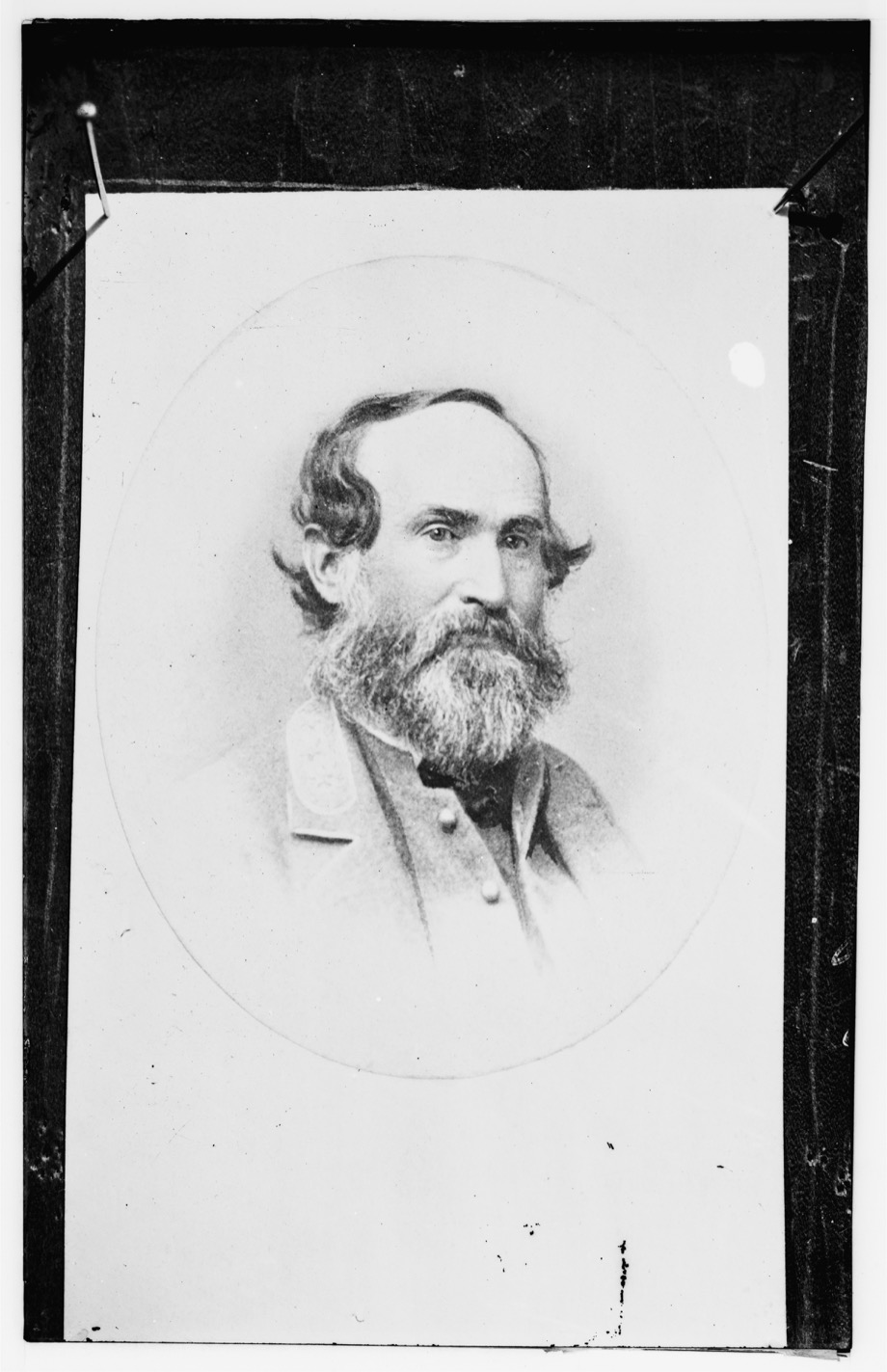
Photograph of Jubal Early, c. 1860s
The General Who Refused to Surrender Twice
Jubal Early lost the war on two occasions and accepted neither. The first loss came in the Shenandoah Valley in the autumn of 1864, when Philip Sheridan's superior force ground his army to pieces at Cedar Creek and Winchester. The second came in April 1865, at Appomattox, when the Confederacy itself collapsed. Early answered the first defeat by fleeing west rather than laying down his sword, and he answered the second by spending the next thirty years constructing, almost single-handedly, the narrative that would let the South lose the war and win its memory. He was the founding architect of the Lost Cause — the man who declared Robert E. Lee beyond reproach, blamed James Longstreet for Gettysburg, and insisted that slavery had nothing to do with why Virginia seceded. That project, as much as anything he did with an army, is why he is remembered.
Sarcastic, profane, and impossible to embarrass, Early was a lawyer and West Point man who had voted against secession at the Virginia convention and then rode to war for the Confederacy anyway once his state left the Union — a man whose objections evaporated the instant a decision had actually been made. He is the clearest ENTJ in the Confederate high command: a mind built to seize command of a situation and then, having lost, to seize command of how the situation would be remembered.
Early did not experience defeat as an ending. He experienced it as a new campaign — one to be fought with a pen instead of a corps, using the same commanding, Te-driven will and the same long, Ni-shaped view of what the war was ultimately for.
A Corps Commander Who Never Waited for Permission
Early's Te showed up first as raw command instinct. Across First Bull Run, the Peninsula, Antietam, Fredericksburg, and Chancellorsville, he built a reputation as one of Lee's hardest-driving corps commanders — not brilliant in the way Jackson was brilliant, but relentlessly, profanely effective at getting men to do what needed doing, fast. Lee trusted him enough to hand him an independent command in 1864, something granted to almost no one else in the army, and Early used it exactly as a dominant Te user would: he organized, marched, and struck without waiting for instructions from Richmond.
The result was the 1864 Valley Campaign, capped by a raid that pushed Confederate troops to the very edge of Washington, D.C. — Fort Stevens, in July 1864, the closest any Confederate force came to the Union capital for the entire war. It was audacious in exactly the way Te audacity looks: not reckless improvisation, but a hard, executable plan pursued with total commitment until logistics and Sheridan's numbers finally broke it.
That same executive drive resurfaced after the war in an entirely different theater. Early did not mourn the Confederacy in private; he organized on its behalf. He founded the Southern Historical Society, edited its papers, and ran a decades-long campaign to control the written record — treating the war's memory as a problem of management and execution no different from a Valley campaign, just fought with letters and lectures instead of infantry.
Building the Story Before the Facts Could Settle
What separates Early from a merely aggressive tactician is the auxiliary Ni underneath the Te — the capacity to see past the battlefield to the single, controlling narrative he wanted history to carry. Within a few years of Appomattox, while other former Confederates were still absorbing the shock of defeat, Early had already assembled the interpretive framework that would dominate Southern memory for a century: the war was fought over states' rights, not slavery; defeat was inevitable against Union numbers and matériel, not a failure of Confederate leadership; and Lee, above all, was to be preserved as a flawless, saintly figure.
That last plank required a villain, and Early built one out of James Longstreet, fixing the blame for Gettysburg on Longstreet's alleged slowness on the second day — a charge that stuck for generations less because of the evidence than because Early kept repeating it with total conviction, in the right venues, to the right audiences. This is Ni doing what it does at its most consequential: not reacting to facts as they arrive, but holding a settled internal picture of how the whole story must resolve, and then arranging the available material to fit it.
The Nerve to Ride on Washington
Tertiary Se gave Early's command style its edge of physical nerve. He was not a cautious general; he gambled on speed and proximity, marching his army down the Valley and toward the Union capital on the theory that boldness itself — reaching the enemy's doorstep before the enemy could react — was worth more than the numerical odds against him. Fort Stevens was Se in its purest military form: a willingness to press right up to the edge of catastrophe because the immediate opportunity outweighed the theoretical risk.
It showed just as plainly in his temperament. Early swore in front of superiors, mocked subordinates to their faces, and treated confrontation as simply how business got done — earning him Lee's half-affectionate, half-exasperated nickname, “my bad old man.” That bluntness was not a character flaw layered on top of the general; it was the same sensory, in-the-moment assertiveness that sent him toward Washington, applied to every room he walked into for the rest of his life.
Why ENTJ Over ESTJ
Why not ESTJ?
An ESTJ commander executes established procedure with force and discipline, but Early's career is defined by two moves an ESTJ profile does not predict: an independent, improvisational gamble on Washington itself, well outside any playbook, and a decades-long, ideologically coherent project to reshape an entire nation's memory of the war. Both depend on Ni's capacity to hold a long-range, abstract picture and bend present facts toward it — not Se applied to present-tense procedure alone. The Lost Cause was not administered; it was authored.
Strip away the uniform and the mythology he built around it, and what remains is a man who could not tolerate an unresolved outcome. Losing a campaign was, for Early, simply a prompt to open a new one — first with infantry, then with archives, editorials, and societies dedicated to making sure his side's version became the only version taught. That is ENTJ command logic operating at the scale of history itself.
Connected Figures
Further Reading
- A Memoir of the Last Year of the War for Independence — Jubal A. EarlyHis own postwar memoir, and an early foundation stone of the Lost Cause narrative.
- The Shenandoah Valley Campaign of 1864 — Gary W. Gallagher (ed.)The definitive scholarly account of the 1864 campaign that made and broke Early's reputation.
- Jubal Early's Raid on Washington 1864 — Benjamin Franklin CoolingA close study of the raid that brought Confederate troops to Fort Stevens.
- Remembering the Civil War: Reunion and the Limits of Reconciliation — Caroline E. JanneyTraces how Lost Cause memory, which Early helped engineer, shaped national reconciliation.
- The Myth of the Lost Cause and Civil War History — Gary W. Gallagher & Alan T. Nolan (eds.)Essays dismantling the historiography Early spent his postwar life constructing.
