 Historical Figure MBTI
#567 · 4-29-26 · The Ottoman Zenith
Çandarlı Halil Pasha
Grand Vizier · The Cautious Statesman · Voice Against the Siege
c. 1364 — 1453
6 min read
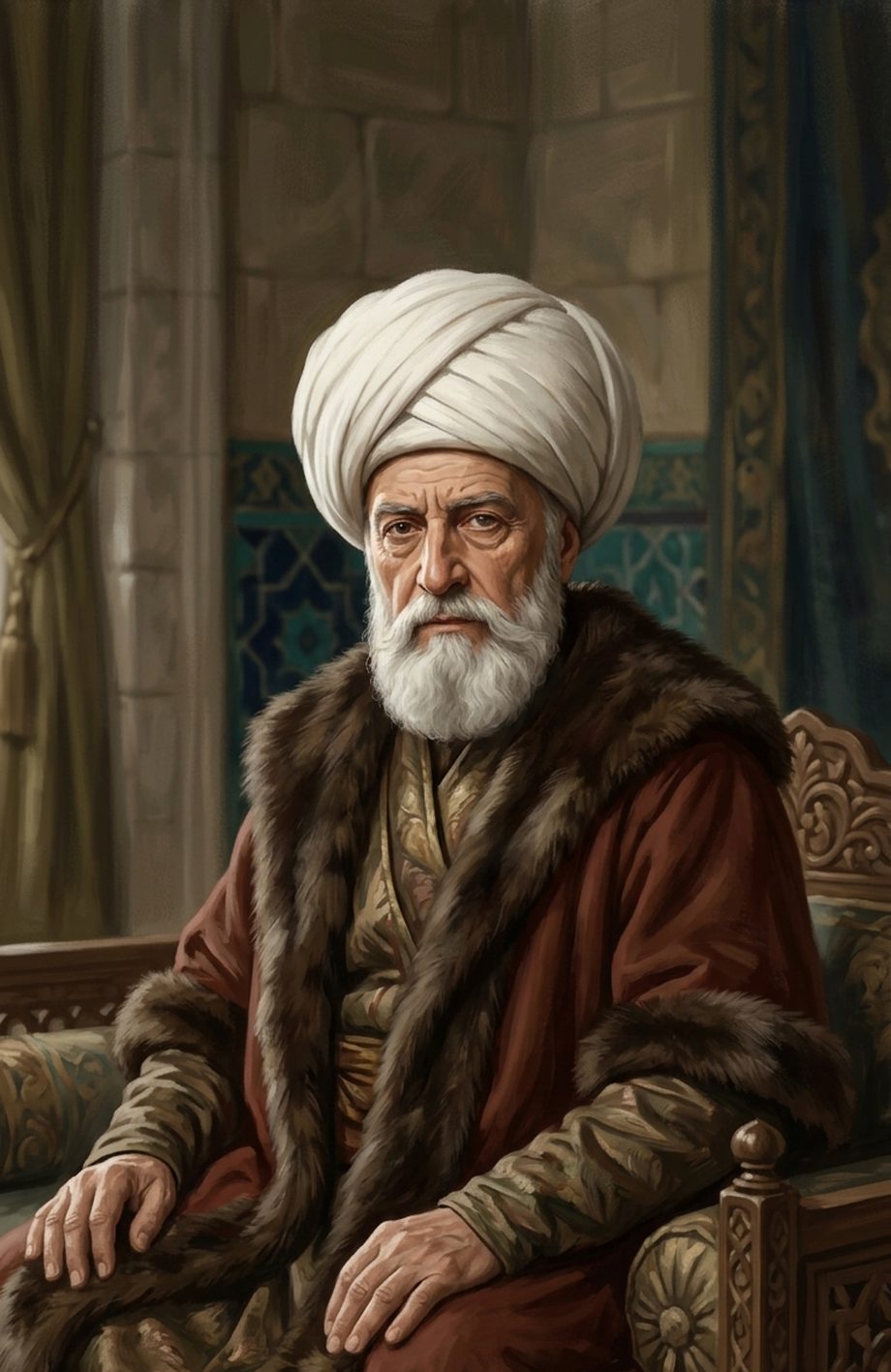
AI-assisted Portrait of Çandarlı Halil Pasha
The Guardian of the Old Order
He was the establishment incarnate, and it killed him. The Çandarlı were the old Turkish aristocracy — a dynasty of jurists and viziers who had supplied the House of Osman its grand viziers for generations. By the time Halil held the office under Murad II, his family was the closest thing the young, still-improvising state possessed to a permanent institution. He was cautious, deeply experienced, versed in what had worked before — and he believed, with the settled certainty of long precedent, that the Ottoman state should not stake everything on the walls of Constantinople.
He was overruled by a teenager. The new sultan, Mehmed II, dreamed of taking the city that had defied Islam for eight centuries. Halil counseled the tested policy instead: coexistence, tribute, patience — the arrangement that had kept a feeble Byzantium a manageable neighbor for decades. He distrusted the boundless ambition of the young ruler and resisted the war-party of devshirme hawks — men like Zaganos Pasha — who fed Mehmed's appetite for the siege. When the city fell in May 1453, Halil was left the competent servant of a policy the world had just discarded.
That is the ISTJ tragedy in its purest political form: a mind built on Si — the deep memory of what has been proven — and Te — the sober management of a working state — colliding with a visionary who valued neither, and destroyed by the very triumph it had the wisdom to warn against.
The Weight of Precedent
Si — dominant
Dominant Si reasons from what has already been proven, and Halil's entire statecraft was an argument from precedent. The policy he defended — coexistence with Byzantium, a weak Constantinople kept in its place by treaty and tribute rather than stormed — was not cowardice. It was the arrangement that had demonstrably worked for decades, and to a Si mind a thing that has worked carries an authority that a thing merely imagined never can. He distrusted the untested precisely because it was untested.
That instinct had been branded into him by living memory. In the mid-1440s, when Murad II abdicated and left the boy Mehmed on the throne, the realm nearly came apart — a crusader army marched on Varna, and the janissaries of Edirne rose in revolt. It was Halil who steadied the state through the crisis and engineered the old sultan's return to power. To a mind that stores the past as instruction, the lesson was permanent: the untried young ruler had almost lost everything, and the old order had saved it. He never stopped acting on that memory. When Mehmed came again to the throne, older but no less ravenous, Halil met him with the same conservative brake — the voice of the proven against the voice of the possible, convinced that the state was a thing to be preserved rather than reinvented.
The Administrator of Two Reigns
Te — auxiliary
Auxiliary Te is what made Halil indispensable rather than merely well-born. He did not simply inherit the grand vizierate; he ran it, competently, through the reigns of two very different sultans. He managed the treasury and the logistics of the army, conducted the empire's diplomacy, negotiated its treaties, and held its fractious janissaries in order. Where Si supplied his caution, Te supplied his competence — the ability to keep a working machine working.
The proof of that competence is that even his enemies could not do without him. Mehmed inherited Halil along with the throne and kept him at the head of government because the state could not be administered without him, however much the sultan chafed at his caution. And once the decision for the siege was taken against his advice, Halil served it: he organized, he supplied, he executed the will of a policy he had opposed. Te obeys the outcome that has been decided, even when the deciding went the other way. But his Te always served his Si, never the reverse — the instrument of preservation, not of ambition. He was the manager of a going concern who could not become the architect of a transformed one.
The Future He Could Not See
Ne — inferior
Inferior Ne is the ISTJ's blind spot: an imagination that runs to what might go wrong rather than to what might be created. Where Mehmed looked at Constantinople and saw a world-capital, the seat of a transformed empire, Halil looked at the same walls and saw only risk — the rupture of a stable equilibrium, a gamble against the proven. He was not wrong about the danger; he was simply unable to imagine the reward the young sultan could already picture whole. His caution even made him look like a traitor: his contacts with the Byzantines, consistent with a lifelong policy of coexistence, were seized upon by rivals who accused him of taking bribes and mocked him as "father of the infidels."
The reckoning came with the victory. The very event Halil had warned against — the fall of the city — became the occasion of his destruction. Within days of the conquest, Mehmed had him arrested and executed: not a fit of pique but a deliberate stroke of statecraft, using the triumph to break the old Turkish aristocracy Halil embodied and replace it with devshirme administrators loyal to no one but the sultan. The guardian of the old order was the first casualty of the new one, undone by a future his own mind had never been built to see.
Why ISTJ Over ESTJ
Why not ESTJ?
Both types run on Te, and Halil's administrative competence could belong to either. But the ESTJ leads with Te turned outward — the commander who drives an enterprise and seizes the great organizing project. An ESTJ grand vizier would very likely have taken the siege as the crowning campaign of his life. Halil's whole being resisted it. He was reserved, precedent-bound, and risk-averse where the ESTJ is assertive and forward-leaning — his Te the conservative brake, not the driving wheel.
The distinction is the whole story of his fall. An outward-driving Te-dominant would have bent with the sultan and made the conquest his own; Halil could only stand athwart it, counseling the proven policy until it became obsolete beneath him. That is Si-dominance, not ESTJ command — the guardian who defends the institution rather than the general who expands it, destroyed not for lack of competence but because his competence served a world a younger man had already decided to end.
Connected Figures
Further Reading
- The Ottoman Empire: The Classical Age, 1300–1600 — Halil İnalcıkThe foundational study of the early Ottoman state — essential on the old Turkish aristocracy and the rise of the devshirme system that displaced it.
- Mehmed the Conqueror and His Time — Franz BabingerThe classic biography of Mehmed II; the fullest account of the court politics of the siege and the fall of Çandarlı Halil.
- 1453: The Holy War for Constantinople and the Clash of Islam and the West — Roger CrowleyA vivid narrative of the siege that sets Halil's counsel of caution against the war-party pressing the young sultan toward the walls.
