 Historical Figure MBTI
#603 · 5-5-26 · The Age of the Borgias
Caterina Sforza
Countess of Forlì · The Tigress of the Romagna · Defier of Cesare
1463 — 1509
8 min read
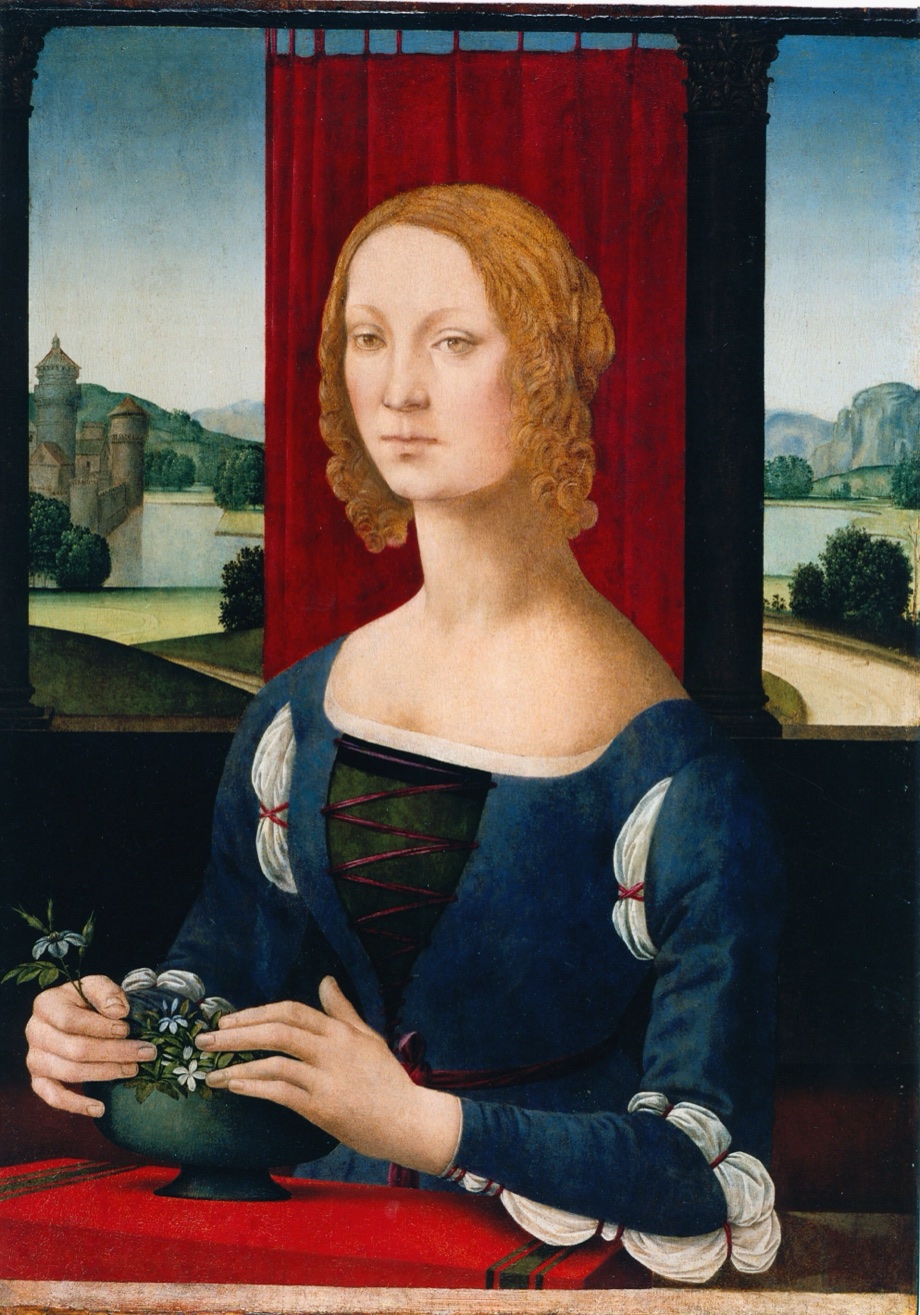
Portrait of Caterina Sforza
The Woman on the Ramparts
In April 1488 the rebels of Forlì held every card. They had murdered her husband, seized the town, and captured her children, and now they stood below the walls of the fortress of Ravaldino, where Caterina Sforza had shut herself in and refused to come out. They threatened to butcher her sons in front of her if she did not surrender. The story that has come down to us — repeated, embroidered, and never entirely dislodged — is that she climbed to the ramparts, lifted her skirts, and shouted down that she had the means to make more children. Then she held the fortress. Whether she said the exact words hardly matters; what matters is that the gesture rang true to everyone who knew her, because it was exactly the kind of thing Caterina Sforza did.
Born in 1463, the illegitimate daughter of Galeazzo Maria Sforza, Duke of Milan, she became Countess of Forlì and Imola through marriage to Girolamo Riario, and then, far more, through her own nerve — ruling two small states in the turbulent Romagna as a hands-on regent for her sons, putting down revolts and holding her fortresses when men expected her to weep. Contemporaries called her the “Tigress of Forlì,” and the name fit. She was not a schemer who worked through others but a fighter who worked through her own body, her own boldness, and a shrewd, practical intelligence for fortresses, poisons, and leverage.
Caterina Sforza is the ESTP in armor: raw Se courage that met every crisis head-on with her own hands, wedded to a cold Ti feel for exactly where the leverage lay — in a wall, a poison, or an enemy's bluff. She lived in the fight, not the plan.
Sword in Hand
Se — dominant
Dominant Se meets the world through the body and the immediate moment, and Caterina met every crisis of her life that way — physically, fearlessly, in person. When her husband Girolamo Riario was assassinated in 1488 and the town rose against her, she did not send an emissary or negotiate from safety; she got herself inside the walls of Ravaldino and dared the mob to do its worst. The famous act on the ramparts is Se distilled: a body-first gesture of pure defiance, staking her own children against her enemies' nerve in the full physical presence of the crowd, calling the bluff with her own flesh. An abstract mind negotiates; Caterina climbed the wall.
The same appetite for direct command ran through her whole rule. She knew her fortresses not as lines on a map but as stone she had walked, and when Cesare Borgia came for Forlì in 1499 she fought the defense in person, reportedly in armor and sword in hand on the walls of Ravaldino, rather than surrendering from behind a treaty. The same faculty shows in the restless experimenter: between wars she compiled a book of “experiments” — hundreds of recipes for medicines, cosmetics, and poisons, tested by hand and hoarded like a craftsman's secrets. The woman who held the ramparts and the woman who ground her ointments were one hands-on sensor, endlessly engaged with the tangible stuff of the world rather than the theory of it.
The Feel for Leverage
Ti — auxiliary
If Se supplied the nerve, auxiliary Ti supplied the calculation — a cool, private, mechanical intelligence that told her exactly where the pressure points lay. Caterina was not merely brave; she was shrewd, and the two ran together. The Ravaldino gambit was not blind courage. She had grasped the real structure of the standoff: that her captors' only leverage was the threat to her children, and that a threat is worthless the moment the other side refuses to be moved by it. By making herself unmoveable — loudly, theatrically unmoveable — she dissolved their advantage. That is Ti reading the true mechanics of a situation and acting on the logic, however brutal.
The same analytic bent shaped her as a ruler and her recipes alike — an impulse to isolate causes, to know which dose healed and which killed, to reduce the tangled world to workable rules of leverage. It was a practical intelligence, not a philosophical one: she built no system and left no treatise on statecraft. Her cleverness was always aimed at the concrete problem in front of her — this wall, this rival, this dose — and it made her formidable precisely because it never floated free of the fight. The tactician and the fighter were the same person, and the calculation served the nerve.
The Gesture and the Crowd
Fe — tertiary
Tertiary Fe gives the ESTP a feel for an audience — for the theatrical gesture that lands, the image that spreads, the mood of a watching crowd. Caterina had it. The scene on the ramparts is remembered five centuries later not only because it was defiant but because it was performed: a countess making herself, in a single indecent flourish, into a legend that would outrun the siege. She understood instinctively that the way she held Forlì mattered as much as whether she held it — that a reputation for fearlessness was itself a weapon, deterring the next rebel before he rose.
That reputation was cultivated as well as earned. She dressed the part, fought visibly, and let the stories of her nerve travel, knowing they made her states harder to take. The Tigress of Forlì was partly a character she played — a persona through which a woman ruling in a man's world commanded fear and loyalty. But Fe was tertiary, not dominant, and it served her boldness rather than governing it: she could awe a crowd, yet she never bent her course to keep the peace or win affection. When the choice came between the harmonious gesture and the hard one, the analytic fighter beneath the performance won every time.
The Storm She Could Not See Coming
Ni — inferior
Inferior Ni is the ESTP's blind spot: the long, single trajectory of the future, the slow tide gathering beyond the immediate horizon. Caterina, so brilliant in the crisis of the moment, was weakest exactly here. She met each threat magnificently as it arrived, but she did not build the kind of durable alliances and strategic depth that might have kept the largest threat from arriving at all. She defended her states superbly and lost them anyway, because defense of the present is not the same as command of the future.
The reckoning came with the Borgias. In 1499 and 1500, Cesare Borgia, backed by the money and armies his father Pope Alexander VI could command, swept into the Romagna to carve out a state of his own. Against a force of that scale, ferocity in a single fortress was not enough. Caterina fought Forlì to the last, sword in hand, and was overwhelmed and captured — the fiercest of the many local rulers the Borgias brushed aside on their way to something bigger. She was imprisoned in Rome, reportedly abused, and though eventually released, she never recovered her states.
It is the classic shape of the Se-dominant life at full stretch: incomparable in the fight, undone by the war. Cesare could see the whole board — a consolidated principality years in the making — while Caterina could see only, but brilliantly, the enemy at her gate. She retired to Florence and died in 1509, the tiger who won every fight the mob and the rebels could bring her, and lost the one contest of long design against a man who thought in years.
Why ESTP Over ENTJ
Why not ENTJ?
The case for ENTJ is tempting: Caterina commanded troops, ruled states, and had a will of iron, and the commanding female sovereign is often typed ENTJ on reflex. But the ENTJ is a long-range architect — a Te-Ni builder who designs an institution and executes a grand strategy over years. Caterina did the opposite. Her genius flared in the immediate defense of a fortress and the audacious gesture, improvising defiantly against whoever came, not executing a design that reached beyond the crisis in front of her. That is why the far more strategic Cesare Borgia could take everything she had: he built the plan she only reacted to. Se-Ti audacity, not Te-Ni architecture.
The distinction is the whole of her story. An ENTJ in her place fights fewer battles and wins the war — cements alliances, marries her states into a larger power, thinks three moves past the immediate siege. Caterina thought one move, and executed it with a nerve no ENTJ could match. She lived in the fight, not the plan; in the present crisis, not the future she was building toward. Her greatness and her downfall were the same faculty — the Se-Ti fighter who could out-nerve anyone across the table but never quite see, until it arrived, the storm that would sweep the table away.
Connected Figures
Further Reading
- The Tigress of Forlì: Renaissance Italy's Most Courageous and Notorious Countess, Caterina Riario Sforza de' Medici — Elizabeth LevThe fullest modern biography in English — vivid, sympathetic, and the essential starting point for her life and legend.
- The Borgias and Their Enemies — Christopher HibbertA readable narrative of the Borgia world that frames Cesare's conquest of the Romagna and the rulers, Caterina among them, whom it consumed.
- Cesare Borgia: His Life and Times — Sarah BradfordThe standard biography of the man who beat her — indispensable for understanding the strategic machine that overwhelmed Forlì.
