 Historical Figure MBTI
#594 · 5-4-26 · The Age of the Borgias
Pope Alexander VI
Pope of Rome · Patriarch of the Borgias · The Most Notorious Pontiff
1431 — 1503
10 min read
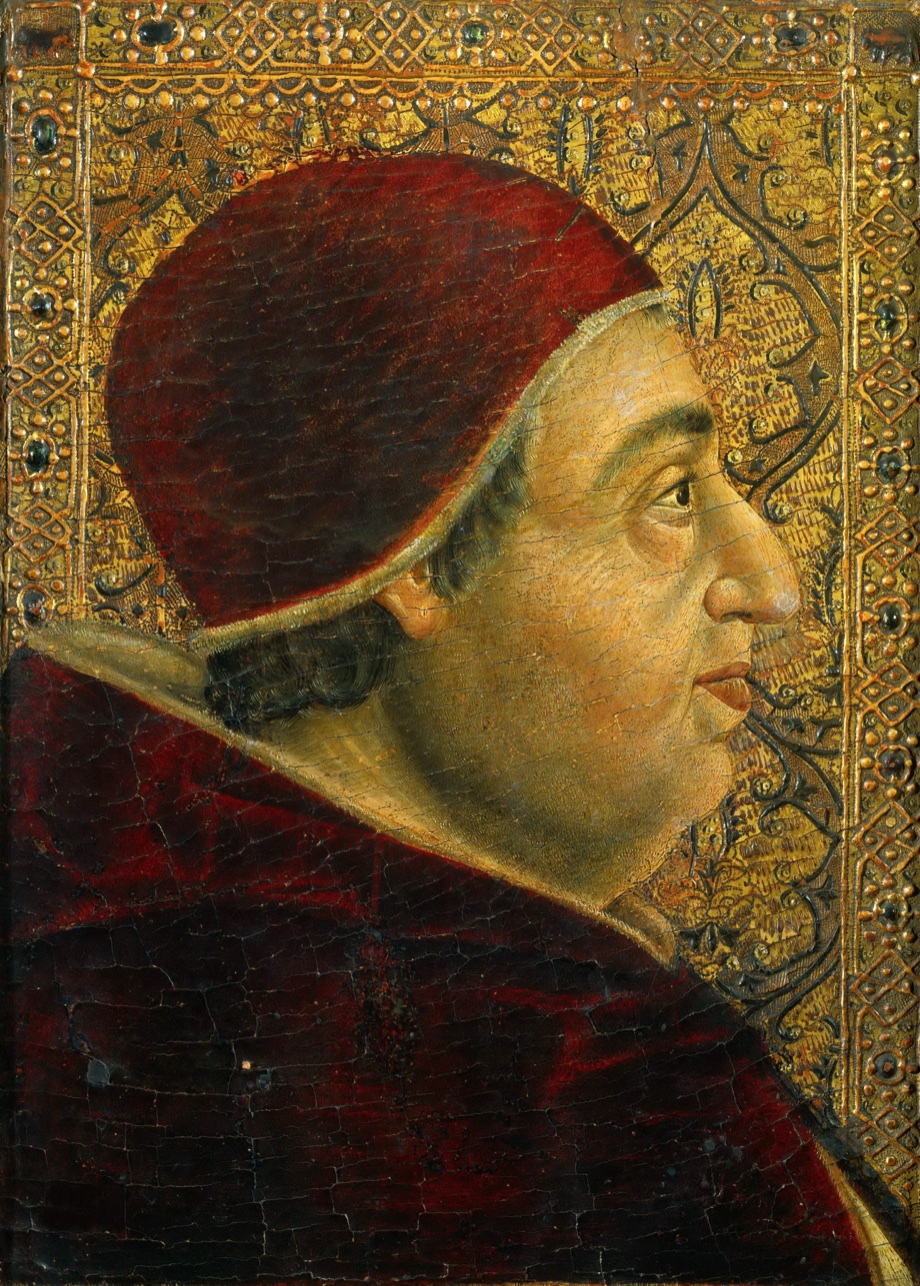
Portrait of Pope Alexander VI
The Genial Predator
He is remembered as the most corrupt man ever to sit on the throne of Peter, and the caricature is not entirely unfair — but it misses what made him dangerous. The popular image of the Borgia pope is a hooded schemer stirring poison in a Vatican shadow, a mind bent on cold intrigue. The real Rodrigo Borgia was almost the opposite: expansive, warm, hugely enjoyable company, a man of enormous appetite and easy laughter who happened to be the most gifted operator in Christendom. Contemporaries who loathed his morals conceded his charm. He filled a room. He remembered names, read faces, worked a conclave the way a great salesman works a floor — and behind the geniality ran a cool, unsentimental intelligence about exactly how power moves and what it costs to buy.
Born near Valencia in 1431, he owed his rise to blood: his uncle, elevated as Pope Callixtus III, made him a cardinal and, at twenty-five, vice-chancellor of the Church — its chief administrator, the office that ran the papal machine. He held it for some thirty-five years, growing immensely rich and immensely skilled, and he never pretended to be a holy man. He kept mistresses openly; his children by Vannozza dei Cattanei — Cesare, Juan, Lucrezia, and Gioffre — he acknowledged and advanced without embarrassment. In 1492 he simply bought the papacy, outbidding his rivals in open simony, and took the name Alexander VI. Then he turned the oldest institution in Europe into an instrument for one concrete purpose: the greatness of the House of Borgia.
That is the tell. Alexander was not a theorist of power or a builder of doctrine. He was a supreme ESTP — a reader of rooms and openings, a dealmaker who felt opportunity the way a hunter feels wind, and who moved on it before slower men had finished deliberating. His weapons were the tangible ones: money, marriage, and force. His genius was never a grand design drawn in advance. It was the unerring instinct for the opening that was actually there.
That is the ESTP signature at full power: dominant Se reading the concrete situation — the room, the rival, the price — fused to a cool, amoral Ti that grasps exactly how leverage works. Alexander did not scheme his way to greatness. He saw the opening and took it, again and again, faster than anyone else alive.
Appetite and the Feel for the Opening
Se — dominant
Dominant Se lives in the concrete present — the sensory, the immediate, the deal on the table — and Alexander lived there completely. His appetites were the visible surface of it: the feasting, the hunting, the mistresses, the love of gold and spectacle and beautiful things. He was in his sixties and pope when he took the teenaged Giulia Farnese as his mistress, and he made no secret of it. This was not a man mortifying the flesh toward some inner vision. It was a man who trusted his senses and enjoyed the world in front of him — and that same trust in the concrete made him a formidable reader of situations.
The purest expression came in the conclave of 1492. Alexander did not out-argue his rivals or out-pray them; he out-bid them. He read the price of every vote in the room and paid it — benefices, offices, cash, the vice-chancellorship itself dangled before Ascanio Sforza — assembling a majority through open bribery with the brisk competence of a man closing a sale. It was simony so blatant it scandalized even a cynical age, and it worked precisely because Alexander understood that a conclave is not a debate about virtue but a market, and he was the best trader in it. He felt exactly what each cardinal wanted and delivered it.
That instinct for the tangible lever governed his whole pontificate. When France invaded in 1494 and Charles VIII marched an army the length of Italy, Alexander did not retreat into principle; he read the immediate balance of force, bent, negotiated, waited, and re-emerged intact when the moment shifted — playing France against Spain against Milan against Naples as the situation moved under him. In 1493 he drew a line on a map dividing the newly discovered New World between Spain and Portugal, a concrete stroke settling an empire with a signature. He worked money, marriage, and armies — never abstractions. Every instrument he reached for could be counted, wedded, or wielded.
The Cool Logic of Leverage
Ti — auxiliary
Beneath the geniality ran a mind of exceptional analytical clarity, and it had been trained. Alexander was a canon lawyer and, for thirty-five years, the Church's chief administrator — a man who knew the machinery of the papacy at the level of statute, precedent, and paperwork. Auxiliary Ti is the private engine that measures how systems actually work, stripped of what they claim to be about, and Alexander's Ti was pure cold assessment of leverage. He saw the papacy not as a sacred office but as a mechanism — of appointments, dispensations, alliances, revenues — and he understood its every gear.
This is why the nepotism was so effective rather than merely greedy. Advancing your relatives was routine; Alexander did it with an engineer's precision. He made Cesare a cardinal at eighteen — and then, when the red hat proved less useful than a sword, coolly arranged for him to be released from it so he could lead armies, an almost unheard-of reversal executed without visible strain. He bankrolled Cesare's conquest of the Romagna out of papal revenues, converting the spiritual authority of the Church into hard territorial power for his own line. He married Lucrezia from one princely house to the next as the diplomatic map shifted, dissolving one union and forging another whenever the alliance it secured stopped paying. Each marriage was a calculated placement of an asset.
He treated the holiest office in Europe as a system of levers, and he never once confused the levers with the sacred thing they were supposed to be. That detachment — Se seeing the real board, Ti coldly working out how it moves — is what made a jovial man so genuinely frightening when crossed.
The Ti was amoral rather than immoral — it did not rage or hate, it calculated. When the friar Girolamo Savonarola thundered against Borgia corruption from Florence, Alexander did not answer the moral charge; he treated it as an operational problem. He tried inducement first — a cardinal's hat to buy silence — and only when that failed did he move to excommunication and the pressure that helped bring the friar to the fire. There was no wounded fury in it, just a man removing an obstacle by the most efficient available means.
The Charm That Opened Every Door
Fe — tertiary
Tertiary Fe gave the operator his warmth — and his warmth was a weapon. Alexander was, by the near-universal testimony of even hostile witnesses, magnetic: eloquent, gracious, quick to laugh, generous, physically imposing and genuinely charming in a way that disarmed people who arrived intending to resist him. This was the social fluency of a man who read the emotional temperature of a room instantly and adjusted to it. Where Cesare inspired fear, Alexander inspired something more useful and harder to guard against: he was liked. Ambassadors who distrusted his every word still found themselves enjoying his company.
It was Fe in service of Se and Ti — charm as an instrument of the deal, not an end in itself. He used geniality to lubricate negotiation, to keep enemies talking, to bind clients and allies with the sense that the pope was warm toward them personally. He was an open, affectionate father in an age that expected concealment, and that visible family feeling was real even as it served dynastic ends. He patronized the arts with the same expansive sociability — commissioning Pinturicchio to fresco the Borgia Apartments in gold and color, staging Rome as a theater of Borgia magnificence, understanding that spectacle is a language a whole city can read.
But tertiary Fe is a supporting player, not a conscience, and its limits define the man. The warmth was wide but it did not extend to strangers who stood in the family's way. Alexander could feast a rival at his table and undermine him by morning without any sense of contradiction, because the charm was a tool and the objective was Borgia power. When the geniality stopped working, it was dropped without a flicker — and what lay under it was the cold assessment of leverage that had been running the whole time.
The Dynasty That Died With Him
Ni — inferior
Inferior Ni is the ESTP's blind side: the long horizon, the single unfolding future that a man of the concrete present neither sees clearly nor trusts. Alexander's whole project had a Ni-shaped ambition — a permanent Borgia dynasty, a family rooted so deep in Italy that it would outlast him for generations. But he pursued that long vision entirely through short, concrete strokes: this marriage, that conquest, this bribe, that treaty. He built the structure opportunistically, brilliantly, one seized opening at a time — and never quite reckoned with the one contingency his method could not control.
The whole edifice rested on his own life. Cesare's armies, the conquered Romagna, the network of alliances — all of it was funded and legitimized by the papacy, and the papacy was Alexander. Cesare himself is said to have admitted, after the fact, that he had planned for every eventuality of his father's death except one: that he would be gravely ill at the same moment. In August 1503 both Borgias were struck by fever — probably malaria. Alexander died; Cesare survived but was flat on his back, unable to act, at the exact hour his enemies had waited years for. The opening the whole family had lived by feeling out now opened against them, and there was no Borgia on his feet to seize it.
What followed was the inferior function's revenge. Alexander's bitterest rival, Cardinal della Rovere, took the papacy as Julius II and set about dismantling everything the Borgias had built, stripping Cesare of his conquests within months. The dynasty that a supremely gifted operator had assembled deal by deal evaporated almost as fast as he had raised it — because it had never been an institution built to stand on its own, only a masterpiece of opportunism that required its maker to keep improvising. The man who could read any room could not, in the end, secure the one future he most wanted.
Why ESTP Over ENTP
Why not ENTP?
The case for ENTP is tempting: Alexander was quick, verbally brilliant, endlessly adaptable, and delighted in outmaneuvering cleverer-seeming men — all traits the type shares. But the ENTP is fundamentally an idea-generator, a Ne–Ti mind that lives in theory, possibility, and the pleasure of the concept. Alexander was the opposite kind of intelligence: a canon lawyer and career administrator who worked the tangible levers — money, marriage, armies, votes — and never spun abstractions. His improvisation was always about the concrete opening in front of him, not the interesting hypothetical. That is Se–Ti reading the real board, not Ne–Ti playing with the possibilities of it.
The distinction is the whole difference between a thinker and an operator. An ENTP in Alexander's chair would have theorized about the papacy — its reform, its doctrine, its place in a changing world. Alexander never showed the faintest interest in ideas about the office; he was interested in what it could be made to do, this year, for his family. His genius was sensory and situational: the feel for the room, the price of the vote, the timing of the marriage, the moment to bend before France and the moment to strike. He did not build a system of thought or even a durable institution. He seized what was in front of him with more nerve and more skill than anyone around him — the ESTP dealmaker in the most unlikely of robes.
Connected Figures
Further Reading
- The Borgias and Their Enemies, 1431–1519 — Christopher HibbertA vivid, accessible narrative of the whole dynasty — the best single-volume introduction to Alexander and his world.
- The Borgias: The Hidden History — G. J. MeyerA revisionist account that challenges the blackest legends and reweighs the evidence against the family.
- The Borgias: The Rise and Fall of a Renaissance Dynasty — Michael MallettThe measured scholarly standard — sober, source-grounded, and especially good on the political machinery Alexander ran.
- Cesare Borgia: His Life and Times — Sarah BradfordA rich biography of the son that illuminates the father's dynastic project from the inside.
- The History of the Popes — Ludwig von PastorThe classic multivolume account, drawing deeply on the Vatican archives — the foundational scholarly treatment of the Borgia papacy.
