 Historical Figure MBTI
#595 · 5-4-26 · The Age of the Borgias
Cesare Borgia
Duke of Valentinois · Model for The Prince · The Ruthless Prince
1475 — 1507
11 min read
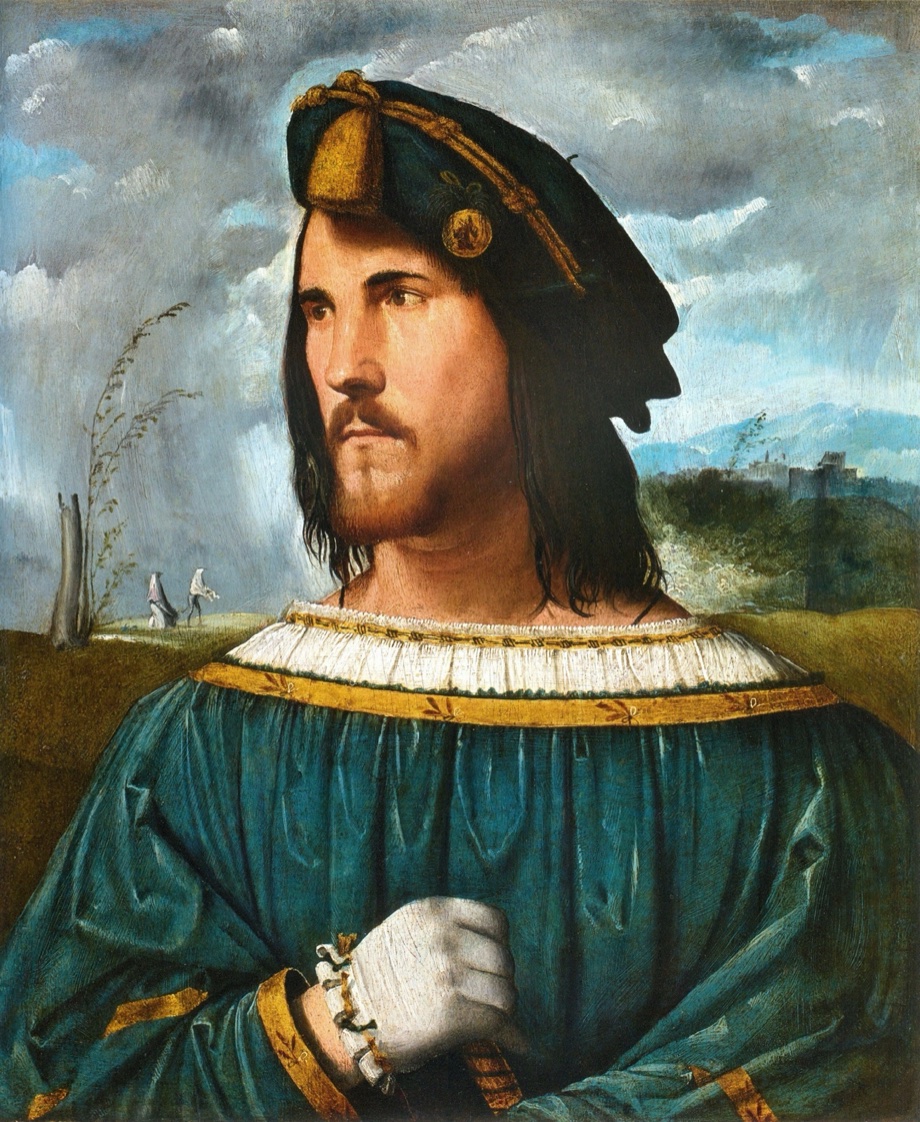
Portrait of Cesare Borgia
Aut Caesar aut Nihil
His motto was a threat to the world and a warning to himself: either Caesar or nothing. There was no third state Cesare Borgia would accept. He was made a bishop at fifteen and a cardinal at eighteen — the fastest ecclesiastical ascent money and a father's papacy could buy — and he despised every hour of it. The Church was a cage of scarlet silk, and when the chance came to break out of it, he took it with a coldness that unsettled even the age of the Borgias. He would not be a prince of the Church. He intended to be a prince.
Cesare (1475–1507) was the son of Rodrigo Borgia — the Spanish cardinal who bought the throne of St. Peter to become Pope Alexander VI — and of his mistress Vannozza dei Cattanei. When his elder brother Juan, the family's designated soldier, was fished out of the Tiber in 1497 with nine wounds in him, the whisper across Rome was that Cesare had ordered the killing to inherit his role. He never denied it convincingly. What is certain is that he acted on it: he became the first man in history to resign the cardinalate, shed the red hat, and made himself the sword of a dynasty that had run out of other swords. Over the next four years, backed by the King of France — who made him Duke of Valentinois, the “Valentino” Italy would fear — and by the bottomless purse of the papacy, he carved a personal state out of the Romagna and governed it, to the astonishment of everyone, with order and justice. Then, at the height of it, fortune killed his father and nearly killed him in the same week, and the whole edifice fell in on itself.
The temptation is to read that arc as the meteor of a reckless adventurer — a gambler who rode his luck until it broke. It is the wrong reading. Cesare was the most disciplined predator of his era, a man who conquered by design and governed by design, and whose most famous crime, the massacre at Senigallia, was not an eruption of violence but a trap sprung after months of patient, smiling deceit.
Cesare Borgia is the ENTJ stripped to its steel: a Te will to power executed through force, terror, and hard administration, wedded to an Ni vision so fixed — a durable state of his own in central Italy — that he would build institutions, strangle allies, and unmake the Church itself to reach it.
The Conqueror Who Learned to Govern
Te — dominant
Dominant Te organizes the external world toward a result, and Cesare's result was a state. Between 1499 and 1502 he took the Romagna city by city — Imola, Forlì, Cesena, Rimini, Faenza, and finally Urbino, seized in a single lightning stroke of treachery against an ally. At Forlì he broke the resistance of Caterina Sforza, the warrior-countess who defended her fortress in person, and carried her back to Rome a prisoner. This was not glory-hunting. It was acquisition — the methodical assembly of contiguous territory into something that could be ruled as a unit. Cesare measured a campaign by what it left him holding, not by the songs it inspired.
What separates Cesare from a hundred other Italian condottieri — and what makes the ENTJ reading unavoidable — is that he did not stop at conquest. He governed the Romagna better than its old tyrants ever had. He installed a rational administration, curbed the petty lords who had bled the region, standardized justice, and won a genuine popularity among subjects who had never before had a ruler who protected them from their protectors. The building of the institution mattered as much to him as the taking of it. That is the Te horizon: not the raid, but the working machine that survives the raider.
The single most Te act of his life was administrative theater. To pacify the newly conquered Romagna, Cesare had installed a brutal governor, Ramiro de Lorqua, and let him do the cruel work of imposing order. When order was achieved — and the people hated the man who had imposed it — Cesare had Ramiro arrested and, one December morning, left him cut in two in the piazza at Cesena, a bloody knife and a wooden block beside the halves of the body. The message was surgical: the cruelty was the servant's, the justice is the prince's. He had used the man, extracted the order, and then converted the people's resentment into gratitude with a single stroke. Machiavelli, watching, understood at once that he was in the presence of a political intelligence of the first rank.
The Trap at Senigallia
Ni — auxiliary
Auxiliary Ni supplies Te with its single, unwavering picture of the end — and Cesare's end was fixed from the moment he threw off the cardinal's hat: a durable principality of his own, welded together in central Italy, strong enough to stand on its own feet once his father's protection was gone. Every conquest, every marriage negotiation, every borrowed French lance was bent toward that one image. He did not improvise a career. He executed a design.
The proof that this was Ni–Te calculation and not Se opportunism is Senigallia. In late 1502 his own condottieri captains — Vitellozzo Vitelli, Oliverotto da Fermo, and the Orsini lords — turned on him, frightened by how large he had grown. A rasher man would have struck back at once, or fled. Cesare did neither. He negotiated. He soothed. He let the mutineers believe a reconciliation was real, drew them back into his orbit over weeks of patient diplomacy, and proposed a friendly joint venture against the town of Senigallia. On the last day of December 1502 he received them warmly, embraced them one by one — and had them seized and strangled, the ringleaders that very night. It was the masterstroke of his life: a betrayal engineered so far in advance that his victims walked smiling into the room where they would die. Machiavelli, who was there, wrote it up as if reporting a work of art.
Senigallia is the anatomy of Ni–Te deception: not a man losing his temper, but a man who could hold a lie steady for months because he could see, with absolute clarity, the single moment in which it would pay — and who felt nothing at all as he embraced the men he had already condemned.
The same long vision shows in whom he chose to employ. In 1502 Cesare took on Leonardo da Vinci as his military engineer, setting the greatest mind of the age to drawing maps of his territories and designing the fortifications that would let a Borgia state defend itself. He was not collecting an artist for prestige; he was building the technical apparatus of permanence. A conqueror who plans for the century after the conquest — who wants surveys and citadels and codes of law, not just plunder — is a man governed by a vision of what the state must become, not by the adrenaline of taking it.
Speed, Nerve, and the Body
Se — tertiary
Tertiary Se gives the ENTJ strategist a taste for decisive physical action and an instinct for tempo — the ability to strike hard and fast when the plan calls for it. Cesare had it in abundance. His campaigns were famous for their speed: he moved armies faster than his enemies thought possible, appearing before a city's walls before its lords had finished deciding whether to resist. The taking of Urbino was pure Se timing — a sudden descent that captured the whole duchy almost before a blow was struck. Contemporaries marveled at the sheer physical pace of the man.
He was, by every account, magnificent to look at and dangerous in his body: a superb horseman and swordsman, said to behead a charging bull with a single stroke in the ring, restless and nocturnal, transacting the business of a principality by night and sleeping through the day. The Se register runs through the darker legends too — the casual lethality, the poisonings and stranglings attributed to him, the sense of a man entirely unsqueamish about the physical fact of killing. Where a more squeamish temperament hesitates, Cesare's Se simply acted, cleanly and without flinching.
But in the ENTJ this boldness is a tool the strategist wields, not a master he obeys. The speed served the design; the violence was rationed to where it would buy the most. That distinction — between Se as the servant of a long plan and Se as the whole engine of the personality — is exactly where the argument for his type will turn.
The Loyalty He Kept for Blood Alone
Fi — inferior
Inferior Fi is the ENTJ's narrow, buried interior — a private set of loyalties that the instrumental mind almost never lets to the surface. In Cesare it was very nearly invisible. He broke oaths as a matter of policy, murdered allies, and treated other human beings as pieces on a board with a completeness that shocked even Rome. Fe — the reading of a room's feeling, the instinct to be liked — was simply absent; he was feared, not loved, and preferred it that way. What little warmth he had ran along the single channel of family.
The one durable attachment of his life was to his sister, Lucrezia Borgia, and beyond her to the dynastic project itself — the Borgia name as a thing worth everything. Even that is ambiguous: Lucrezia's second husband, Alfonso of Aragon, was strangled on what most believed were Cesare's orders when the marriage ceased to serve the family's interests. His loyalty was to the House of Borgia as an idea, not to the people inside it as persons — which is inferior Fi at its coldest, a value so fused with the strategic aim that it can turn lethal against its own object.
Where the buried function finally showed its hand was in the manner of his fall. Stripped of everything, imprisoned in Spain, Cesare would not accept the nothing his motto had promised as the alternative to Caesar. He escaped, took service as a soldier under his brother-in-law the King of Navarre, and threw himself into an obscure skirmish at Viana in 1507 — charging ahead of his men into an ambush and dying, stripped naked and full of wounds, on a nameless road. There is something almost purely personal in that end: a man who could not bear to live diminished, spending his last strength on a fight that meant nothing strategically, because the only self he could tolerate was the conquering one. The Fi that never governed his life governed his death.
Why ENTJ Over ESTP
Why not ESTP?
The ESTP case is the strongest one against him, and it rests on Machiavelli's own famous verdict: Cesare did everything a founder of states should do — except prepare for the one contingency of his father's death. Read as inferior-Ni blindness, that single fatal gap looks exactly like an Se-dominant who rode momentum and fortune brilliantly until the wheel turned. He was dazzling in the moment, physically fearless, a genius of tempo and nerve; take the Romagna at speed, kill de Lorqua for effect, spring the Senigallia trap — is this not the supreme opportunist rather than the patient architect?
Concede the force of it, and then look at what the ESTP reading cannot explain. The opportunist takes cities; he does not stay to build a rational administration, standardize justice, and win the love of the governed — that is Te constructing a durable institution, not Se seizing a prize. The tactician strikes when provoked; he does not hold a smiling lie steady for months to lure his enemies into a single room, which is Ni–Te design of the coldest kind. And the man who hires Leonardo to survey his lands and fortify his citadels is planning for a state that must outlast the campaign. As for Machiavelli's reproach: even the greatest strategist can be undone by a stroke of fortune no design could anticipate. What actually destroyed Cesare was not a failure of foresight but a coincidence — his father dead and he himself lying at the edge of death in the very same week, both possibly poisoned, at the one instant a new pope was to be chosen. That his mortal enemy Giuliano della Rovere became Pope Julius II and stripped him of everything was the cruelty of chance, not the exposure of a shallow gambler. He was the architect blindsided by an earthquake, not the gambler who never built anything to shake. That is why he lands as ENTJ.
Connected Figures
Further Reading
- Cesare Borgia: His Life and Times — Sarah BradfordThe standard modern English biography — thorough, balanced, and especially good on the Romagna campaigns and the machinery of the rise and fall.
- The Prince — Niccolò MachiavelliChapter VII is a case study of Cesare's method; read alongside Machiavelli's diplomatic dispatches from the Borgia court for the eyewitness fascination.
- The Borgias and Their Enemies — Christopher HibbertA vivid narrative of the whole dynasty — accessible and richly detailed on the world Cesare moved through.
- The Borgias: The Rise and Fall of a Renaissance Dynasty — Michael MallettThe classic scholarly account of the family, sober and authoritative, that separates the documented Cesare from the legend.
- The Artist, the Philosopher, and the Warrior — Paul StrathernTraces the extraordinary months in 1502 when Leonardo, Machiavelli, and Borgia orbited one another — the warrior at the center of the triangle.
