 Historical Figure MBTI
#600 · 5-5-26 · The Age of the Borgias
Niccolò Machiavelli
Florentine Secretary · Author of The Prince · Father of Political Science
1469 — 1527
9 min read
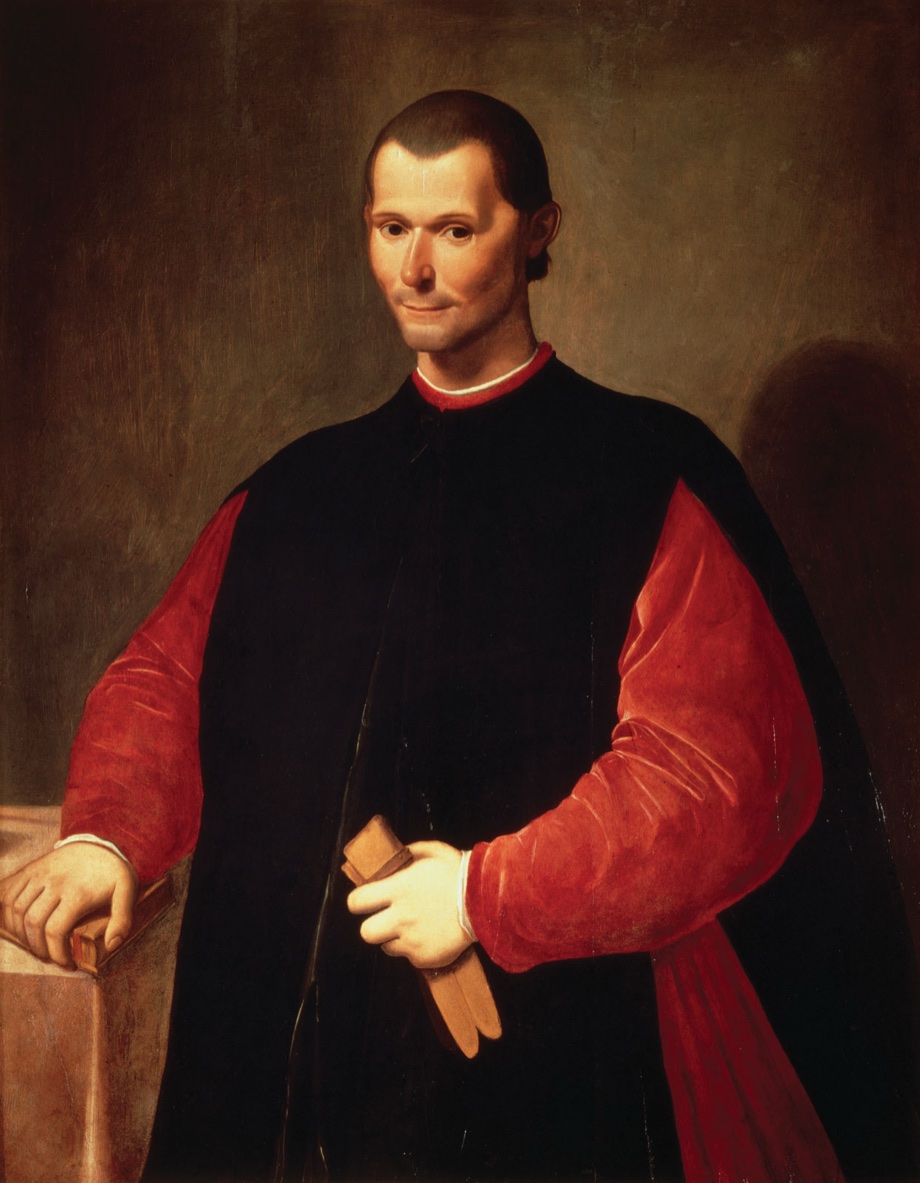
Portrait of Niccolò Machiavelli
The Man Who Looked at Power Without Blinking
For two thousand years, men who wrote about statecraft described how a ruler ought to behave — the just prince, the mirror of virtue, the good king as the philosophers imagined him. Then a dismissed Florentine civil servant, exiled to a small farm and burning with the shame of enforced idleness, did something no one before him had quite dared. He described power not as it should be but as it is — a mechanism, stripped of its moral costume, running on its own cold logic. He asked not whether a ruler was good but whether he was effective, and why. In doing so he founded political science, and purchased with it the strangest immortality: his own name became a synonym for calculated evil.
Niccolò Machiavelli (1469–1527) was not a prince, a general, or a schemer at the center of power. He was a working bureaucrat — Secretary of the Second Chancery of the Florentine Republic, a diplomat sent to observe men greater than himself. His life, judged by worldly results, was a near-total failure: his projects came to little, his republic fell, he was imprisoned and tortured, and he died having never regained the office he spent his last years begging to be given back. And yet he saw more clearly than any of the powerful men he served. His genius was not doing; it was understanding. He is the INTP as political anatomist — a mind that dissected the living body of power on the table and wrote down, without flinching, exactly what it found.
Machiavelli is the INTP in its purest and most disturbing form: Ti building a cold, internally consistent model of how power actually works — virtù against fortuna, feared against loved, ends against means — and Ne ranging restlessly across all of history to test it. His weapon was analysis, never action.
Read him as an operator and he looks like a monster or a fool. Read him as a theorist — a detached, ironic intelligence in love with the idea of the thing itself — and the whole shape of the man snaps into focus.
Power as a Machine to Be Taken Apart
Ti — dominant
Dominant Ti builds a private, rigorous model of how a thing works and then trusts that model over any received wisdom, however sacred. Machiavelli did this to the most dangerous subject imaginable: the getting and keeping of power. Where every previous writer had folded politics into ethics — the ruler must be just, merciful, truthful — Machiavelli severed the connection and asked a purely mechanical question: given that a prince wishes to hold his state, what actually works? The answer had nothing to do with virtue. It is better to be feared than loved, he concluded, because love is a bond of obligation men break whenever it serves them, while fear is held by a dread of punishment that never fails. A prince must learn how not to be good, and to use that knowledge according to necessity. This is not cynicism for its own sake; it is Ti following the logic of the system to its cold conclusion, regardless of where decency would prefer it to stop.
The whole of The Prince reads like a dissection performed with a steady hand. Machiavelli reduces statecraft to general laws — the calculus of cruelty (do all your necessary harm at once, your benefits slowly), the anatomy of principalities, the fatal weakness of mercenary armies. His central concept, virtù — not virtue but a ruthless, adaptive competence — set against fortuna, the river of chance a bold man can dam and channel, is pure theoretical architecture. He wanted the principle beneath the mess of events, and pursued it with the impersonality of a physicist describing forces.
What makes this Ti rather than mere shock is its consistency and detachment. Machiavelli is not urging tyranny; he is describing a mechanism the same way whether the prince is admirable or appalling. In the deeper Discourses on Livy, the same engine turned on republics concludes — with equal rigor — that liberty and popular participation make a state stronger than any prince. He is not an apostle of despotism but a systematizer who follows the argument wherever it leads, and reports the finding without softening it.
The Ironist Ranging Across History
Ne — auxiliary
If Ti built the model, auxiliary Ne supplied the raw material and the wit. Machiavelli's mind moved constantly between examples — ancient Rome and contemporary Florence, Cesare Borgia and Hannibal, the recent and the antique — hunting for the pattern that connected them. He reasoned by analogy and possibility, holding a dozen cases in the air at once and turning them until the shared principle emerged. His years as a Florentine diplomat, from 1498 onward, were his real education precisely because they fed this appetite for observed cases. Sent on legation after legation — to the French king, to the Emperor, to Pope Julius II — he watched powerful men up close, took mental notes on their methods, and stored the data for a theory he was already assembling in his head.
The formative encounter came in 1502–03, when the Republic sent him to attend on Cesare Borgia, the pope's son, then carving a state out of the Romagna by fraud and force. Machiavelli was half-repelled and wholly fascinated. He watched Borgia lure his treacherous captains to Senigallia and have them strangled; he watched him install a brutal governor to pacify a province, then publicly execute that governor to win the people's love and disown the cruelty he had ordered. To most observers this was villainy. To Machiavelli's Ne it was a case study — a teachable demonstration of how a new prince manufactures order — and Borgia became the living exemplar of virtù at the heart of The Prince.
The Ne shows most in the irony — the faint, dry amusement of a man watching the theater of power and cataloguing its tricks. He delighted in the idea for its own sake, and the same restless intelligence that anatomized tyrants also wrote Mandragola, a bawdy comedy of seduction and gulled fools.
That range is the auxiliary's signature. The author of the coldest book in political thought was also a gifted comic playwright and a man who could hold the tragic and the ridiculous in the same glance. His pessimism about human nature — that men are ungrateful, fickle, and false, and always will be — was less bitterness than a naturalist's observation, delivered with a shrug and a joke. Ne kept the analytic machine supplied with examples, and kept the man himself from ever taking the world quite as solemnly as it took itself.
Conversing with the Ancients
Si — tertiary
Tertiary Si gives the INTP a reverence for a stored body of tried precedent — a faith that the past holds patterns worth recovering — and in Machiavelli it fastened on ancient Rome. He treated the classical world not as decoration but as a repository of working political data, the tested results of centuries, from which reliable rules could be drawn. The Discourses on Livy is a line-by-line mining of the Roman historian for lessons the present had forgotten, written on the conviction that human nature is constant and what worked for Rome can work again. Where Ne supplied the wide range of examples, Si drove the deep vertical shaft into a single revered tradition.
This Si is most touching in the famous letter he wrote from exile in 1513 to his friend Francesco Vettori. Reduced to a small farm, spending his days snaring thrushes and squabbling with locals at the tavern, he described how each evening he shed his muddy country clothes and put on “regal and courtly garments” to enter the ancient courts of ancient men, where for four hours he felt no boredom, forgot every trouble, and did not fear death. It was in those hours, he added, that he composed The Prince. The ritual is pure tertiary Si: a private communion with the honored dead, a return to a fixed and reliable source of meaning when the living world had cast him out.
Si had a practical face too. Distrusting the mercenary companies that fought Italy's wars without loyalty or stake, Machiavelli urged and then organized a Florentine citizen militia — an attempt to revive the ancient Roman ideal of the armed citizen defending his own republic. That its patron was thinking of a two-thousand-year-old precedent while his contemporaries thought of the next season's contract tells you where his deepest confidence lay: not in the fashions of the moment, but in the proven store of the past.
The Patriot Beneath the Cold
Fe — inferior
Inferior Fe is the INTP's weak relationship with the shared emotional world — a poor instinct for how things will land on other people, punctuated by sudden, unguarded eruptions of feeling the analytic mind cannot contain. Machiavelli is a textbook of it. His most catastrophic Fe failure was strategic: he wrote The Prince as an amoral instruction manual and could not see how monstrous it would sound. He dedicated the coldest book in Europe to the Medici — the very family that had destroyed his republic, imprisoned him, and had him tortured on the strappado — in a naked bid for employment. The gambit was tone-deaf in the extreme, and it failed completely. A man with functioning Fe would have felt in advance how the gesture would read; Machiavelli, brilliant about power in the abstract, misjudged the actual human beings he most needed to please.
And then, at the very end of that same cold book, the inferior function erupts. After twenty-five chapters of surgical detachment, the final chapter of The Prince abandons analysis entirely for a sudden, burning Exhortation to liberate Italy from the barbarians — a passionate, almost tearful plea for a redeemer to drive the French and Spanish invaders from a bleeding, leaderless Italy. The temperature of the prose leaps. This is Fe breaking loose: a deep, inarticulate love of country that the systematizing mind had held down for the whole book and could no longer keep silent. “I love my native city,” he wrote elsewhere, “more than my own soul.”
That is the paradox that makes him human rather than diabolical. The apparent apostle of tyranny was, underneath, a wounded republican patriot who wanted Italy free and Florence great, and whose cold analysis was in part a means to that ardent, clumsily expressed end. The world remembered the ice and forgot the fire — the fate of inferior Fe: the feeling is real, it is deep, and it is almost never read correctly by anyone, including the man himself.
Why INTP Over INTJ
Why not INTJ?
The instinct to call Machiavelli an INTJ is strong — he is coldly strategic, future-facing, and famous for the ruthless pursuit of ends. But the INTJ is a strategic operator: an Ni–Te mind that fixes on a vision and executes it in the world. Machiavelli executed almost nothing. His diplomatic missions changed little, his cherished militia was routed, his republic fell, and he spent years failing to claw his way back into office. His power was never in doing — it was in understanding. That is the difference between Ni–Te, which bends events toward a personal endgame, and Ti–Ne, which builds a model of the game and delights in the model itself, whether or not the modeler ever wins.
The tells are everywhere. The detached irony, the comic plays, the letters full of dry amusement — an INTJ driving toward a goal does not treat power as a spectacle to be enjoyed and dissected. The absence of a personal agenda — he offered his services to Medici and republicans alike, wrote The Prince and the fiercely republican Discourses in the same years, and seemed finally more loyal to the truth of the mechanism than to any faction using it — is Ti, not Te. He is a theorist, not a prince; an analyst who could describe how a Cesare Borgia seizes a state far better than he could ever seize one himself — a close cousin to Procopius, the INTP historian who saw through every powerful figure he served while wielding no power of his own. Machiavelli's genius was to look at the machine of power without blinking and tell us exactly how it runs — and to leave the running of it to other men.
Connected Figures
Further Reading
- The Prince — Niccolò MachiavelliThe book itself — the short, cold, essential text that founded modern political thought and lent his name to an adjective. Read it before reading about it.
- Discourses on Livy — Niccolò MachiavelliHis deeper, republican masterwork — the same analytic engine turned on Rome, arguing that liberty and popular participation make a state stronger than any prince.
- Machiavelli: A Portrait — Christopher S. CelenzaA compact, learned modern life that sets him firmly within Florentine humanism and the intellectual world that made him.
- Machiavelli: A Biography — Miles J. UngerThe fullest and most readable modern narrative biography — strong on the legations, the fall, and the exile that produced the books.
- Machiavelli in Hell — Sebastian de GraziaA Pulitzer-winning intellectual biography that takes his inner and religious life seriously, recovering the moral man behind the myth.
- Be Like the Fox: Machiavelli's Lifelong Quest for Freedom — Erica BennerA vivid reappraisal that reads him as a committed republican and ironist, arguing The Prince is far more subversive than its reputation allows.
