 Historical Figure MBTI
#604 · 5-5-26 · The Age of the Borgias
Piero Soderini
Gonfaloniere of Florence · Republican Standard-Bearer · Machiavelli's Patron
1450 — 1522
6 min read
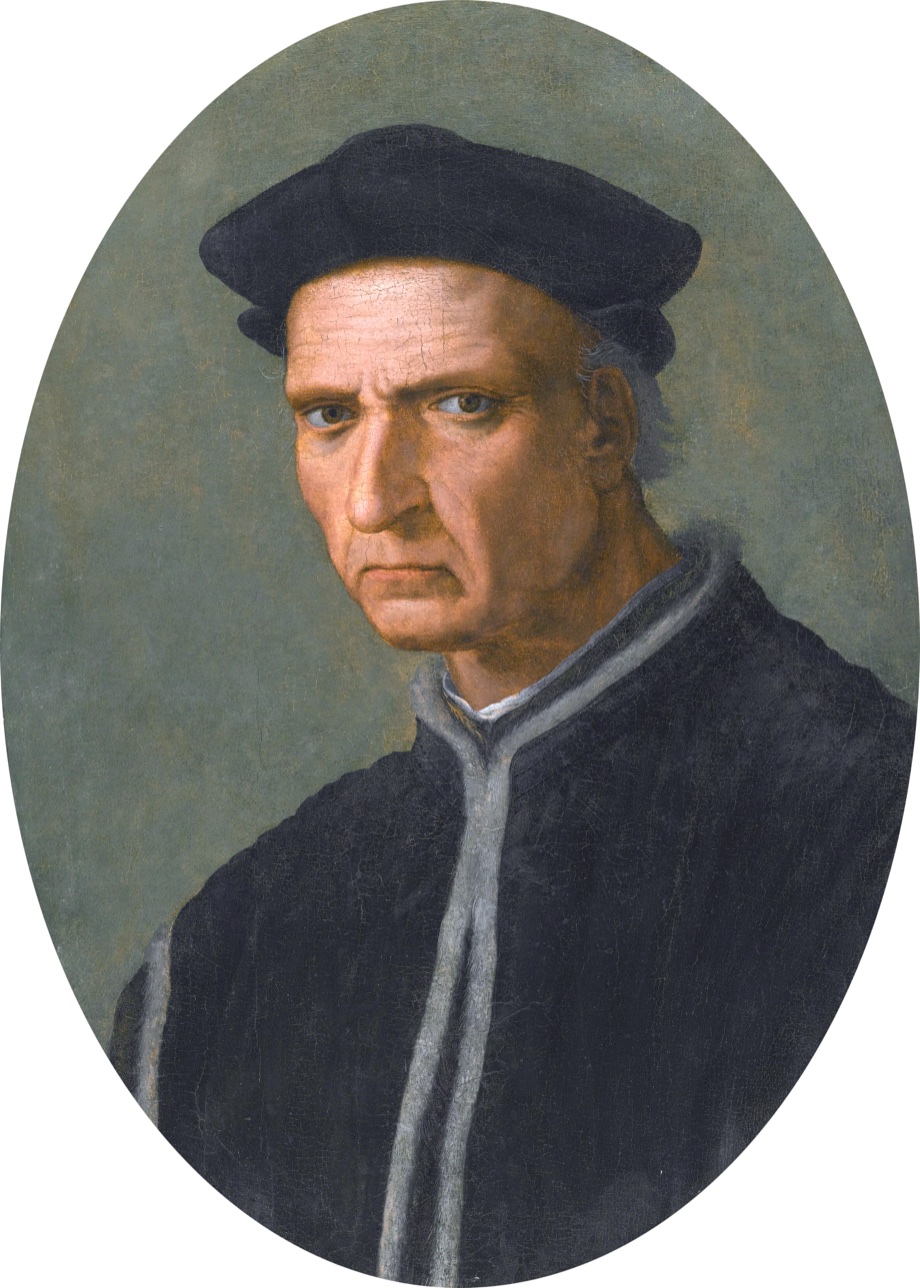
Portrait of Piero Soderini
The Decent Man in an Age of Borgias
He was, by every honest account, a good man — and that was precisely the problem. In 1502, an exhausted Florentine Republic, weary of factional whiplash and grasping headmen, did something novel: it elected Piero Soderini Gonfaloniere of Justice for life, a permanent standard-bearer meant to give the fractious city the steadiness of a single, trustworthy head. They chose him not because he was brilliant or feared but because he was unthreatening, moderate, and scrupulously fair — a safe pair of hands for a state that had had its fill of ambition.
For a decade he was exactly the guardian they had ordered. He governed by the book, conciliated the rival factions, refused to enrich himself, and leaned on the sharp young mind of his Second Chancellor, Niccolò Machiavelli, to run the republic's diplomacy and raise a citizen militia. But the age around him belonged to warrior-popes, Spanish tercios, and men who killed without blinking, and Soderini's great virtue — his temperate, rule-abiding caution — was also the flaw that would destroy him. He is the ISFJ as republican steward: the dutiful custodian who kept the forms intact right up to the moment the forms were swept away.
Soderini is the ISFJ in the wrong century: Si's careful guardianship of the republic's forms wedded to Fe's hunger to keep every faction content — a temperament built to preserve a settled order, dropped into an age that rewarded only the men willing to break it.
The Keeper of the Forms
Si — dominant
Dominant Si venerates the established order — the tested procedure, the settled custom, the constitution as it stands — and Soderini governed as its faithful custodian. Where his predecessors had bent Florence to their own advantage, he treated the republic's institutions as a trust to be preserved intact. He honored the councils, respected the laws, and refused to convert his lifetime office into a signory; a man with fewer scruples could have made himself a prince, and everyone knew it. Soderini declined, because to him the point of power was to conserve the machine, not to remake it.
That guardian instinct shows most concretely in the militia. Florence had long hired unreliable mercenaries, and at Machiavelli's urging Soderini backed the creation of a standing citizen force — a return, as they saw it, to the sturdy civic virtue of the Roman republic they both revered. It was the one genuinely constructive act of his regime, and it was characteristically Si: not a bold new invention but the careful restoration of a proven, older way of doing things. He built slowly, steadily, and within the rules — the temperament of a steward who measures success by continuity, by the republic still standing at the end of his watch exactly as he had received it.
Governing by Accommodation
Fe — auxiliary
Auxiliary Fe reads the temperature of the room and works to keep it warm, and Soderini governed by keeping the peace. Florence was a snake-pit of rival clans — the aristocratic families who resented a broad-based republic, the popular party that sustained it, the exiled Medici plotting return. Soderini's method was to conciliate all of them: to avoid the hard break, to soften the sharp edge, to find the arrangement that left no faction so aggrieved that it would overturn the board. He was approachable, fair-minded, and personally honest, and for years that decency bought the republic a stability it had not known in a generation.
But Fe's consensus-seeking has a cost, and Soderini paid it in full. Determined to offend no one, he could not bring himself to strike decisively at the enemies within — to purge, exile, or crush the men who wished the republic dead. Machiavelli, watching from the chancery, drew exactly this lesson: that Soderini trusted patience and good faith where the moment called for the knife, and that his refusal to do a little cruelty in time invited a far greater catastrophe later. The instinct to please everyone is a fine trait in a neighbor and a fatal one in a head of state surrounded by predators. Soderini wanted, above all, for everyone to be content — and his enemies read that wish, correctly, as weakness.
The Failure of Nerve
Ne — inferior
Inferior Ne is the ISFJ's weakest instrument: the leap into the unforeseen, the improvised gamble, the willingness to act boldly on a possibility that no precedent covers. Soderini had almost none of it, and in the summer of 1512 that deficit ended the republic. A Spanish and papal army, marching to restore the Medici, stormed the nearby town of Prato and put it to a horrifying sack. The message to Florence was unmistakable. In that emergency the situation demanded exactly the qualities Soderini lacked — decisive nerve, a ruthless improvisation, the readiness to do something unprecedented and violent to save the state.
Instead he hesitated, negotiated, and hoped the constitutional forms would somehow hold. They did not. The regime simply collapsed, and Soderini — too decent to fight for power the way it had to be fought for — fled Florence into exile. The Medici returned, the republic died, and Machiavelli, dismissed and tortured, lost the career and the state he had served. The cautious steward who had preserved the machine for a decade could not, at the one moment that mattered, imagine the desperate stroke that might have saved it. His virtues were real and his hands were clean; but cleanliness and caution were not the currency of an age of Borgias and warrior-popes, and he was overwhelmed by men who dealt in the currency that was.
Why ISFJ Over ISTJ
Why not ISTJ?
The ISTJ case is tempting: Soderini was dutiful, moderate, procedural, and devoted to the constitution as written — all classic marks of the type. But the ISTJ guards the rules impersonally and would have enforced them without much anxiety about who was left unhappy. Soderini's whole method was the opposite: he governed by conciliation, forever seeking the arrangement that would keep every faction content, and his fatal weakness was an aversion to the hard, cold break rather than any rigid legalism. That harmony-seeking, offend-no-one instinct is Fe, not Te — and it places him firmly on the ISFJ side of the line.
The distinction is the whole story of his fall. An ISTJ steward, cornered at Prato, might have applied the law's severest instruments without flinching; what undid Soderini was not procedural rigidity but a warm, human reluctance to be cruel, to purge, to fight dirty. He wanted everyone reconciled and no one crushed — a genuinely good wish, and a lethal one. That is the ISFJ's peculiar tragedy in a predatory age: the very decency that made him the safe choice in 1502 made him the doomed one in 1512.
Connected Figures
Further Reading
- Pier Soderini and the Ruling Class in Renaissance Florence — Roslyn Pesman CooperThe standard scholarly study of Soderini and the politics of the last Florentine Republic — the essential work on the man and his regime.
- Machiavelli in Hell — Sebastian de GraziaA Pulitzer-winning intellectual biography that traces how Machiavelli drew his hardest political lessons from serving — and outliving — Soderini's fall.
- Florence: The Biography of a City — Christopher HibbertA vivid narrative history that sets Soderini's republic within the long, turbulent life of the city and the Medici who bracketed it.
