 Historical Figure MBTI
#1102 · 8-17-26 · The Qin Dynasty
Chen Sheng
The Rebel Who Asked If Kings Are Born
d. 208 BCE
5 min read
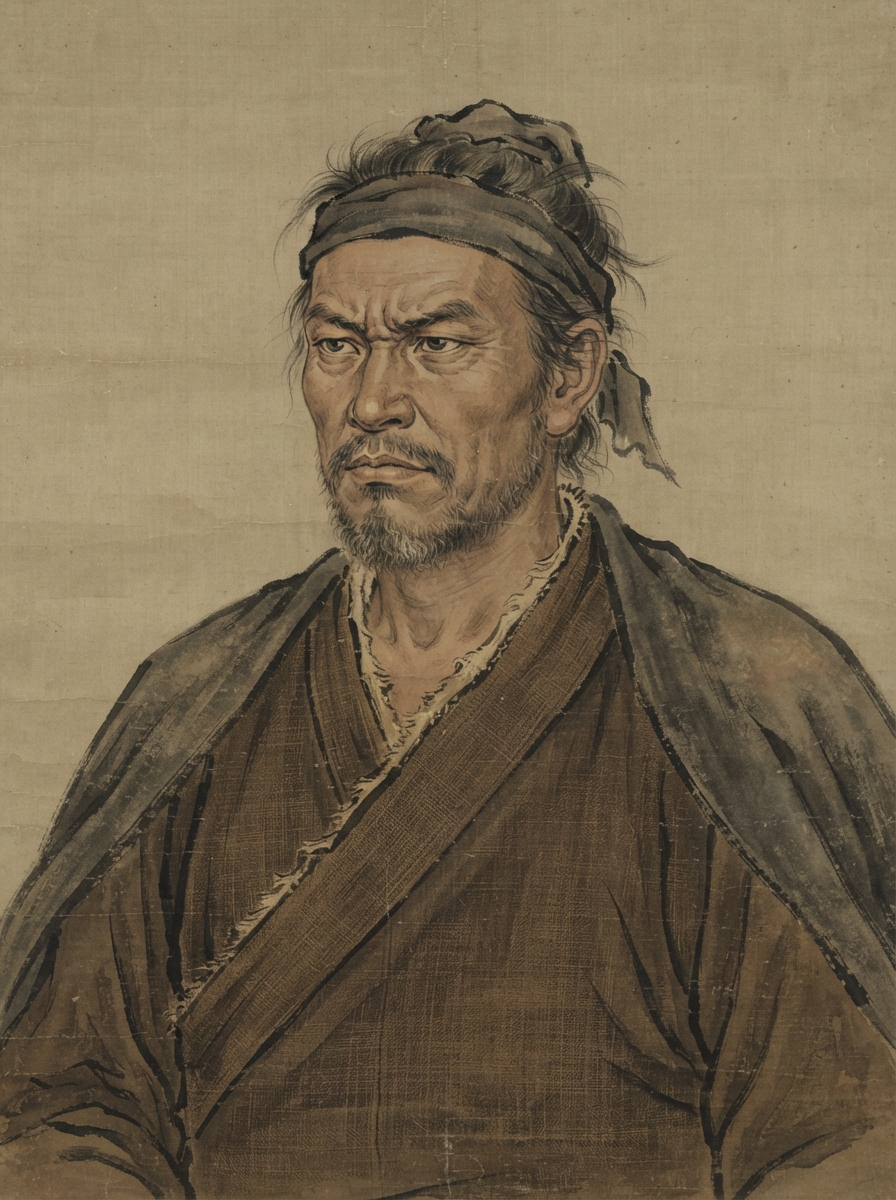
AI-assisted Portrait of Chen Sheng
A Question Asked in the Rain
Chen Sheng was a tenant farmer, the kind of man the Qin dynasty's census rolls counted but never named. In 209 BCE he was one of some nine hundred conscripts marched north toward a garrison post, a legal obligation under a penal code so exacting that lateness — for any reason, fault or none — carried a death sentence. Rain flooded the roads. The column stalled. By the time the arithmetic of the calendar caught up with them, arriving on schedule was no longer possible.
Most men facing that math would have kept walking anyway, hoping for mercy or a lenient officer. Chen Sheng did neither. He looked at the two paths in front of him — arrive late and die, or revolt and maybe die — and treated them as functionally identical, then chose the one that left a chance of surviving. That calculation, made fast and made in a ditch, is the whole of him: an ESTP reading a crisis correctly in real time and acting inside it, rather than a strategist executing a plan laid weeks in advance.
Chen Sheng did not plan a revolution. He read the odds in a flooded road and moved before anyone else had finished doing the math — the reflex of dominant Se married to a cold Ti calculus of consequence.
The Uprising Begun Overnight
There was no faction behind Chen Sheng, no manifesto drafted in advance, no months of quiet recruitment. There was a road crew stuck in the mud and a deadline that had already expired. Within the space of what the record treats as a single conversation, he and his co-conscript Wu Guang killed the officers escorting the group, armed the laborers with what tools and improvised weapons were on hand, and declared revolt — a decision converted into action almost as fast as it was reached.
That immediacy is the signature of dominant Se: a mind that lives in the concrete present and trusts its read of a physical situation over any abstract plan. Chen Sheng did not wait to see whether the rain would let up, whether an officer might show leniency, whether word could be smuggled ahead to explain the delay. He treated the visible facts in front of him — the flood, the deadline, the armed but outnumbered escort — as the only facts that mattered, and he moved on them before the moment closed. Within weeks the revolt had taken several towns and put an army in the field, momentum built entirely on the same instinct: act on what is right in front of you, immediately, at full commitment.
Are Kings a Race Apart?
What separates Chen Sheng from a man who simply panics is the argument he is recorded as making to the other conscripts before anyone picked up a weapon. Sima Qian preserves the line directly: death awaited them whether they fled, arrived late, or revolted, so the only rational move was the one that also carried a chance of survival and gain. It is a piece of stripped-down decision logic — payoffs weighed against certain loss — delivered under pressure, not a philosophy worked out at leisure.
The same logic produced his more famous provocation: "Are kings, nobles, generals, and ministers a race apart?" It reads as rhetoric, but it functioned as a premise — an internally consistent claim that rank was custom, not nature, and therefore contestable by anyone with the nerve to contest it. That is auxiliary Ti in its most exposed form: not systems built for their own sake, but a private, load-bearing logic invoked to justify an action already underway, and to talk several hundred frightened men into believing the math actually worked in their favor.
Why ESTP Over ESTJ
Why not ESTJ?
An ESTJ facing the same flooded road would have looked for a chain of command to appeal to, or begun organizing a durable structure before committing to open revolt. Chen Sheng did neither. His uprising had no administrative apparatus behind it — no supply lines, no trained officer corps, no institution capable of outlasting its founder's momentum — and his self-declared kingdom of "Zhang Chu" collapsed within months of his death, because it had never been built to survive the first serious reversal. That is the mark of a reaction to an immediate crisis, not an organized campaign.
What Chen Sheng offered history was not administration but proof of concept — a demonstration, executed in real time by an uncredentialed man with no resources, that Qin's authority could be answered with force and survive the attempt for months rather than days. Xiang Yu and Liu Bang, who followed him into revolt, brought the organization he never had. He brought the nerve that made the entire cascade thinkable in the first place.
Connected Figures
Further Reading
- Shiji (Records of the Grand Historian) — "Hereditary House of Chen She" — Sima QianThe primary source; preserves Chen Sheng's own recorded words, including the challenge to hereditary rank.
- The Early Chinese Empires: Qin and Han — Mark Edward LewisSituates the revolt within the collapse of Qin's penal and administrative order.
- The Cambridge History of Ancient China — Michael Loewe & Edward L. Shaughnessy (eds.)Broader context on the Qin legal code and the cascade of revolts it provoked.
