 Historical Figure MBTI
#1101 · 8-17-26 · The Qin Dynasty
Zhao Gao
The Eunuch Who Toppled an Empire
d. 207 BCE
5 min read
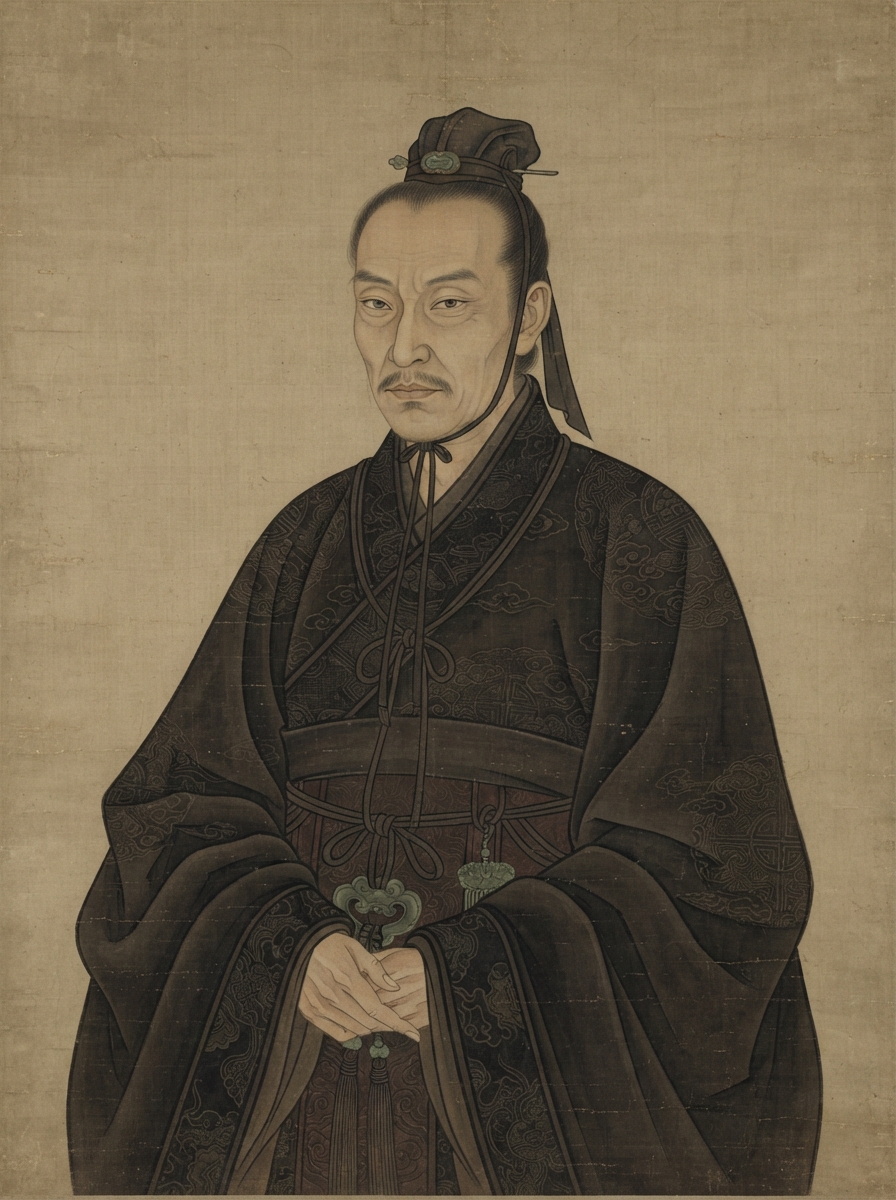
AI-assisted Portrait of Zhao Gao
A Deer, Called a Horse
Zhao Gao left almost no trace of ambition until the moment ambition became useless to hide. For years he served the First Emperor of Qin as a minor legal official and palace eunuch, competent enough with the penal codes to tutor the emperor's younger son, Huhai, in law — a post that put him near power without granting him any. Then, in 210 BCE, Qin Shi Huang died suddenly on a provincial tour, far from the capital, and the empire's succession existed for a few days as nothing more than a sealed letter and the men who controlled it. Zhao Gao was one of those men. He did not seize the empire. He rewrote it.
What follows is not the story of a man who wanted the throne — he never sat on it, never claimed a title beyond chancellor, never announced a program. It is the story of a man who read each room with total clarity and moved only the piece the room allowed him to move: forge the will here, frame a rival there, and — most famously — walk a deer into court, call it a horse, and watch, expressionless, to see which officials corrected him. The ones who said "deer" he had killed. The ones who said "horse," or said nothing, he kept. This was not theater for its own sake. It was a diagnostic instrument, built and run by a mind that trusted only what it could verify for itself: an INTP, testing a system to find its exact tolerances before deciding what to do with it.
Zhao Gao ruled through no office anyone had named — an INTP whose dominant Ti turned the entire Qin court into an experiment, and read the results without mercy.
The Logic of the Forged Will
The plot that made Zhao Gao chancellor began as a legal problem, and he solved it the way a lawyer solves a problem: by finding the clause nobody had thought to defend. Qin Shi Huang's dying instruction named his eldest son, Fusu, as heir — a letter Zhao Gao, as keeper of the imperial seal, physically controlled and had not yet sent. Rather than destroy it outright, he ran the calculation cold. Fusu was serious, popular with the general Meng Tian's army, and would owe Zhao Gao nothing. Huhai was pliable, untested, and had been Zhao Gao's law student for years. The correct move followed from the premises without any emotional residue: alter the letter, order Fusu to suicide in his father's name, and install Huhai instead. He needed one more signature to make the forgery credible, so he did not persuade the chancellor Li Si with appeals to loyalty or ambition — he laid out Li Si's own position as a syllogism, showing him precisely how a Fusu enthronement would end Li Si's career, until Li Si signed simply because the logic left him no other move.
That same detached exactness governed how he later destroyed Li Si himself. Once Huhai sat secured on the throne, Li Si was the one man who remembered how the throne had gotten there, which made him the single greatest risk left in the empire. Zhao Gao did not attack him with an army or a public denunciation. He built a legal case — bribery, treasonous correspondence, fabricated confessions extracted under torture — that satisfied the Qin code's own procedural requirements, then let the machinery of law that Li Si had spent his life enforcing consume him. It was justice as a closed system, worked from the inside, with no appeal to anything beyond its own internal consistency.
The Deer Test and the Purge That Followed
What separates Zhao Gao from a merely thorough schemer is how improvisational his method stayed even after he held nearly total power. He never announced a program, never worked toward a fixed endpoint by a fixed route. He read whatever opening the current moment offered and moved into it. The deer-called-a-horse episode is the clearest surviving record of this instinct in action: rather than simply purging suspected rivals on suspicion, he manufactured a live situation — an absurd public claim — and let the court sort itself into loyalists and threats by how each official reacted in real time. It was less a plan than an experiment he could run again as needed, each iteration generating fresh information about who could still be trusted.
The same opportunism shaped his endgame. As peasant rebellions spread and the Qin armies collapsed in the field, Zhao Gao did not defend the dynasty he had spent a decade securing — he pivoted again, forcing the now-friendless Second Emperor to suicide once Huhai had become more liability than asset, and installing a third, lesser ruler, Ziying, as a fresh vessel for the same arrangement. He was reading the deteriorating situation and adapting to it piece by piece, never committing to any vision of Qin beyond the next advantageous move. That habit of perpetual improvisation finally failed him: Ziying, unlike Huhai, saw the pattern clearly enough to break it, and had Zhao Gao and his entire family killed within weeks of taking the throne he had been handed.
Why INTP Over INTJ
Why not INTJ?
An INTJ conspirator would have worked from a single long-range design, pursued consistently and often openly declared once secured — a stated vision of the empire under new management. Zhao Gao never had one. Each move, from the forged will to the framing of Li Si to the deer test to the forcing of Huhai's suicide, was a reaction to whatever the immediate situation made possible, not a step toward any endpoint he had mapped in advance. He built no faction, articulated no program, and left no record of what Qin under his own name would have looked like — because he never intended to rule it under his own name at all.
What INTJ vision would have supplied — a plan extending past the next crisis — Zhao Gao replaced with pure adaptive logic: read the room, find its weak point, exploit it, and read the next room once the first had been used up. That is Ti paired with Ne, not Ti paired with Ni. It made him devastatingly effective at seizing power and catastrophically bad at holding it once no further openings remained.
Connected Figures
Further Reading
- Shiji (Records of the Grand Historian) — Sima Qian, trans. Burton WatsonThe primary source for Zhao Gao's forged will, the destruction of Li Si, and the deer-called-a-horse episode.
- China's First Unifier: A Study of the Ch'in Dynasty as Seen in the Life of Li Ssu — Derk BoddeThe standard scholarly study of the Qin court collapse, centered on Li Si but essential for Zhao Gao's role.
- The Cambridge History of Ancient China — Michael Loewe and Edward L. Shaughnessy (eds.)Places the Qin succession crisis within the broader collapse of the first imperial dynasty.
