 Historical Figure MBTI
The Qin Dynasty
221 – 206 BCE
The first unification of China under a Legalist emperor, and the swift collapse that followed him.

Qin's philosophers had spent a century arguing for exactly this: Han Fei gave Legalism its sharpest theoretical edge, and Li Si put it into practice as the chancellor who helped Qin Shi Huang conquer the last independent kingdoms and declare himself the First Emperor — standardizing script, currency, and law across a unified China for the first time in history.
It was a triumph built on terror, and it did not last. Jing Ke's failed assassination attempt became legend precisely because it so nearly worked; the courtier Lü Buwei, who had engineered the young king's rise, was destroyed by the very throne he built. Within years of the emperor's death, the dynasty he meant to last ten thousand generations was already unraveling.
7 figures · sorted by birth year
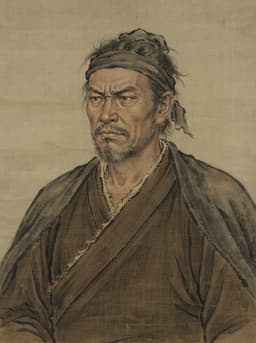
Chen Sheng
notableESTP
The conscript laborer whose desperate revolt broke Qin's spell of invincibility.
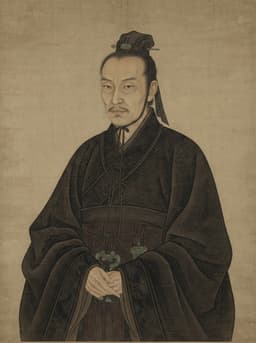
Zhao Gao
notableINTP
The eunuch who forged an emperor's will and called a deer a horse to test his court.
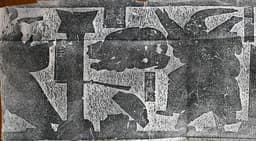
Jing Ke
obscureISFP
The swordsman whose failed dagger-thrust against the King of Qin became legend.
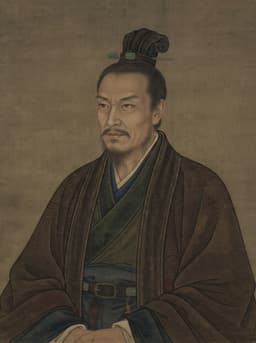
Lü Buwei
notableENTP
The merchant who bought a throne and lost it to the king he made.
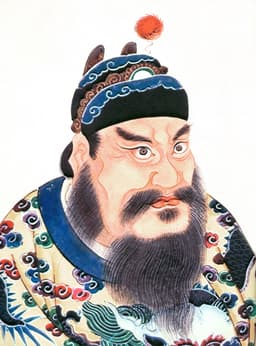
Qin Shi Huang
iconicENTJ
The First Emperor, who unified China and built an empire meant to last forever.
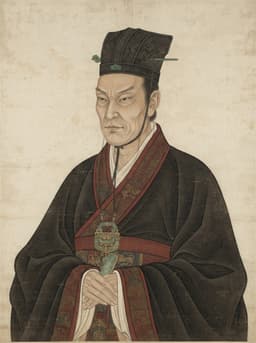
Li Si
notableESTJ
The chancellor who unified China's script and law, then forged the will that doomed it.

Han Fei
notableINTJ
Legalism's sharpest theorist, poisoned in prison by the classmate who feared him.

Sign up for monthly insights
Monthly insights into history's most influential figures — examined through psychology, context, and cognitive pattern. Less stereotype, more structure. History, but with a mind map.
Powered by Buttondown