 Historical Figure MBTI
4 min read
#47 · 2-16-26 · The Roman Republic
Marcus Tullius Cicero
The Voice of the Republic · The Man Who Commanded Language Where Others Commanded Legions
106 BCE — 43 BCE
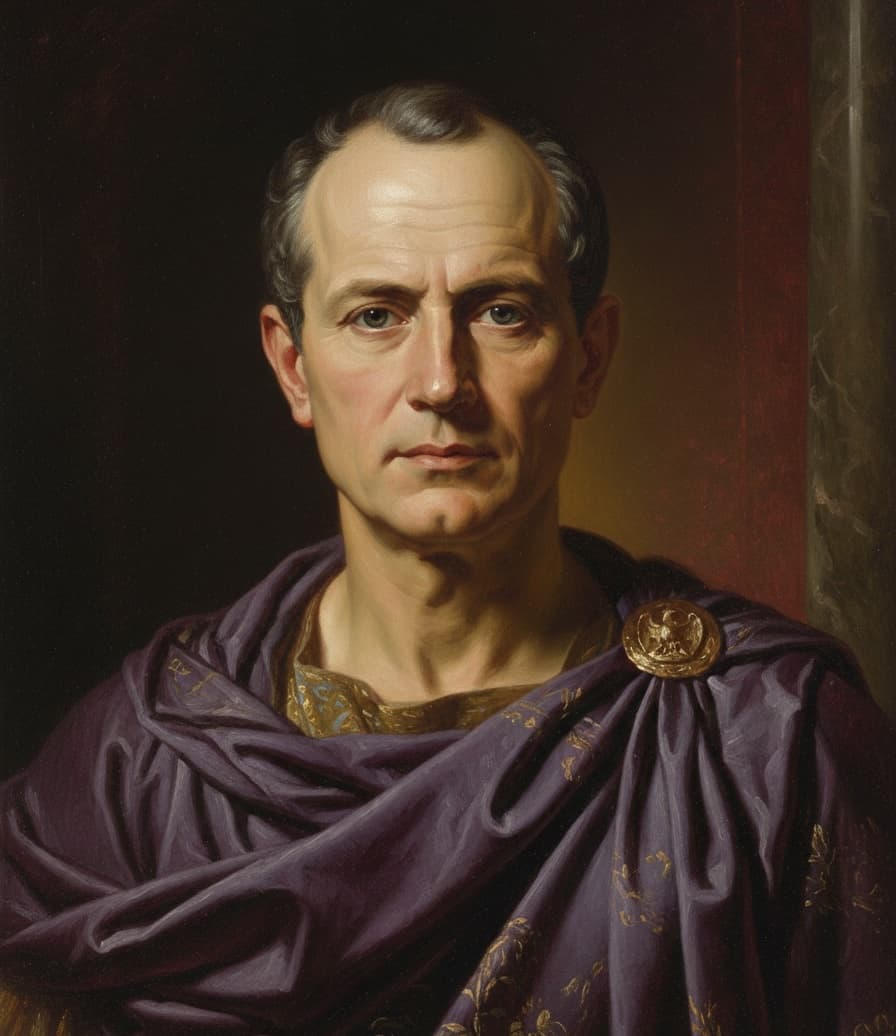
AI-assisted Portrait of Marcus Tullius Cicero.
The Voice of the Republic
Marcus Tullius Cicero did not command legions. He commanded language. Born outside Rome's ancient patrician elite, Cicero rose not through inheritance but through oratory. His ascent through the cursus honorum was powered by speech — speeches that could inflame, persuade, humiliate, console, or rally an entire Senate.
Where Caesar reshaped Rome through force, Cicero tried to reshape it through moral consensus. He believed words could hold the Republic together. That belief aligns with ENFJ: his political instinct was not domination, but alignment — not structural enforcement, but relational persuasion toward a shared civic ideal.
He believed words could hold the Republic together. That belief defines him.
Fe — Dominant
Cicero's speeches — from the Catilinarian Orations to the Philippics — were not detached intellectual exercises. They were moral interventions. He framed threats not merely as strategic dangers, but as corruptions of Rome's shared virtue. He appealed constantly to who Rome was supposed to be.
Even his political shifts reveal Fe navigation: he calibrated himself to preserve influence within institutions he believed must survive. He could publicly support causes he privately doubted — not from ideological emptiness, but from a conviction that stability, order, and collective direction mattered more than personal rigidity.
His insecurity in letters does not contradict Fe dominance — it reinforces it. Cicero was deeply sensitive to reputation, perception, and relational standing. His emotional transparency with Atticus reveals a man whose internal state was closely tied to his social and political world.
Ni — Auxiliary
Cicero did not treat politics as mere contest. He treated it as historical trajectory. He perceived Caesar's consolidation of power as symbolic — a turning point in Rome's story. He saw Antony not just as a rival, but as a threat to the moral arc of the Republic. His rhetoric often escalates toward existential framing: liberty versus tyranny, virtue versus decay.
That pattern recognition — Rome moving toward monarchy — drove his final gamble in elevating Octavian against Antony. He miscalculated. But the miscalculation came from vision, not opportunism.
Se — Tertiary
Unlike Brutus, who read philosophy before battle, Cicero thrived in the Forum. He enjoyed the arena. He was quick, responsive, sharp in live debate. His presence was performative in the best Roman sense — calibrated for impact. He did not withdraw under stress. He spoke. Even when it cost him his life.
Why Not ENTJ, ESFJ, ENTP, ENFP, or INFJ?
Why not ENTJ?
Cicero did not command through structural dominance or executive decisiveness. His power was influence, not enforcement. He persuaded; he did not impose.
Why not ESFJ?
His politics were future-framed and ideational, not rooted in tradition or social maintenance alone. He was not harmonizing existing structures — he was arguing for a moral vision of what Rome should be.
Why not ENTP?
His rhetoric was morally invested, not playful or detached. He argued to defend a civic ideal, not to win intellectual sport. The earnestness is the tell.
Why not ENFP or INFJ?
His motivation centered collective alignment rather than personal authenticity (Fi) or inward moral singularity (Ni-dom). Unlike Brutus, Cicero did not seal himself in quiet conviction. He processed publicly, persuaded constantly, and oriented himself toward shaping the emotional atmosphere of Rome.
The Voice in the Storm
Cicero lived as the Republic's voice — and died as a warning about what happens when words can no longer restrain power.
He made the final mistake of believing Octavian could be managed through political alignment.
He was wrong. And the Republic he defended died with him.
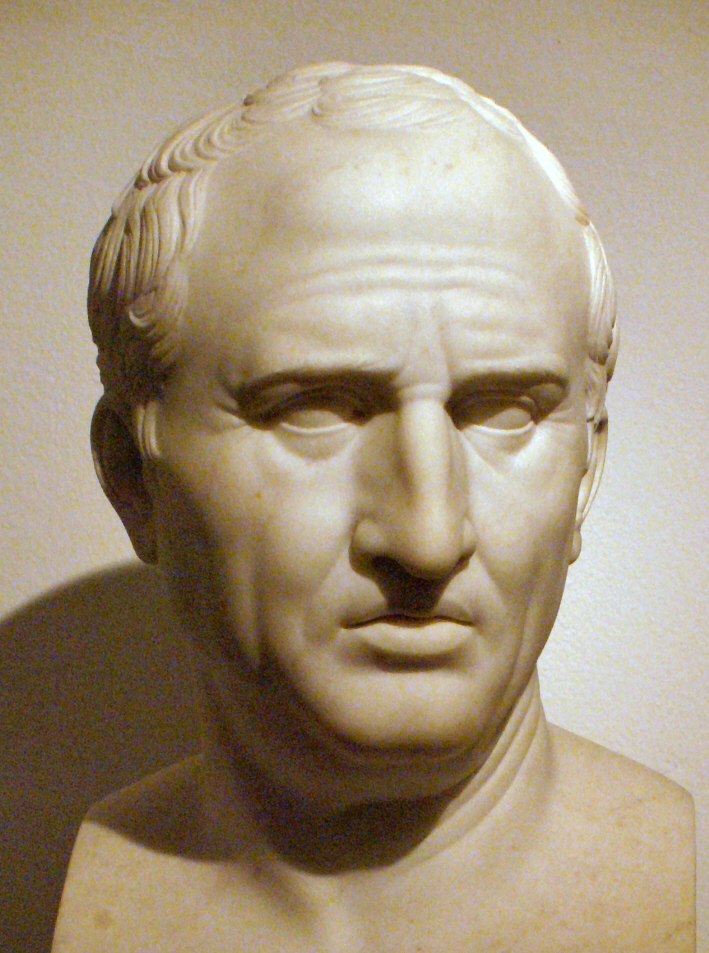
Connected Figures
Further Reading
- Cicero: A Turbulent Life — Anthony EverittAccessible biography tracing Cicero's rise from provincial origins to the center of Roman politics.
- Cicero the Philosopher: Twelve Papers — Jonathan Powell (ed.)Essays by leading classical scholars examining Cicero's philosophical works — the De Re Publica, De Finibus, and Tusculan Disputations.
- Selected Letters — Marcus Tullius Cicero, trans. P. G. WalshThe correspondence with Atticus and others — an unguarded window into Cicero's anxieties, ambitions, and affections.
- Cicero: The Statesman — W. K. LaceyScholarly analysis of Cicero's constitutional theory and his evolving relationship with the late-Republican power struggle.
- The Death of Caesar: The Story of History's Most Famous Assassination — Barry StraussPlaces Cicero in the wider context of the conspirators and the political fallout he helped shape.
