 Historical Figure MBTI
#882 · 6-26-26 · The American Civil War
David Herold
Conspirator · Booth's Companion in Flight
1842 — 1865
3 min read
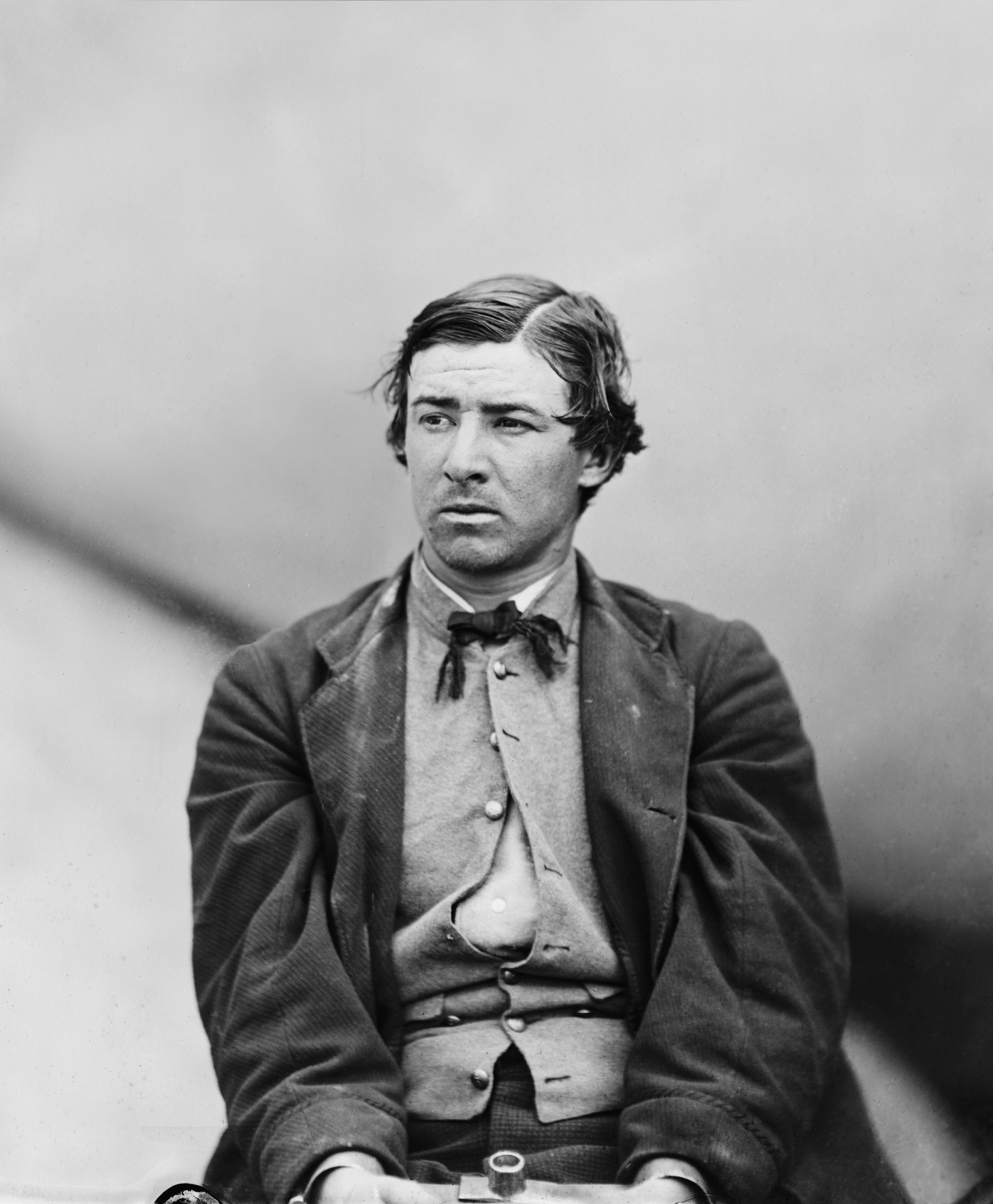
Portrait of David Herold
The Boy Who Followed
David Herold was twenty-two years old in April 1865, a pharmacy clerk from Washington who knew the back roads of southern Maryland the way other young men knew a favorite fishing hole — from years of idle hunting trips, not from any plan that those roads would one day matter. That knowledge was the whole of his usefulness to John Wilkes Booth, and it was enough. On the night of the assassination he led Lewis Powell partway toward Secretary of State William Seward's house, then peeled off before the attack went bloody upstairs. Twelve days of flight followed — swamps, tobacco barns, a doctor's spare room, a river crossing in the dark — and Herold stayed at Booth's side through all of it, to the very end at the Garrett farm, where Booth was shot and Herold, unarmed and unresisting, walked out with his hands raised.
Nothing in that record suggests a man weighing the justice of slavery, the fate of the Confederacy, or the political meaning of Lincoln's death. What it suggests is a young man captivated by an older, more magnetic one, willing to trade a clerk's dull future for the electric feeling of being needed by someone extraordinary. He is best read as an ISFP — not a planner, not an ideologue, but a follower whose loyalty ran on feeling and immediacy rather than principle, and who never once, across nearly two weeks on the run, seems to have asked himself where any of it was going.
Herold's crime was not conviction. It was proximity — a susceptible temperament that mistook a stronger man's certainty for a destination worth having.
Psychological Verdict
Everything documented about Herold points the same direction: a young man organized around immediate experience and immediate loyalty rather than an internal code or a long-range plan. He did not recruit anyone, argue policy, or seem to hold any settled conviction about the war he had just helped push into its final atrocity. What he had was an appetite for the present tense — the thrill of guiding men through familiar woods at night, the romance of riding with a famous actor turned fugitive — and a personal attachment to Booth strong enough to survive twelve days of hunger, exposure, and mounting danger without breaking. That is the shape of a low-agency, high-responsiveness personality: quick to bond, quick to act on impulse, and almost entirely absent the independent judgment that might have told him to peel away long before the barn at Garrett's farm caught fire around the only friend he seems to have been trying to keep.
The court that tried him made little distinction between follower and planner, and he hanged on July 7, 1865, alongside Mary Surratt, Lewis Powell, and George Atzerodt. History has been slightly kinder, if only by inches — remembering him less as a man who chose Lincoln's death than as a man who could not, in the end, choose to walk away from Booth.
Connected Figures
Further Reading
- Manhunt: The 12-Day Chase for Lincoln's Killer — James L. SwansonThe standard narrative account of Booth's flight, with Herold at his side throughout.
- American Brutus: John Wilkes Booth and the Lincoln Conspiracies — Michael W. KauffmanThe most thorough scholarly treatment of the conspiracy and its participants.
- Trial transcripts, Military Commission of 1865 — U.S. War DepartmentThe primary record of the case against Herold and his co-defendants.
