 Historical Figure MBTI
#885 · 6-26-26 · The American Civil War
Samuel Mudd
Physician · Set Booth's Leg · Convicted Conspirator
1833 — 1883
6 min read
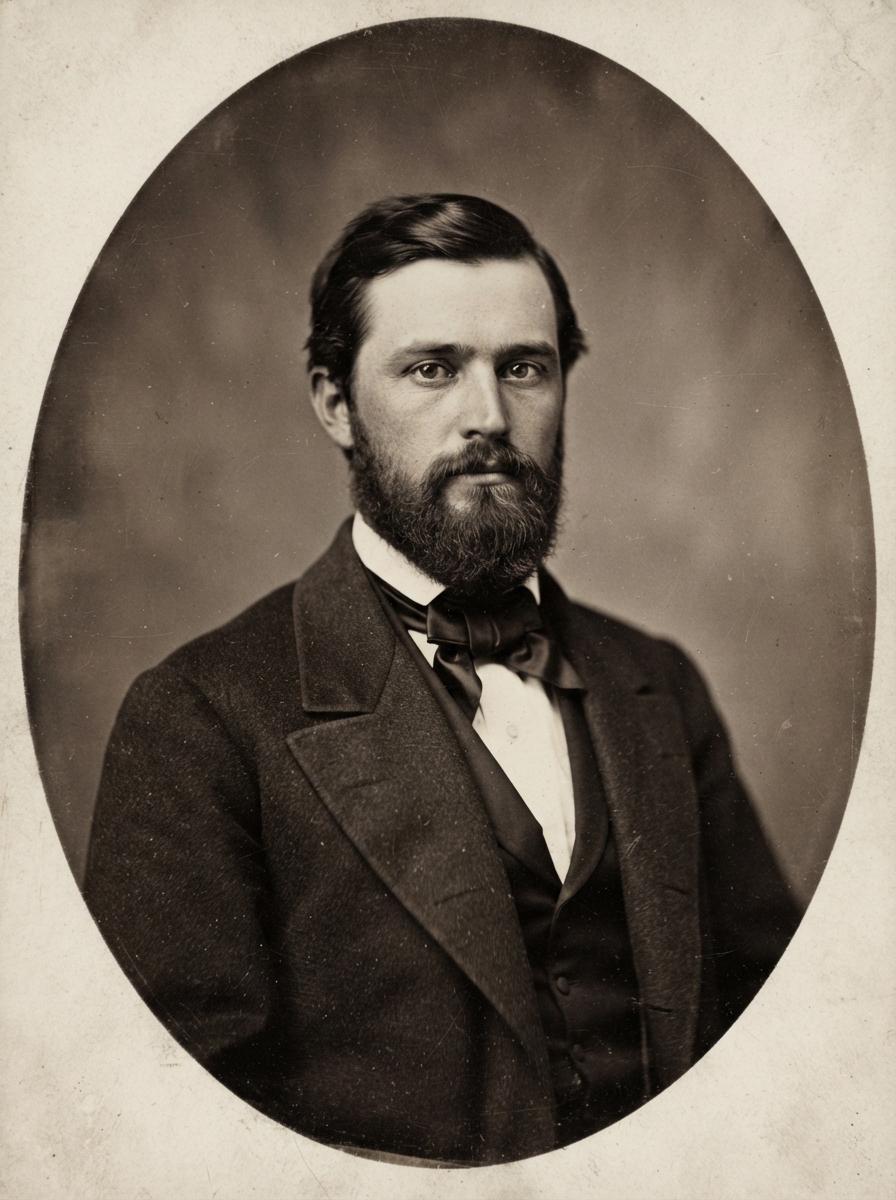
AI-assisted Portrait of Samuel Mudd
A Doctor Answers the Door
Just after four in the morning on April 15, 1865, a stranger arrived at Samuel Mudd's farmhouse near Bryantown, Maryland, with a shattered fibula and a story that did not quite hold together. Mudd, a country physician who had built his practice on treating whoever knocked, set the leg, fashioned a crude splint, and let the man rest through the day. By the time the stranger's name reached the newspapers — John Wilkes Booth, hours removed from shooting Abraham Lincoln at Ford's Theatre — Mudd had already sent him on his way south into the Maryland night.
What Mudd knew, and when, is the question that has never fully settled. He had met Booth at least once before the war — evidence enough for a military tribunal, sitting in the raw fury of the assassination's aftermath, to convict him of conspiracy and send him to life imprisonment at Fort Jefferson in the Dry Tortugas. He always maintained he had treated a stranger, nothing more, and did what any doctor bound by both oath and custom would do. History has never fully chosen a side, and perhaps it shouldn't have to: the man who emerges from the record is neither the cold conspirator of the tribunal's telling nor the wholly innocent victim of his family's later defense, but someone whose instincts ran toward quiet, unglamorous duty — instincts that read, on both the worst night of his life and the best, as unmistakably ISFJ.
An ISFJ doesn't ask who is at the door before opening it — Mudd's dominant Si bound him to the plain fact of a broken leg, and his auxiliary Fe would not let him leave a fellow sufferer untreated, whatever the cost to himself later proved to be.
The Habits of a Country Practice
Mudd's whole professional life ran on Si's quiet logic: a doctor treats the patient in front of him, follows the procedure he has always followed, and does not stop to interrogate the stranger's biography before setting the splint. He had spent years building the same unremarkable rhythm — riding out to farmhouses, tending the sick and the injured of rural Charles County, keeping the routines of a rural practice that asked little of him beyond competence and reliability. That groove was so deep that it did not bend even for the most consequential patient of his life. He treated Booth the way he had treated a hundred farmers with broken bones, because that was simply what the established pattern told him to do.
It is easy, in hindsight, to read that same steadiness as either damning or exculpatory, and both readings miss what was actually happening. Si does not improvise a new response to an unprecedented situation; it reaches for precedent. Mudd's insistence — to his dying day — that he had merely done his job as a physician is the voice of a man whose sense of self was built entirely on the reliability of ordinary duties, performed the same way regardless of who stood in the doorway. The tribunal wanted to see calculation. What the record more plausibly shows is a man who could not, even under the circumstances, think his way outside the procedural role he had occupied his whole adult life.
The Yellow Fever Ward
If Si explains why Mudd opened his door to Booth, it is Fe that explains what he did once the tribunal had shut a cell door on him. At Fort Jefferson, in the brutal isolation of the Dry Tortugas, Mudd tried to escape once and was punished harshly for it — a detail conspicuously absent from the more flattering versions of his story. But when yellow fever tore through the fort's garrison in 1867, killing the prison's own doctor within days, Mudd stepped into the vacancy without being asked twice. He treated soldiers and fellow prisoners alike, worked through outbreaks that killed dozens around him, and did so with no guarantee it would earn him anything but an unmarked grave beside the men he was trying to save.
That is Fe operating exactly as it does at its best in an ISFJ: not performed virtue, not a calculated bid for clemency, but an unwillable warmth toward the people immediately in front of him, the same instinct that had opened his door to a stranger with a broken leg. The garrison's officers ultimately petitioned for his release on the strength of that service, and Andrew Johnson pardoned him in 1869 — but the timing should not be mistaken for the motive. Mudd's Fe did not need an audience to function; it needed only people who were suffering and within reach.
Why ISFJ Over ISTJ
Why not ISTJ?
An ISTJ physician caught in Mudd's exact circumstances would likely have hardened into pure self-protection once implicated — closing ranks, minimizing contact, treating the tribunal as a procedural problem to be managed. Mudd instead spent his imprisonment doing the opposite: throwing himself into the care of sick guards and fellow convicts at Fort Jefferson during a fever outbreak that had already killed the prison's own doctor, with no assurance it would help his case and every reason to believe it might simply kill him too. That is not a Ti-Se pragmatist calculating odds; it is Fe reaching outward toward suffering it happened to be near.
The distinction matters because Mudd's defenders and prosecutors have both tended to flatten him into a single motive — either cold complicity or blameless bad luck — when the more interesting truth is that his psychology was never built around calculation at all. An ISTJ weighs consequences before acting. Mudd, by every account of both April 1865 and the fever ward two years later, simply acted, because someone in front of him needed a doctor and he was one. That is Si's habit and Fe's conscience working in tandem, not Ti's judgment weighing risk.
Connected Figures
Further Reading
- Manhunt: The 12-Day Chase for Lincoln's Killer — James L. Swanson2006 — the definitive narrative of Booth's flight and Mudd's role in it
- His Name Is Still Mudd: The Case Against Doctor Samuel Alexander Mudd — Edward Steers Jr.1997 — the leading case for Mudd's foreknowledge and guilt
- American Brutus: John Wilkes Booth and the Lincoln Conspiracies — Michael W. Kauffman2004 — situates Mudd within the broader conspiracy and tribunal
