 Historical Figure MBTI
#881 · 6-26-26 · The American Civil War
Mary Surratt
Boardinghouse Keeper · Conspirator · First Woman Executed by the US
1823 — 1865
6 min read
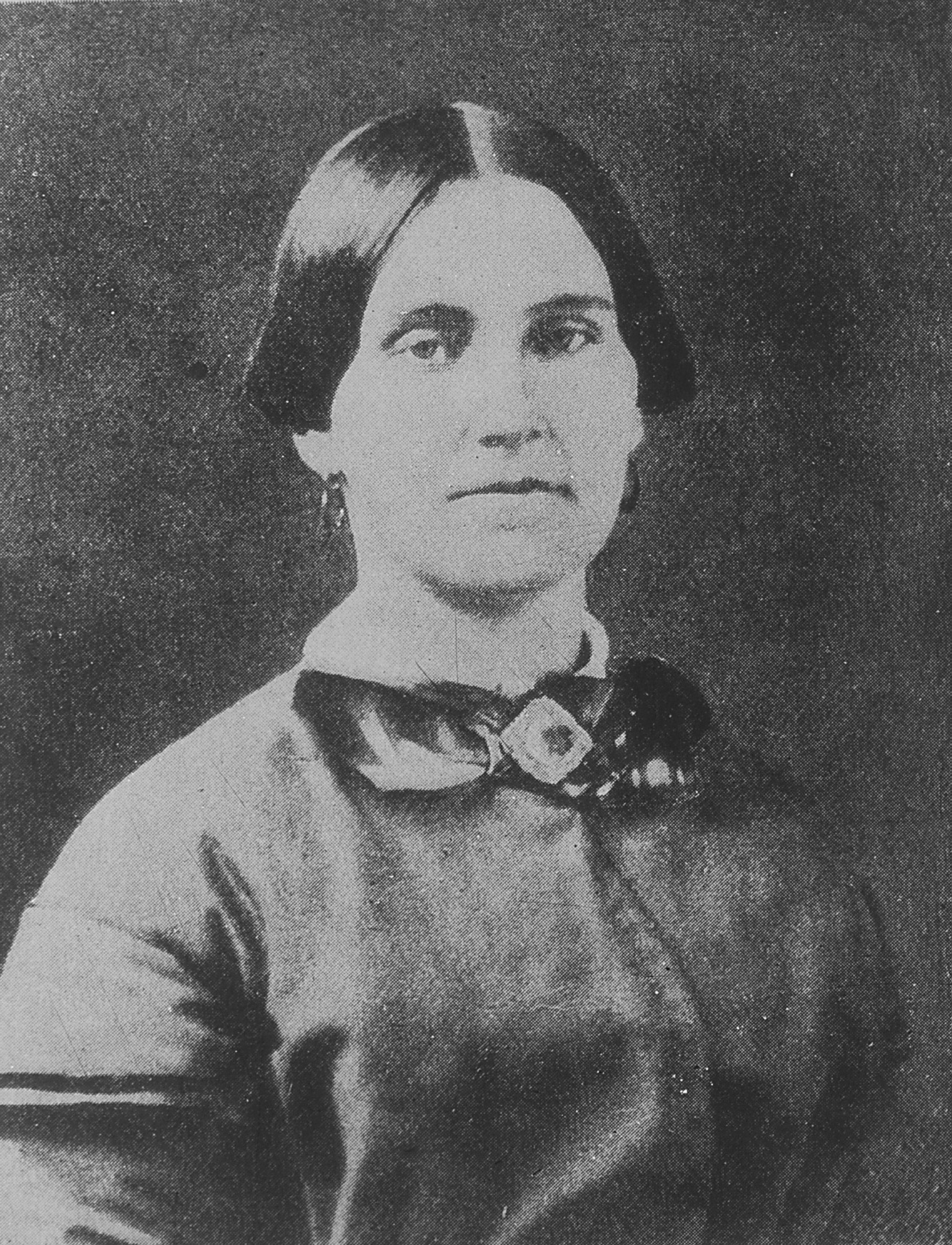
Portrait of Mary Surratt
The Boardinghouse on H Street
Mary Surratt kept a tidy house. That is, in the end, most of what the record allows anyone to say about her with confidence — that she rented rooms, balanced ledgers, and ran a boardinghouse through a war that had already cost her a husband and a livelihood in Maryland. Widowed at forty, left with debts and a tavern she could not make solvent, she did what a woman of her practical bent did: sold what she could, moved to a rowhouse at 541 H Street in Washington, and took in lodgers. One of those lodgers, in the winter of 1864-65, was a well-known actor named John Wilkes Booth.
Whether Mary Surratt understood what was being plotted at her own table is the question that has outlived her by a century and a half. The government said she did — that she hosted the meetings and passed along a message the night of the assassination that helped the killers escape. A military tribunal convicted her in six weeks, largely on testimony from a boarder, Louis Weichmann, who had every incentive to talk his way out of the gallows himself. She was hanged on July 7, 1865, the first woman executed by the federal government, protesting her innocence to the end. What is not in dispute is the temperament underneath the trial: an ISTJ woman, steady to the point of opacity, who gave her interrogators almost nothing to work with — which some read as guilt, and others as the reticence any private, dutiful person shows a hostile room, regardless of what she has done.
Mary Surratt was ISTJ to the marrow — a Si-Te woman whose composure under interrogation looked, to a nation hungry for a villain, exactly like guilt.
A House Kept in Order
Dominant Si is what let Mary Surratt keep functioning while the world around her came apart. Her husband's drinking and mismanagement left her a tavern in debt and land she eventually had to lease and sell. Rather than fold, she rebuilt around what she already knew — hospitality, thrift, the rhythms of a household — and transplanted them wholesale into a Washington rowhouse. Boarders paid rent, meals went out on schedule, and the machinery of daily life kept running underneath a war that had upended nearly everyone else's.
That same Si is what makes her so hard to read in the historical record. She left behind almost no reflective writing, nothing that lets a biographer climb inside her head the way court documents let them climb inside her son's or Booth's. What she left was routine — receipts, errands, a house run the same way whether or not treason was being whispered in the front parlor. Sensing types anchored in the concrete rarely narrate their own inner lives for posterity; they simply do the next practical thing, which is exactly what makes it so hard, from this distance, to know how much she understood about what her lodgers were doing.
Business, Not Sentiment
Auxiliary Te gave that household its edge of competence. Surratt negotiated the lease of her Maryland tavern to John Lloyd rather than let the property sit idle, chased down debts owed to her late husband's estate, and managed a house full of strangers with the brisk efficiency of someone who understood a business — even one entangled with dangerous men — had to be run on terms, not feelings. Contemporaries who found her cold were, more precisely, encountering a woman who treated obligations as obligations, to be discharged, not agonized over.
That efficiency became the prosecution's whole case. The errand to John Lloyd's tavern the afternoon of the assassination — relaying a message about the "shooting irons" left there weeks earlier — was, on its face, exactly the kind of practical task a Te-using landlady ran without asking too many questions about why. Whether it was an innocent favor or a knowing act in furtherance of murder, the tribunal never had to prove; it only had to point at a woman capable, visibly, of getting things done, and let the jury supply the motive.
The Loyalty She Would Not Sell
Tertiary Fi surfaces in Surratt not as warmth extended outward but as a private, load-bearing loyalty — above all to her son, John Surratt Jr., who had recruited Booth's inner circle and fled the country rather than face the gallows himself. She never implicated him, never offered up the one name that might have redirected the tribunal's attention. Whether that silence was principled protection of a child she believed innocent, or willful blindness to what she already knew, is unrecoverable now — but the shape of it is textbook interior Fi: a value held so privately it costs the holder everything and explains nothing to the people demanding an account of it.
It is worth sitting with the asymmetry: her son escaped to Canada and then Europe while his mother hanged in his place, in effect, for a plot the government could never prove she planned. If she was shielding him, it was the quietest, costliest kind of loyalty — one that left no letters justifying itself, nothing but a woman going to her death still declining to say more than she had decided to say.
Why ISTJ Over ISFJ
Why not ISFJ?
An ISFJ's discretion tends to read as warm and protective — a quiet accommodation that puts others at ease even while withholding. Surratt's reticence read as the opposite: cold, unyielding, closed. Under interrogation she gave the tribunal almost nothing to work with, which is the mark of a self-contained Si-Te steadiness rather than an Fe-toned instinct to soothe. Her guardedness protected no one visibly and comforted no one watching; it simply held.
The distinction is close to the whole case. An ISFJ landlady who suspected treason under her roof might have tried, quietly, to manage the room — to smooth things over, to protect the people around her through warmth even while concealing facts. Surratt did none of that. She ran her house, kept her ledgers, and said as little as possible to anyone, including — it seems — her own defense. That is Si-Te self-containment, not Si-Fe accommodation, and it is why history has never decided whether her silence was innocence or complicity: both look, from an ISTJ, exactly the same.
Connected Figures
Further Reading
- The Assassin's Accomplice: Mary Surratt and the Plot to Kill Abraham Lincoln — Kate Clifford Larson2008
- Manhunt: The 12-Day Chase for Lincoln's Killer — James L. Swanson2006
- Mary Surratt: An American Tragedy — Elizabeth Steger Trindal1996
