 Historical Figure MBTI
#1030 · 8-1-26 · The Old Kingdom
Djoser
The King Who Built in Stone
r. c. 2686 – 2649 BCE
4 min read
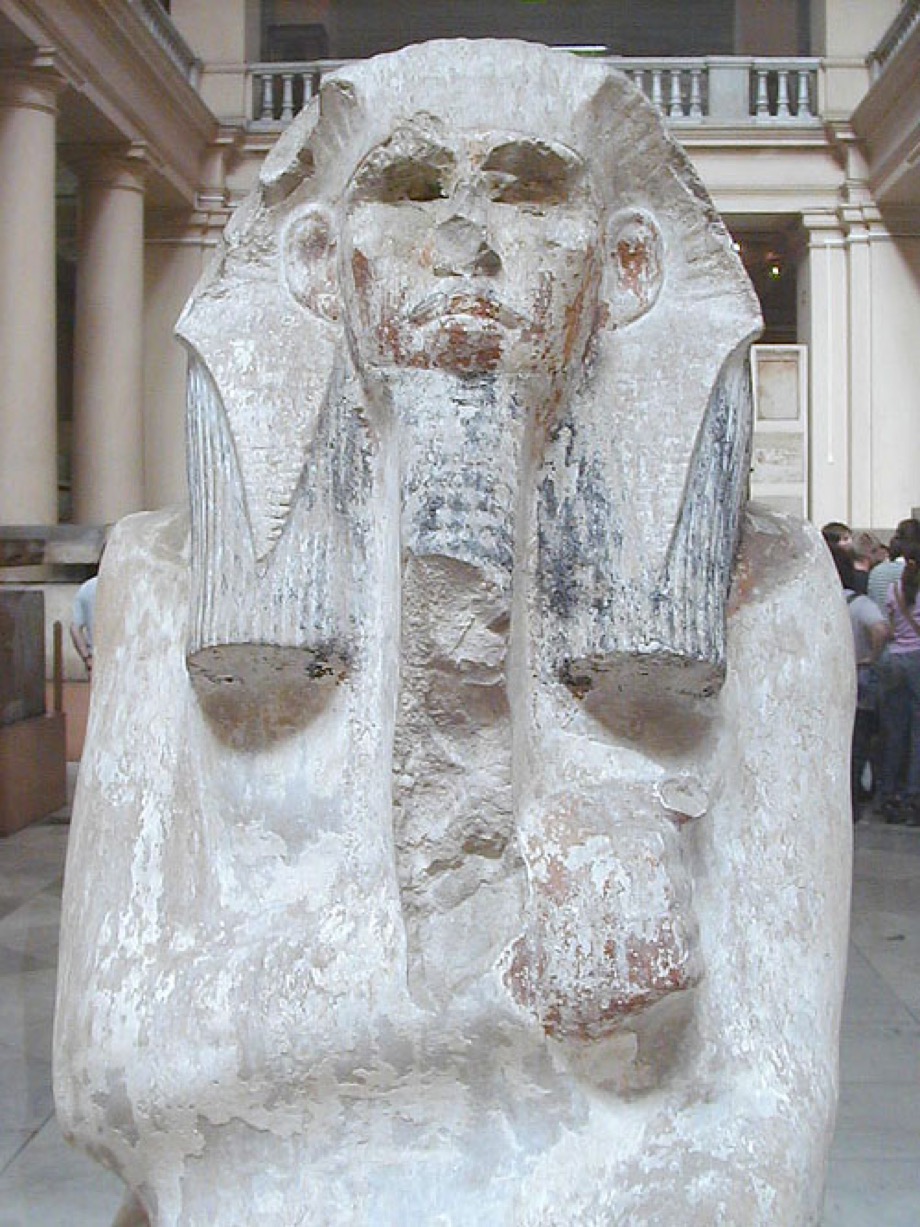
Statue of Djoser
The King Who Trusted the Plan
Djoser did not invent the Step Pyramid. He commissioned it, funded it, and — this is the part history keeps forgetting to credit him for — let it run for the better part of two decades without losing his nerve. At Saqqara, his architect Imhotep proposed something no one in the Nile Valley had built before: not a low mastaba of mudbrick, but tier upon tier of dressed limestone rising sixty meters into the desert sky. It was a colossal bet on an unproven method, made by a man who by every surviving trace of his reign — administrative seals, a stable succession, a court that functioned without visible rupture — was not a gambler by temperament.
That is the puzzle Djoser presents, and it resolves cleanly once you stop looking for a visionary and start looking for a custodian. The vision was Imhotep's. Djoser's contribution was structural in the other sense of the word: he built the institutional scaffolding — labor levies, quarry logistics, an unbroken chain of royal authority — that let an experimental idea survive contact with reality for twenty years. Later Egyptians, centuries on, remembered his reign not for drama but for order, a benchmark against which their own troubled ages were measured.
Djoser was an ISTJ, dominant Si — a king who measured his reign not in what he imagined but in what he reliably sustained.
Continuity as a Governing Principle
Dominant introverted sensing shows up in Djoser not as caution against novelty but as a fidelity to process once a course is set. The Step Pyramid complex at Saqqara is, in its bones, a conservative structure wearing a radical shape: its walled enclosure mimics the palace architecture of the earlier dynasties, its dummy buildings replicate ritual spaces that already existed in perishable form. Djoser and his court translated the known world into permanent stone rather than inventing a new one from nothing.
That translation took patience measured in years, not seasons — a willingness to keep funding the same quarry gangs, the same transport routes, the same ritual calendar, season after season, without the project ever delivering a finished result until the very end. A reign remembered for order rather than incident is, in practice, a reign spent maintaining thousands of small continuities that never individually made the record but collectively built a pyramid.
The Machinery Behind the Monument
Auxiliary extraverted thinking is what let Si-driven steadiness become an actual pyramid instead of a well-organized stagnation. Someone had to authorize Imhotep's unprecedented design, allocate the state's resources to it over a scale of time no predecessor had attempted, and keep that allocation flowing through the ordinary friction of administration. Djoser's court left behind the apparatus of a functioning bureaucracy — seal impressions, titles, evidence of a state that could execute a multi-decade capital project without the throne itself becoming its bottleneck.
This is Te in service of Si rather than Te as personal ambition: the king does not appear to have needed the project to prove anything about himself. He needed it executed correctly, on the resources the state could bear, by the man he had entrusted with it. That is a subtly different posture than the empire-building Te of a conqueror, and it is the posture that got the first stone monument in history actually finished.
A Reign Without a Cult of Personality
Tertiary introverted feeling surfaces in what Djoser did not do: he did not crowd Imhotep's name off the record, and he did not reshape the project's purpose around his own glorification the way later kings so often did. The complex at Saqqara reads as a shared achievement — a king's resources married to an architect's design — and that restraint suggests a private conviction about what the project was for that did not need constant external validation.
It is a quiet function in a quiet king: Fi here is less about passionate personal cause than about a settled internal sense of proportion, one that let Djoser fund a monument to outlast him without needing every stone to shout his name alone.
Why ISTJ Over ESTJ
Why not ESTJ?
An ESTJ pharaoh backing an unprecedented stone monument would more likely have made himself the visible engine of the project — issuing directives, asserting personal command over its design. What survives of Djoser instead points to a king who receded behind his architect, sustaining rather than steering, his authority expressed through what he permitted to continue rather than what he personally drove forward. That is introverted, not extraverted, sensing at the helm.
The distinction matters because it changes what the Step Pyramid means as evidence. It is not a monument to one man's vision executed by an obedient state — it is a monument to institutional patience, to a king who let a genius work for twenty years because the structures of continuity he maintained made that possible.
Connected Figures
Further Reading
- The Complete Pyramids — Mark LehnerThe standard survey of pyramid construction, including Saqqara's Step Pyramid complex.
- The Pyramids — Miroslav VernerDetailed archaeological account of the Third Dynasty building program.
- The Rise and Fall of Ancient Egypt — Toby WilkinsonPlaces Djoser's reign within the wider arc of Old Kingdom state formation.
- A History of Ancient Egypt — Nicolas GrimalCovers the administrative context that sustained a multi-decade royal project.
