 Historical Figure MBTI
#909 · 7-3-26 · The Rise of Fascism
Édouard Daladier
Prime Minister of France · The Bull Who Signed at Munich
1884 — 1970
5 min read
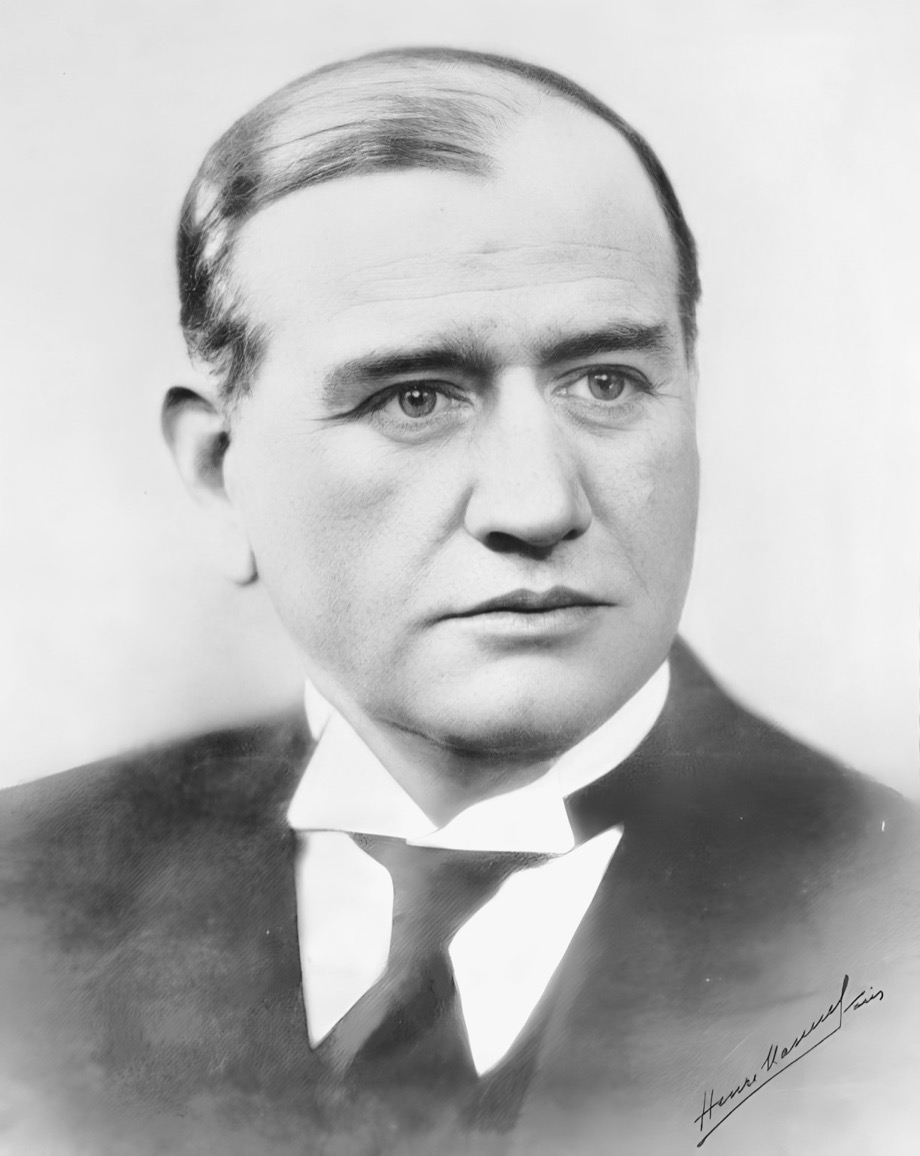
Portrait of Édouard Daladier
The Bull Who Expected to Be Booed
When Édouard Daladier flew back to Paris from Munich on 30 September 1938, having signed away the Sudetenland to avert a war he believed France was not ready to fight, he expected the crowd waiting at Le Bourget to jeer him as a coward. He had said as much to his aides on the plane. Instead the crowd cheered — wildly, with relief — and Daladier, watching them from the car, reportedly muttered something to the effect that the fools did not understand what they were celebrating.
That gap between what he privately dreaded and what he publicly executed is the whole of the man. Nicknamed "the Bull of Vaucluse" for a stocky build and a gruff, taciturn public manner, Daladier looked like conviction made flesh. He was in fact something quieter and sadder — a former history teacher and decorated WWI sergeant who had watched France bleed white between 1914 and 1918, and who signed at Munich not out of Chamberlain's naive hope that Hitler could be satisfied, but out of a felt, almost paternal horror at what another war would cost his countrymen.
Daladier was an ISFJ, and Munich shows the type at its most exposed: a dominant Si anchored in the trauma of the last war, executing a duty its own Fe told it the nation could not survive refusing.
Unlike Chamberlain, Daladier never believed Munich had bought peace. He believed it had bought time, at a moral cost he alone in the room seemed to feel fully — and he spent the eighteen months after it rearming France as fast as the treasury and the factories would allow.
Governed by the Memory of 1918
No single fact about Daladier explains him better than this: he had fought at the front in the First World War, been decorated for it, and returned to a France that had lost nearly 1.4 million men — a wound, per capita, far deeper than Britain's. Chamberlain came to Munich as a businessman balancing a ledger. Daladier came to it as a veteran who could still see the casualty lists. His dominant Si did not process the crisis of 1938 as an abstract diplomatic problem; it processed it through the lived, remembered texture of the last war, and it would not permit him to sign anything that risked repeating it without exhausting every alternative first.
That same backward-anchored realism made him, paradoxically, the more clear-eyed of the two men at Munich. Chamberlain returned waving paper and promising peace in his time. Daladier returned convinced he had only delayed the reckoning, and pushed French rearmament — aircraft production, the Maginot fortifications, army modernization — harder than any French government had managed in the preceding decade. Si does not forget; it builds the next decision out of the wreckage of the last one.
Duty to the Nation, Not to the Argument
Daladier's auxiliary Fe explains why Munich was, for him, an act of dread rather than calculation. He did not sign because a cold accounting of French military readiness told him to — though that accounting existed and was grim. He signed because he could not bear to be the man who chose, from a position of relative safety in Paris, to send another generation of French sons to die in the numbers the last war had demanded. That is a felt, almost parental obligation to the collective, not a contractual weighing of interests — the emotional register is the tell that separates him from a colder Thinking-dominant counterpart making the identical decision.
The same Fe surfaces in his public persona: the gruff Bull of Vaucluse manner was itself a performance calibrated to what the moment needed from a leader — stolid reassurance — even as the man beneath it was consumed by private anxiety. When the war he had tried to forestall finally came in 1939, Daladier declared it grimly and without triumph, and led France through the anxious inaction of the "Phoney War" with the same weary sense of obligation, resigning in March 1940 once it became clear his government could no longer command confidence.
Why ISFJ Over ISTJ
Why not ISTJ?
An ISTJ would have reached the same Munich decision through cold procedural logic — troop counts, treaty obligations, a dispassionate cost-benefit ledger. Daladier's own accounts, and those of aides who watched him on the flight home, describe something warmer and more anguished: an acute, almost parental dread of what he was about to spare France, and what he might yet fail to spare it. That emotionally loaded reluctance, expecting to be hated for a decision he made anyway out of care for people he would never meet, is Fe under strain, not Te running the numbers.
The distinction is not academic. It explains why Daladier, alone among the Munich delegation, treated the agreement as a wound rather than a victory — and why he spent the year that followed trying, with everything the French state could muster, to make sure it would not need signing again.
Connected Figures
Further Reading
- Édouard Daladier — Elisabeth du RéauThe standard French-language biography, drawing on his private papers and diaries.
- The Collapse of the Third Republic — William ShirerA sweeping account of interwar France that places Daladier's Munich decision in full context.
- Appeasing Hitler — Tim BouverieContrasts Daladier's grim realism with Chamberlain's genuine optimism at Munich.
