 Historical Figure MBTI
4 min read
#107 · 3-12-26 · The Founding Generation of USA
Elizabeth Kortright Monroe
First Lady, diplomatic partner, and dignified steward of early American political society.
1768 — 1830
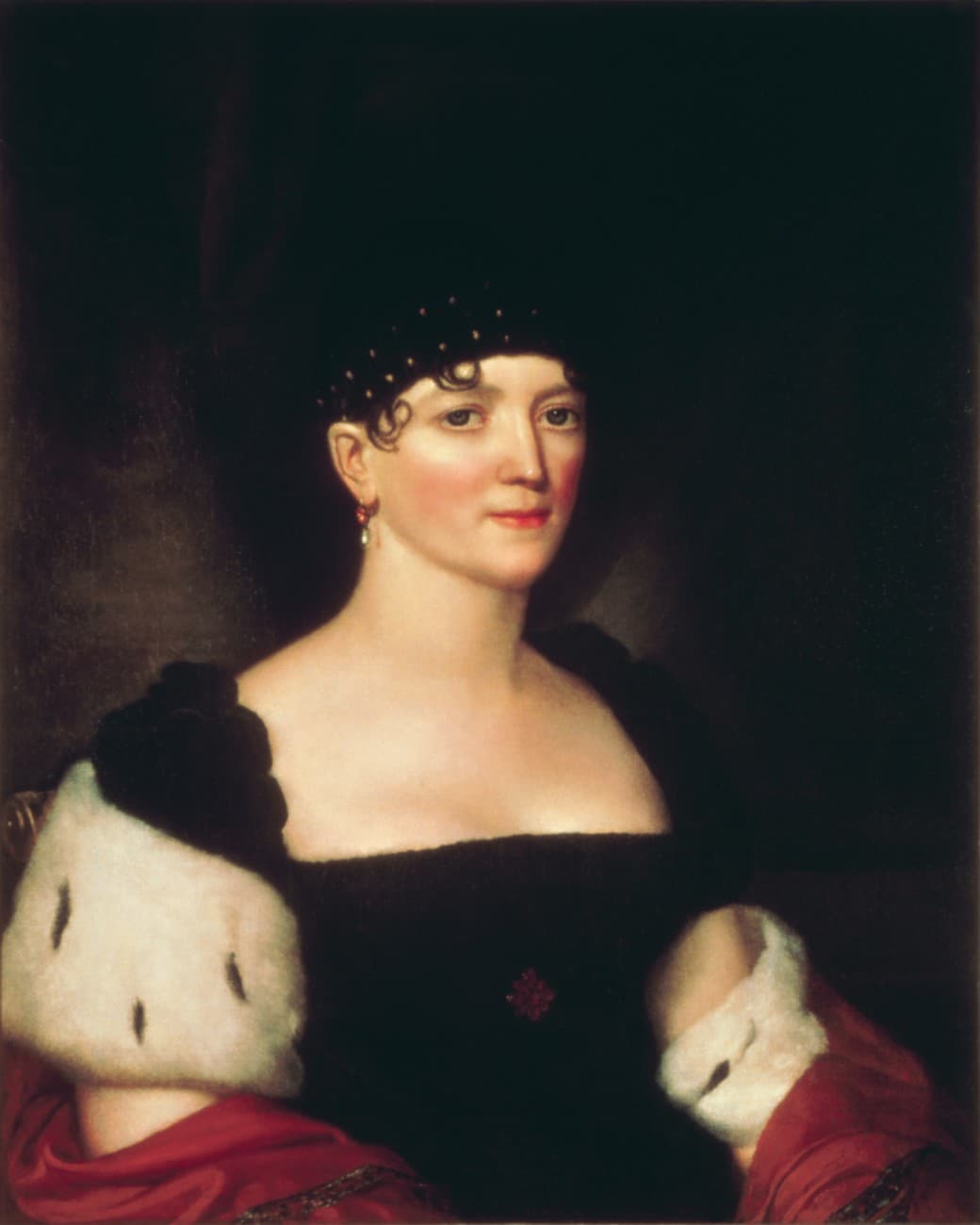
Portrait of Elizabeth Kortright Monroe.
The Reserved Lady of the Republic
Born on June 30, 1768, in New York City, Elizabeth Kortright grew up in a prosperous merchant family during the closing years of the colonial era. At seventeen she married a young Revolutionary War veteran, James Monroe, just as his political life was beginning to unfold. Elizabeth soon found herself accompanying him into the demanding social world of diplomacy and national politics.
During Monroe's early diplomatic assignments in France and Britain, Elizabeth became accustomed to the formal etiquette of European courts. These experiences shaped her public demeanor for the rest of her life. Observers frequently noted that she carried herself with a level of dignity and composure that seemed closer to European aristocratic society than to the more relaxed style of early American political life.
Her time in France produced one of the most dramatic episodes associated with her name. While Monroe served as American minister during the turbulent years of the French Revolution, Elizabeth personally visited the imprisoned Adrienne de La Fayette, whose husband had been a celebrated ally of the American cause. Elizabeth's visit signaled American concern and helped generate pressure that eventually contributed to Adrienne's release.
When Monroe later became president in 1817, Elizabeth assumed the role of First Lady. Her style differed sharply from that of her predecessor, Dolley Madison. Where Dolley had hosted large and lively gatherings that brought Washington's political factions together, Elizabeth preferred smaller, more formal events and maintained a noticeable social reserve.
That's the ISTJ signature: Si propriety paired with Te composure — what observers called aloofness was simply a standard of dignity she never wavered from.
Si — Dominant
Elizabeth Monroe's personality appears strongly oriented toward tradition and propriety — reflecting dominant Si.
Observers repeatedly described her as dignified, formal, and attentive to social etiquette. Her years living within European diplomatic circles reinforced a respect for structured social conduct, which she later maintained as First Lady. Rather than improvising socially or adapting to public expectations, Elizabeth seemed guided by an internal model of proper behavior and carried it consistently into her role in Washington. This emphasis on continuity and established standards reflects dominant Introverted Sensing.
Te — Auxiliary
Although reserved in public, Elizabeth demonstrated practical competence in managing the presidential household and navigating diplomatic society — reflecting auxiliary Te.
She understood the demands of political life and supported her husband's career by maintaining the stability and respectability expected of a national leader's family. Her composure in difficult environments, including the turbulent political atmosphere of revolutionary France, suggests a steady ability to manage responsibilities effectively. Auxiliary Te supported her sense of order and duty.
Fi — Tertiary
Elizabeth's loyalty to family and commitment to her husband's career reveal a quieter moral dimension — reflecting tertiary Fi.
Her intervention on behalf of Adrienne de La Fayette during the French Revolution demonstrates a willingness to act according to personal conviction even within dangerous political circumstances. Though she did not publicly advocate political causes, her actions suggest a private sense of principle guiding her decisions. This inward loyalty aligns with tertiary Introverted Feeling.
Ne — Inferior
Elizabeth Monroe showed little inclination toward intellectual experimentation or public political debate — reflecting inferior Ne.
Unlike some members of the founding generation who constantly pursued new ideas, Elizabeth preferred stable environments and familiar social structures. Her cautious and structured approach to public life reflects the relative absence of exploratory Extraverted Intuition.
Why ISTJ Over ISFJ
Why not ISFJ?
ISFJ is sometimes proposed because of Elizabeth's loyalty and dedication to family life. However, ISFJs often express their care through warm interpersonal engagement and community-oriented hospitality. Elizabeth Monroe's reputation was quite different. Contemporary observers frequently described her as graceful but emotionally reserved, maintaining a certain distance even in social settings. Her conduct emphasized dignity and propriety more than relational warmth, which aligns more clearly with Si–Te than Si–Fe.
Connected Figures
Further Reading
- The Last Founding Father: James Monroe and a Nation's Call to Greatness — Harlow Giles UngerCovers Elizabeth's Paris years at James Monroe's side, including her intervention for Adrienne de Lafayette.
- James Monroe: A Life — Tim McGrathDetails the diplomatic partnership between Elizabeth and James Monroe across four decades of public life.
- Founding Mothers: The Women Who Raised Our Nation — Cokie RobertsPlaces Elizabeth among the founding-era wives whose diplomatic and social labor shaped the young republic.
- Liberty's Daughters: The Revolutionary Experience of American Women, 1750-1800 — Mary Beth NortonContext for the constrained but consequential role Elizabeth occupied as a diplomat's wife and First Lady.
