 Historical Figure MBTI
4 min read
#106 · 3-12-26 · The Founding Generation of USA
James Monroe
Soldier, diplomat, and steady steward of the early American republic.
1758 — 1831
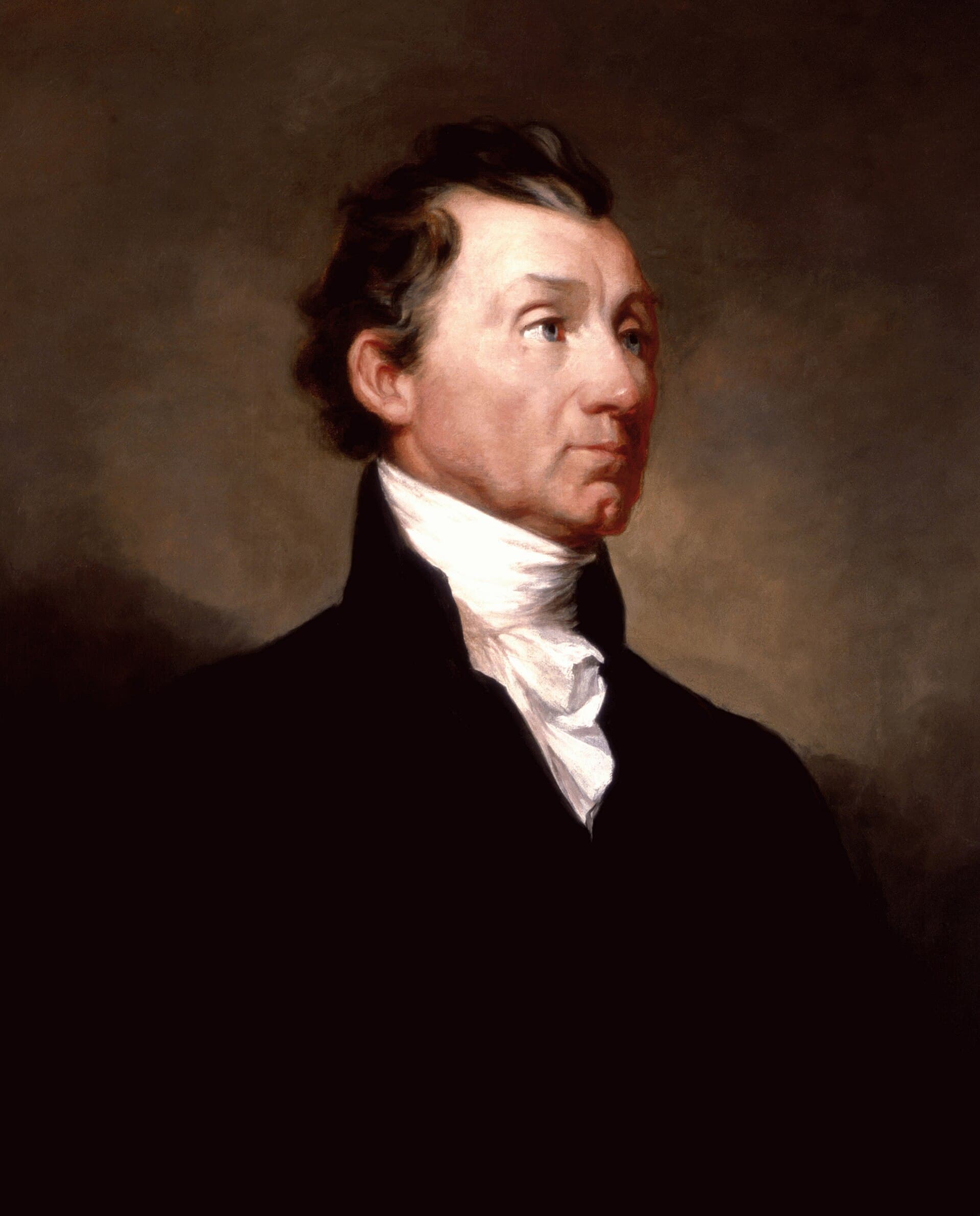
Portrait of James Monroe.
The Loyal Statesman
Born on April 28, 1758, in Westmoreland County, Virginia, James Monroe belonged to the generation that fought to create the United States and then spent decades ensuring the fragile new nation survived. Unlike some of the towering personalities of the founding era, Monroe was not remembered primarily as a philosopher, an orator, or a revolutionary theorist. Instead, his reputation rested on something quieter but equally essential: reliability.
Monroe entered public life through war. As a young student at the College of William & Mary, he left his studies to join the Continental Army during the American Revolution. At only eighteen years old, he fought in the daring winter campaign that included the famous Battle of Trenton, where he was severely wounded while helping capture British artillery. The experience nearly cost him his life and left him with a lifelong scar, but it also established the reputation for courage and endurance that followed him throughout his career.
After the war, Monroe studied law under Thomas Jefferson, beginning a lifelong association with the Virginia political circle that also included James Madison. Within this circle, Monroe occupied a distinct role. Jefferson provided ideological vision, Madison offered constitutional theory, and Monroe served as the dependable administrator who could translate ideas into functioning government. His career reflected that reliability: governor of Virginia, ambassador to France, Secretary of State, and even Secretary of War simultaneously during the War of 1812.
In 1817, Monroe became the fifth President of the United States. His presidency came during a moment when the young republic desperately needed stability, and Monroe's calm leadership helped usher in what journalists later called the “Era of Good Feelings.” Monroe was widely respected across political factions for his integrity and steady judgment. He did not seek to reshape the system. He ensured the system worked.
That's the ISTJ signature: Si continuity paired with Te execution — he didn't seek to redefine the republic, he kept it standing.
Si — Dominant
Monroe's life was characterized by stability, duty, and respect for institutional continuity — reflecting dominant Si.
From his early service in the Revolutionary War to decades of public office, he demonstrated a consistent commitment to the structures and traditions of the young republic. His leadership style emphasized preservation and stewardship rather than innovation. Even as president, Monroe largely maintained the political framework established by earlier leaders rather than dramatically redefining it. His administration focused on strengthening national unity and reinforcing the legitimacy of American institutions. This long-term dedication to stability reflects dominant Introverted Sensing.
Te — Auxiliary
Although not an aggressive political personality, Monroe proved highly capable in administrative roles — reflecting auxiliary Te.
He managed complex diplomatic missions, coordinated wartime government operations, and oversaw multiple departments simultaneously during the War of 1812. His ability to handle practical responsibilities and implement policy effectively suggests strong Te working in service of his sense of duty. He could translate principles into functioning institutions.
Fi — Tertiary
Monroe's loyalty to friends and political allies became one of the defining features of his character — reflecting tertiary Fi.
He remained deeply devoted to the Virginia political circle throughout his life, maintaining close relationships with Jefferson and Madison even during moments of political disagreement. His actions often reflected personal principles of honor and loyalty rather than pure political calculation. This quiet moral compass aligns with tertiary Introverted Feeling.
Ne — Inferior
Monroe did not display the exploratory intellectual curiosity seen in some of his contemporaries — reflecting inferior Ne.
Unlike Madison, who spent years studying political theory, or Jefferson, who constantly pursued new ideas and philosophies, Monroe focused primarily on practical governance. His thinking remained grounded in established principles and experience rather than theoretical speculation.
Why ISTJ Over ESTJ
Why not ESTJ?
ESTJs typically project strong executive authority and assertive leadership. Monroe, by contrast, was widely regarded as personally modest and even somewhat reserved. He rarely dominated political discussions through force of personality and instead relied on steady judgment and careful administration. While he held many positions of authority, his reputation was not that of a commanding executive but of a reliable steward of government institutions. This distinction points more clearly toward Si–Te than Te–Si.
Connected Figures
Further Reading
- The Last Founding Father: James Monroe and a Nation's Call to Greatness — Harlow Giles UngerThe essential full-life biography of Monroe, from Trenton through the presidency and the Era of Good Feelings.
- James Monroe: A Life — Tim McGrathA newer, deeply sourced account of Monroe's career, including his rivalry with Hamilton over the Reynolds affair.
- Alexander Hamilton — Ron ChernowCovers the Reynolds affair disclosure from Hamilton's side of the long Monroe-Hamilton rivalry.
- What Hath God Wrought: The Transformation of America, 1815-1848 — Daniel Walker HoweSituates Monroe's presidency within the nineteenth-century republic his administration helped shape.
