 Historical Figure MBTI
5 min read
#74 · 2-26-26 · The Founding Generation of USA
Elizabeth Schuyler Hamilton
Philanthropist, Community Builder, and Guardian of a Founding Legacy
1757 — 1854
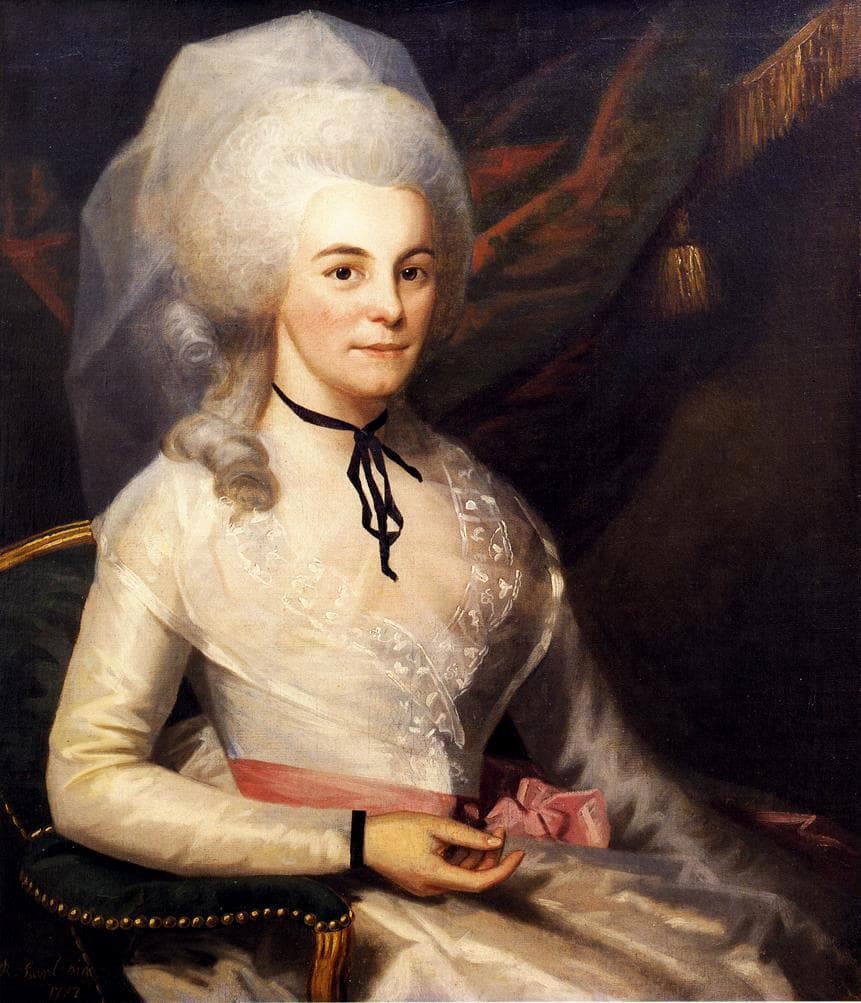
Portrait of Elizabeth Schuyler Hamilton.
The Keeper of the Memory
Born in 1757 into the powerful Schuyler family of New York, Elizabeth Schuyler Hamilton grew up in one of the most politically connected households in the American colonies. Her father, Philip Schuyler, served as a major general during the Revolutionary War, and the family home functioned as an informal hub for military leaders, diplomats, and political figures.
In this environment she met the young and ambitious Alexander Hamilton. The two married in 1780, beginning a partnership that would place Eliza at the center of the political storms of the early republic.
Her life, however, would ultimately be defined less by politics than by resilience and stewardship. After the deaths of her son Philip and later Hamilton himself in the duel with Aaron Burr, Eliza spent decades caring for her family, serving her community, and preserving her husband’s legacy.
She co-founded the New York Orphan Asylum Society—one of the first private orphanages in New York—and remained active in its work for many years. At the same time, she painstakingly gathered Hamilton’s papers, correspondence, and documents, ensuring that the intellectual record of one of America’s founding figures would survive.
Eliza Hamilton did not shape the machinery of the republic. She protected the human memory of it.
The Psychological Verdict
Elizabeth Hamilton is often remembered primarily through the dramatic events of her life: a political marriage, public scandal, personal loss, and extraordinary longevity. Yet the consistent pattern across contemporary descriptions and historical records suggests a personality grounded in loyalty, duty, and long-term stewardship.
Her life’s work reflects a temperament oriented toward preserving relationships, institutions, and memory within a stable social framework.
The most convincing interpretation is ISFJ.
Si — Dominant
Eliza’s defining legacy is preservation.
After Hamilton’s death, she dedicated decades to collecting his letters, organizing his documents, and maintaining the historical record of his work. Without her efforts, much of Hamilton’s writing might have been scattered or lost.
This instinct to safeguard memory and continuity reflects dominant Introverted Sensing. Rather than seeking new ambitions or public recognition, Eliza focused on protecting what already existed.
Her life became an act of stewardship across generations.
Fe — Auxiliary
Contemporaries frequently described Eliza as warm, compassionate, and socially gracious. Her charitable work with orphans and her dedication to family and community were not momentary responses to tragedy but lifelong commitments.
She operated through relationships rather than ideology, supporting the people around her and maintaining the social bonds that held her world together.
This outward orientation toward care and responsibility reflects auxiliary Extraverted Feeling.
Ti — Tertiary
Eliza also demonstrated quiet intellectual discipline in her later work preserving Hamilton’s writings.
The process required careful organization, attention to detail, and sustained correspondence with Hamilton’s former associates. She methodically reconstructed and maintained an archive of political documents over many years.
This careful internal structuring reflects a tertiary relationship with Introverted Thinking.
Ne — Inferior
Eliza’s life included extraordinary upheaval—political conflict, public scandal, and personal tragedy. Yet her response to uncertainty was not to reinvent herself or chase new possibilities.
Instead, she reinforced the familiar anchors of duty, family, and community.
This preference for continuity over exploration reflects the restrained presence of inferior Extraverted Intuition.
Why not INFJ?
Eliza’s resilience and moral strength can sometimes give the impression of INFJ. Yet INFJs typically express their vision through philosophy, reform movements, or ideological leadership.
Eliza’s influence took a different form. She did not attempt to reshape the moral direction of society or articulate sweeping visions for the future. Instead, she focused on maintaining relationships, protecting family, and preserving historical memory.
Her orientation was custodial rather than visionary—more aligned with Si-driven stewardship than Ni-driven transformation.
Why not INFP?
INFP personalities often express themselves through strong individual ideals, creative expression, or personal moral philosophy. Eliza’s life followed a different pattern.
Her actions consistently reinforced established responsibilities: family, community institutions, and the preservation of her husband’s work. Rather than defining a personal ideological path, she worked within the social structures of her time to sustain them.
Her compassion was practical and service-oriented, not primarily ideological. This pattern aligns more closely with the relational duty of Fe and the continuity of Si than with the individualistic idealism associated with Fi-dominant personalities.
The Founding Partnership
The contrast between Eliza and Alexander Hamilton reveals a complementary dynamic:
- • Alexander Hamilton pursued ambitious institutional designs, public debates, and national systems.
- • Elizabeth Hamilton sustained the relational and historical foundations surrounding those efforts.
- • Her sisters, Angelica Schuyler Church and Peggy Schuyler, provided the emotional and intellectual support she needed.
Where Hamilton built structures for the future, Eliza preserved the past that gave those structures meaning.
Connected Figures
Further Reading
- Alexander Hamilton — Ron ChernowThe definitive biography of Hamilton; Eliza's role as keeper of his papers and legacy is woven throughout.
- Eliza Hamilton: The Extraordinary Life and Times of the Wife of Alexander Hamilton — Tilar J. MazzeoThe most focused biography of Eliza herself, tracing her philanthropic work and decades-long effort to preserve Hamilton's memory.
- Founding Mothers: The Women Who Raised Our Nation — Cokie RobertsProfiles the wives and female relations of the Founding Fathers, including Eliza's charitable legacy and correspondence.
