 Historical Figure MBTI
6 min read
#88 · 3-4-26 · The Founding Generation of USA
Philip Schuyler
American general, landowner, and political leader of the Revolutionary era.
1733 — 1804
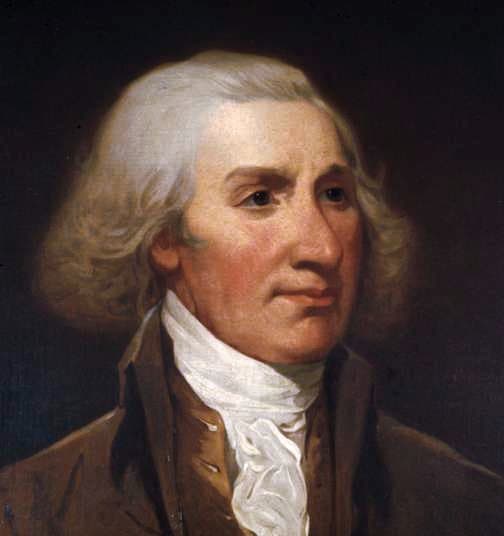
Portrait of Philip Schuyler.
The Institutional Architect of the Northern Revolution
Born in 1733 in Albany, New York, Philip Schuyler emerged as one of the most influential figures shaping the political and military structure of the northern colonies during the American Revolution.
A member of one of New York’s most powerful Dutch families, Schuyler inherited extensive landholdings, business interests, and political connections that placed him at the center of colonial society. From an early age he developed a reputation as a capable administrator and organizer, managing large estates, trade networks, and regional political alliances.
Rather than gaining prominence through dramatic battlefield heroics, Schuyler distinguished himself through his ability to build and maintain the infrastructure that made large operations possible.
During the Revolutionary War he served as a major general in the Continental Army and was placed in command of the Northern Department — a region of immense strategic importance that controlled the corridor between Canada, New York, and the Hudson River.
His responsibilities included constructing forts, organizing transportation networks, supplying armies, and coordinating military logistics across vast and difficult terrain.
This work rarely produced the kind of public glory associated with battlefield victories.
Yet without the systems Schuyler built, the northern army could not function.
Even when he was replaced shortly before the final victory at Saratoga, the structures he had created continued to support the campaign that ultimately secured one of the most decisive turning points of the war.
Schuyler’s influence extended far beyond the battlefield.
His Albany estate became one of the most important political and social centers in revolutionary America. Military officers, diplomats, and political leaders frequently gathered there, and the household served as a hub connecting the emerging leadership of the new nation.
Among those who entered this circle was the young Alexander Hamilton, who would later marry Schuyler’s daughter Elizabeth Schuyler Hamilton and become one of the most influential political figures of the early republic.
Schuyler himself continued to shape American politics after the war, serving in the New York State Senate and later as a United States Senator. Working closely with Hamilton and other Federalists, he helped consolidate political networks that would define the direction of early American governance.
He was not primarily a theorist of the Revolution.
He was one of the men who built the institutions that allowed it to succeed.
The Psychological Verdict
Philip Schuyler is best understood as ESTJ.
Historical accounts consistently portray him as disciplined, administratively skilled, and deeply committed to the organization and stability of the systems he served. His career reveals a man focused on responsibility, infrastructure, and institutional leadership rather than ideological speculation.
These patterns align closely with the Te–Si cognitive framework.
Where some revolutionary figures were remembered for their rhetoric or philosophical vision, Schuyler’s legacy lies in the structures he built and maintained.
Te — dominant
Schuyler’s leadership during the Revolutionary War reflects the strengths of dominant Extraverted Thinking (Te).
He approached military command primarily as a logistical and organizational challenge. Managing supply chains, fortifications, transportation routes, and troop coordination required constant problem-solving and administrative discipline.
Rather than pursuing dramatic displays of personal heroism, Schuyler focused on ensuring that the army’s systems functioned efficiently.
His role was not to inspire symbolic victories.
It was to ensure that the entire operation could actually work.
This emphasis on practical organization and execution is characteristic of Te-dominant personalities.
Si — auxiliary
Schuyler’s power was also deeply rooted in his connection to the traditions and structures of New York society.
Through landownership, family networks, and long-established political relationships, he maintained a stable regional influence that extended across both colonial and early American politics.
This grounding in established systems reflects the influence of Introverted Sensing (Si).
Schuyler did not attempt to reinvent society from scratch.
Instead, he strengthened and expanded the institutions that already existed.
His Albany estate itself functioned almost like a political institution — a place where relationships were cultivated, alliances formed, and leadership networks maintained.
Ne — tertiary
Though primarily a practical organizer, Schuyler also demonstrated an ability to recognize potential in emerging figures.
His support of Alexander Hamilton illustrates this capacity.
Hamilton arrived in Schuyler’s world as a young and relatively unknown officer, yet Schuyler quickly recognized his intelligence and ambition, eventually welcoming him into the family through marriage to his daughter Elizabeth.
This openness to new possibilities and rising talent reflects tertiary Extraverted Intuition (Ne) supporting his more structured leadership style.
Schuyler understood that institutions survive by incorporating capable new actors.
Fi — inferior
Despite his administrative discipline, Schuyler could be intensely sensitive when his honor or reputation was challenged.
When military setbacks led to accusations against his leadership, he fought vigorously to defend his name and demanded formal investigations.
This reaction reflects the influence of inferior Introverted Feeling (Fi), which often manifests as a powerful internal sense of personal integrity and honor.
For Schuyler, reputation was not merely a matter of ego.
Represented the moral legitimacy of the systems he had dedicated his life to building.
The Patriarch of a Revolutionary Household
Schuyler’s influence extended beyond politics and military command into the culture of his family.
His daughters — Angelica, Elizabeth, and Peggy Schuyler — became some of the most socially and intellectually prominent women of the revolutionary generation. Their education, wit, and confidence reflected the structured and intellectually vibrant household their father created.
Through his family, his political alliances, and the institutional systems he helped build, Philip Schuyler shaped the foundations of the early American republic in ways that extended far beyond the battlefield.
He was not remembered primarily for dramatic moments of heroism.
He was remembered for something more enduring.
He built the structures that allowed the Revolution to function.
Connected Figures
Further Reading
- Alexander Hamilton — Ron ChernowThe definitive biography of Hamilton includes extensive coverage of Schuyler as his father-in-law, patron, and political co-conspirator.
- The Founders' Fortunes: How Money Shaped the Birth of America — Willard Sterne RandallExamines the wealth and economic power of leading founding-era figures, including the Schuyler family's role in New York.
- Philip Schuyler and the American Revolution in New York, 1733–1777 — Don R. GerlachThe most focused scholarly study of Schuyler's Revolutionary War career and Northern Department command.
- Eliza Hamilton: The Extraordinary Life and Times of the Wife of Alexander Hamilton — Tilar J. MazzeoReconstructs Elizabeth Schuyler Hamilton's world and illuminates the Schuyler household from which she came.
