 Historical Figure MBTI
#926 · 7-7-26 · The Second World War
Harry Hopkins
Adviser · The Fixer Who Made Lend-Lease Real
1890 — 1946
6 min read
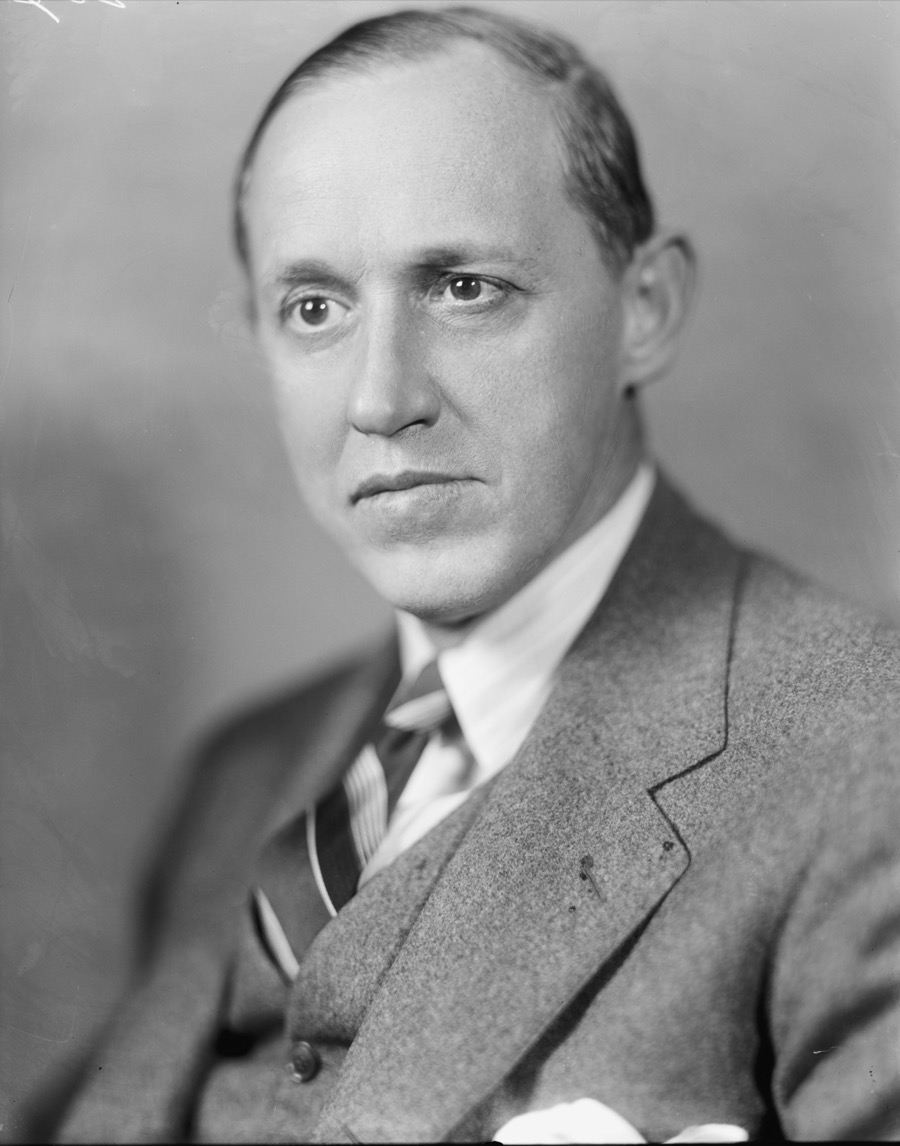
Portrait of Harry Hopkins (Harris & Ewing, Library of Congress)
The Man Who Lived in the Lincoln Bedroom
Harry Hopkins began as a social worker in New York's tenements, the sort of man who measured a policy by whether it got a family through the winter. By 1941 he was sleeping down the hall from Franklin D. Roosevelt in the White House, flying to London and Moscow as the president's personal envoy, and deciding — on his own judgment, with no formal office to back him — which requests for tanks, planes, and ships would actually get filled. Nobody elected Harry Hopkins to anything after his relief-agency days ended. He simply became the man decisions ran through.
That trajectory only makes sense as an INTJ pattern. Hopkins did not accumulate power through charm, ambition, or institutional climbing — he accumulated it because he could see, faster and more clearly than the men around him, what a given crisis actually required and how to get it done without drowning in the process meant to prevent it. Roosevelt trusted him with commitments no cabinet secretary was allowed to make alone, because Hopkins reliably cut to the load-bearing fact and executed on it. Churchill, who did not hand out praise lightly, called him "Lord Root of the Matter."
Hopkins was Ni sighting the target through the fog of Allied bureaucracy, and Te pulling the trigger before anyone else had finished arguing about the angle.
Seeing the Whole War at Once
Lend-Lease was, on paper, a supply program. In practice it was a thousand competing claims on a limited pool of American production, filtered through a dozen agencies each protecting its own turf. Hopkins ran it by holding the entire strategic picture in his head — which theater mattered most this month, which ally's collapse would be catastrophic, which shipment could wait — and then simply overriding the committees that existed to slow that judgment down. He didn't need to relitigate the reasoning each time; he had already seen where it led.
The same pattern held on his missions abroad. Sent to London in 1941 with almost no formal brief, he came back having read Churchill's whole wartime posture correctly enough that Roosevelt reoriented American policy around his report. Sent to Stalin months later, sick and exhausted, he extracted a straight answer on Soviet resistance that professional diplomats had failed to get. Hopkins trusted a single, synthesized read of the situation over the accumulated caution of the institutions around him — the signature of dominant Ni.
The Bureaucracy-Cutter
Hopkins' first career was administrative in the most literal sense — running the WPA meant moving federal money into millions of jobs fast enough to matter, against agencies built to move slowly. He kept that instinct for the rest of his life: identify the actual bottleneck, apply direct pressure there, ignore the rest of the process. It made him unpopular with careerists who resented a man with no formal title outranking their entire chain of command, and indispensable to a president who needed exactly that.
During the war this became his whole function. He held no cabinet post, no confirmed appointment, no line in an organizational chart — and he ran Lend-Lease, sat in on the war-production decisions, and traveled as Roosevelt's personal representative to Churchill and Stalin anyway, because Te doesn't wait for the title to catch up with the authority. He measured himself, and everyone around him, against results: did the ships sail, did the tanks arrive, did the alliance hold. Everything else was noise.
A Social Worker's Conscience, Kept Quiet
Underneath the operator was still the man who had spent his twenties among the urban poor, and the conviction never really left him — it just stopped announcing itself. Hopkins rarely moralized in the rooms where policy got made; he let Ni-Te do the talking. But colleagues who worked closest with him noticed the private loyalty underneath the cold efficiency — to Roosevelt personally, to the relief programs he'd built, to the idea that government existed to catch people who fell. It surfaced less as rhetoric than as where he chose to spend his failing health.
That quiet, private value system is why Hopkins never became a mere fixer for hire. He turned the same skill toward whichever cause he believed actually mattered, and stomach cancer surgery in the 1930s did nothing to change which causes those were. Tertiary Fi in an INTJ doesn't argue for itself; it just quietly decides where the floor is.
A Body That Kept Sending the Bill
Inferior Se showed up as the gap between what Hopkins' body could take and what he demanded of it. He flew across submarine-infested oceans and sat through freezing conferences with much of his stomach removed, running almost entirely on will and adrenaline rather than any real attunement to his own physical limits — the classic inferior-Se blind spot, ignoring the body's signals until it forced the issue. It finally did: he died in 1946, not long after the war that had consumed what health he had left.
Why INTJ Over INTP
Why not INTP?
An INTP in Hopkins' position would have relished the analytical puzzle of Allied logistics and produced brilliant assessments of it — and stopped there, handing the execution to someone else. Hopkins was never a theorist standing at one remove from the decision. FDR sent him to Churchill and Stalin precisely because he could make binding commitments in the room, person to person, under pressure, and be trusted to have judged correctly. That is applied Te closing a decision, not Ti turning a problem over for its own sake.
The distinction is not academic. An INTP fixer would have needed Roosevelt's constant sign-off, wary of overstepping into action his analysis hadn't fully settled. Hopkins routinely acted on incomplete information because the moment demanded it, then adjusted from the result — decisive Ni-Te in motion, not Ti-Ne working out the theory first. That is why Roosevelt could point him at a crisis and walk away certain something would actually happen.
Connected Figures
Further Reading
- Roosevelt and Hopkins: An Intimate History — Robert E. SherwoodThe classic account, written by a wartime speechwriter who knew Hopkins personally.
- The Hopkins Touch: Harry Hopkins and the Forging of the Alliance to Defeat Hitler — David L. RollA modern biography focused on his diplomatic missions and role in Lend-Lease.
