 Historical Figure MBTI
#724 · 5-30-26 · The Conquest of Mexico
Isabel Moctezuma
Princess · Survivor · Bridge Between Two Empires
c. 1509 — 1550
6 min read
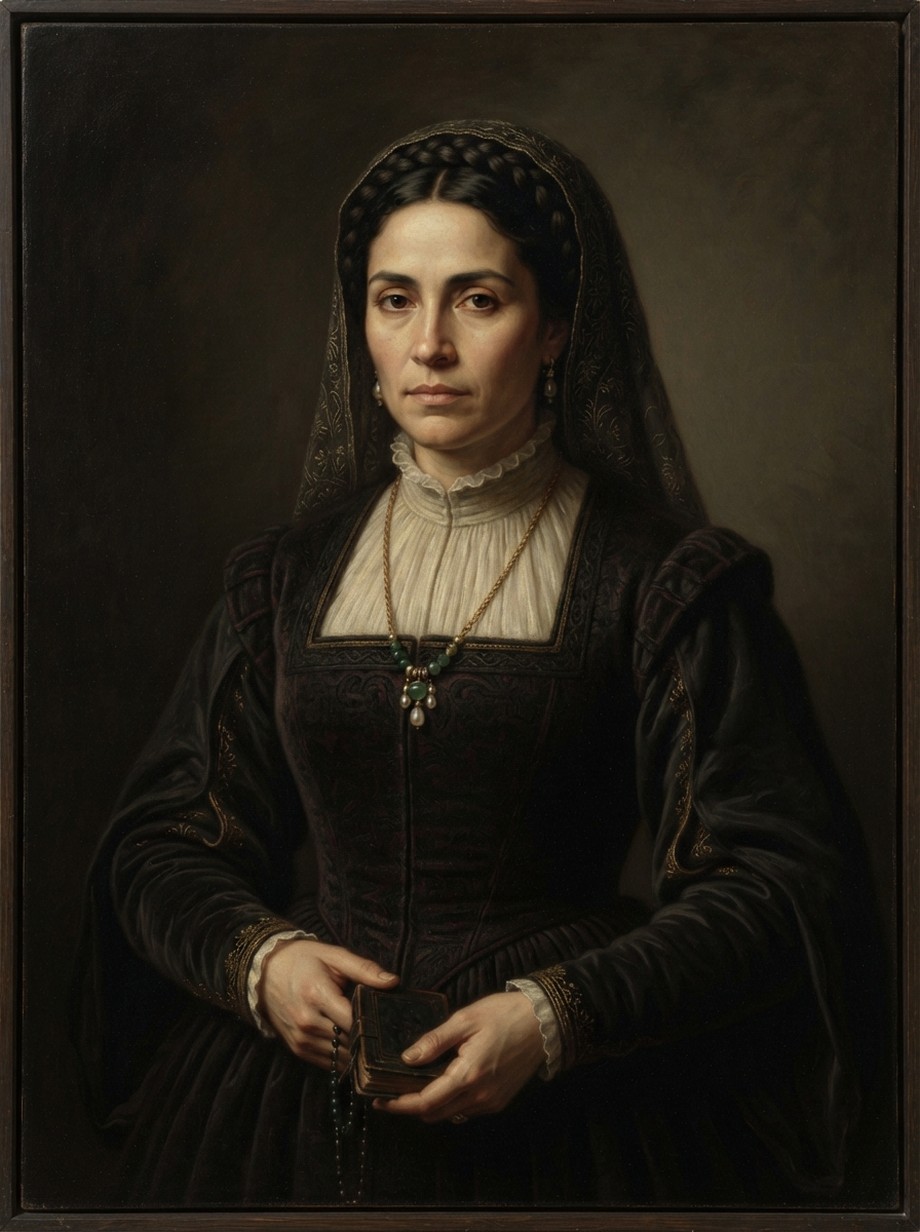
AI-assisted Portrait of Isabel Moctezuma
The Woman Five Empires Married
By the time she was sixteen, Tecuichpoch Ixcaxochitzin — baptized Isabel — had already been widowed twice. She was Moctezuma II’s favorite daughter, married first to her uncle Cuitláhuac when he took the throne during the siege of Tenochtitlan, then, within months, to her uncle Cuauhtémoc when he took it from him. Both marriages were dynastic triage: the empire was collapsing, and Isabel was its last uncontested royal blood, passed hand to hand in an attempt to keep the Mexica line intact around a crown that no longer had ground to stand on.
It did not work. Cuauhtémoc was captured, tortured for gold he did not have, and eventually hanged. Isabel — teenage, twice-widowed, the highest-ranking Mexica noblewoman left alive — passed next into the household of Hernán Cortés himself, who took her as a mistress, fathered a daughter on her, and then married her off in succession to three of his own men. She did not choose any of this. What she did choose, patiently and across five marriages and thirty years, was what she kept: an encomienda, a noble title recognized by the Spanish crown, and a bloodline that would still be litigating its inheritance a century after Tenochtitlan fell.
Isabel Moctezuma is not remembered for a single defiant act, because she never risked one. She is remembered because she outlasted an apocalypse by reading each new household correctly and keeping the household running — which is, as close as history gets, a portrait of ISFJ under siege.
An ISFJ does not resist the flood. She learns where the furniture needs to be moved so that something of the house survives it.
What Survived the Fire
Isabel’s defining act was not resistance but recordkeeping. After the conquest, when the old Mexica nobility had every reason to let its claims dissolve into the general ruin, she spent decades in Spanish courts documenting exactly what her father and her lineage were owed — pressing her case until the crown granted her the encomienda of Tacuba, one of the richest land grants given to any indigenous noble in New Spain. This was Si: not nostalgia for a lost world, but a granular, almost bureaucratic fidelity to precedent, applied to keep something concrete intact across a rupture that destroyed everything around it.
She treated her genealogy the way a dominant Si type treats any inherited structure — as data to be preserved and cited, not mourned. She could produce, decades later, the exact chain of who had ruled, who had married whom, and what each transaction had entitled her to. That precision became leverage: Spanish law respected documented inheritance even from a conquered people, and Isabel understood, with unusual clarity for someone raised inside an oral-and-ritual court culture, that the new empire ran on paper. She adapted her medium without abandoning her material.
The same instinct shaped her domestic life. Through five successive households — Mexica and Spanish alike — she is consistently described running an orderly estate, training servants, managing accounts, raising children from multiple fathers under one roof without apparent scandal. It is the least cinematic kind of survival: she simply kept doing the concrete, maintaining work of a household and an inheritance, marriage after marriage, until it outlasted the men who kept being subtracted from it.
Married Into Every Room She Needed
Five marriages in one lifetime is, on its face, a story of a woman with no autonomy — and largely it was. But the fact that Isabel emerged from each of them with her standing intact, and often improved, points to something more active than pure passivity: a sustained, careful management of the people around her. She did not simply endure Alonso de Grado, Pedro Gallego de Andrade, and finally Juan Cano de Saavedra; she built functioning households with each of them, bore children, and, with Cano especially, formed a genuine and lasting partnership that anchored her final decades and became the line through which her noble status descended.
Even her relationship with Cortés — the man who had effectively inherited her as spoils of conquest — she managed rather than merely survived. She secured recognition and provision for the daughter she bore him, Leonor Cortés Moctezuma, who was later acknowledged and dowered rather than erased. That is Fe doing its quiet, essential work: reading what each relationship required to hold, and supplying it, so that no bridge she needed later was left burned behind her.
It extended to her handling of two civilizations at once. Isabel moved between Mexica court etiquette and Spanish colonial society without the visible rupture that broke so many of her relatives, maintaining standing with indigenous communities who still saw her as Moctezuma’s daughter while also being received at the highest levels of Spanish New Spain. Few people managed both audiences at once; she managed both for thirty years.
The Litigant Behind the Widow
Underneath the diplomacy was a quieter, harder-edged shrewdness. Isabel did not simply accept the encomienda of Tacuba as a gift; she pursued it through years of petitions and legal argument, and her descendants continued litigating the Moctezuma inheritance in Spanish courts for generations after her death, eventually winning pensions and recognitions that stretched into the eighteenth century. That persistence required someone in the founding generation who understood the Spanish legal system well enough to argue inside it — not just charm officials, but construct a case.
It shows, too, in how cleanly she separated the personal from the transactional. She accepted political marriages to men chosen for her, without evident illusions about why they were arranged, and used each union’s legal and financial terms — dowries, property grants, inheritance rights for her children — as instruments to be negotiated rather than romances to be endured. It is a colder calculation than the warmth of her Fe would suggest on its own, and it is exactly the kind of tertiary Ti that steadies an Fe-led survival strategy: the ledger running quietly underneath the relationships.
Why ISFJ Over ESFJ
Why not ESFJ?
An ESFJ leads with Fe — actively organizing the people and rituals around her, visible at the center of the room. Isabel is never described that way. She is described as steady, private, and adaptable within households built and run by other people, quietly preserving records and relationships rather than orchestrating the social world outward. Her documented energy goes into maintaining continuity — of lineage, of property, of household order — which is Si’s signature, with Fe deployed in service of that preservation rather than driving it.
The distinction matters because Isabel’s five marriages could easily be misread as the work of a natural social operator, someone extroverted enough to charm her way through repeated reinvention. The record suggests the opposite: a woman who adapted to whatever household she was placed in, held its structure together with painstaking consistency, and let that reliability — not charisma — be what made her indispensable to conquerors and kin alike.
Connected Figures
Further Reading
- Fifth Sun: A New History of the Aztecs — Camilla TownsendReconstructs Isabel's life and status from Nahuatl-language sources alongside Spanish records.
- Moctezuma's Children: Aztec Royalty under Spanish Rule, 1520–1700 — Donald E. ChipmanThe fullest account of Isabel's marriages, encomienda, and descendants' generations-long litigation.
- Weaving the Past: A History of Latin America's Indigenous Women from the Prehispanic Period to the Present — Susan KelloggSituates Isabel within broader patterns of indigenous noblewomen's survival strategies under colonial rule.
