 Historical Figure MBTI
#350 · 4-1-26 · The French Revolution
Jacques Necker
Finance Minister · The Banker of the Deficit · Father of Madame de Staël
1732 — 1804
7 min read
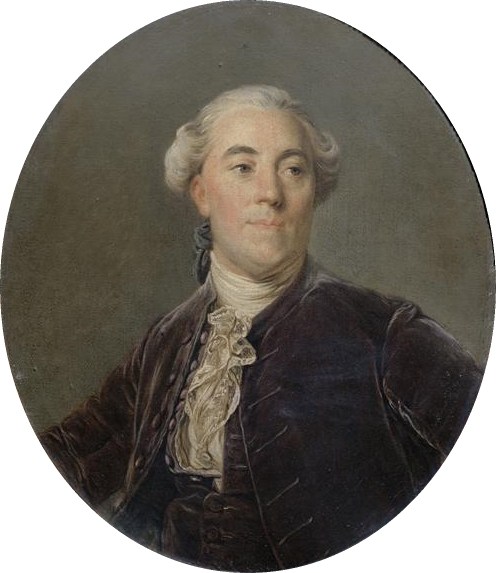
Portrait of Jacques Necker
The Banker Who Audited a Kingdom
In 1781 a foreign Protestant commoner did something no minister of the Catholic Bourbon monarchy had ever dared. He published the books. The Compte rendu au roi — a public accounting of the royal finances laid before the nation rather than whispered in the council chamber — presented a treasury sliding toward catastrophe as a treasury in surplus, omitted the ruinous costs of the American war by filing them as extraordinary expenditure, and turned a Genevan banker into the most popular man in France. It sold tens of thousands of copies. Necker had discovered that public opinion was a form of capital, and he had cornered the market.
A Protestant could not legally hold the office of comptroller-general in Catholic France, so in 1777 he was installed as Director-General of Finance — a foreigner and a heretic running the money of the Most Christian King. The court of Louis XVI distrusted him on every count; the public adored him for the same reasons. Dismissed in 1781, recalled in 1788, dismissed again on 11 July 1789 — his second removal helped detonate the storming of the Bastille three days later. Recalled in delirious triumph, he then discovered the hard limit of his gifts: a man who could measure a deficit and manage a reputation could not steer a revolution. He resigned to his Swiss estate at Coppet, a forgotten man whose daughter, Madame de Staël, would become more famous than he ever was. The psychological signature running through all of it — the command of money, the strategic reform program, the genius for self-display, the brittle vanity — is that of the ENTJ.
Necker was the ENTJ as banker-statesman — dominant Te marshaling money, policy, and public administration into instruments of power, auxiliary Ni reading the long arc of state credit, the whole apparatus harnessed to a self he could not stop promoting.
The Command of the Ledger
Te — dominant
Necker grasped early that the French state lived on borrowed money and that its capacity to borrow depended entirely on lender confidence — confidence a sufficiently competent administrator could manufacture. That insight, finance as a system of trust to be managed, is Te applied to statecraft. In office he attacked tax farming, reduced sinecures, and funded the American war by loans rather than new taxes. Each reform was the same move: locate the inefficiency, impose a cleaner system, make the machine run. He was not a philosopher of government; he was a man who looked at a malfunctioning machine and reached for the wrench.
The Compte rendu was Te's masterstroke and its characteristic flaw in one document. The surplus he advertised was an artifact of accounting; the war debts were quietly parked off the ledger as extraordinary expense. He was managing, not lying — presenting the system in the configuration most likely to keep money flowing. It worked brilliantly in the short term and helped wreck the monarchy in the long one, because the gap between advertised solvency and actual catastrophe could only widen. The Te flaw is to mistake a well-managed presentation for the underlying reality.
The Long Arc of Credit
Ni — auxiliary
Necker's great strategic perception was that the French monarchy's real asset was not its land or its army but its credit — a thing built over years and destroyed in an afternoon. A state financing every war by squeezing a creaking tax system was mortgaging its future. His reform program had the shape of an Ni vision: the provincial assemblies, the assault on fiscal exemption, the substitution of orderly public finance for old-regime improvisation — not isolated fixes but pieces of a single imagined future in which France was governed the way a well-run bank is governed.
Ni also explains his fatal misreading of 1789. Having spent a decade reading the trajectory of state finance correctly, he assumed the political crisis would follow a comparably legible arc. He was recalled in triumph and expected to channel the storm. But a revolution is not a trend line; it is contingency and crowds and accelerating passion. The intuition that served him in the counting house failed him in the street. He had forecast the destination of French credit. He could not forecast the Terror, and he did not even try to govern it — he withdrew.
The Showman of Solvency
Se — tertiary
Necker grasped that government in the age of print had acquired a stage, and that a minister who performed for the public could overrule men who outranked him at court. The Compte rendu was as much theater as accounting — a financial document staged as a public event, sold in the streets, turning the dull machinery of the treasury into a national spectacle starring Jacques Necker. He refused his ministerial salary, lent money to the state, performed his probity in public. The man who could not be comptroller-general because of his faith made himself untouchable by making himself beloved.
But tertiary Se is a loop the ENTJ can fall into, and Necker did. By 1789 he was addicted to his own popularity, calibrating his conduct to preserve the adoration rather than to govern, mistaking the roar of a Parisian crowd for a mandate he could direct. The showmanship that carried him to the summit left him exposed when the spectacle turned into a revolution and the audience stopped wanting a banker.
The Vanity Beneath the Numbers
Fi — inferior
Contemporaries who admired Necker's competence were exhausted by his self-regard. He was, even by the generous testimony of his own family, monumentally vain — convinced of his indispensability, wounded by criticism, certain to the end that France had failed him rather than the reverse. The man could audit a kingdom but could not see himself. Inferior Fi produces not rich emotional interiority but a thin, defensive self-importance that mistakes applause for moral worth. He measured his virtue by his popularity, which is why losing it unmoored him so completely. His ostentatious probity was genuine, but it was also a performance of goodness he needed others to confirm; when the crowd moved on, there was nothing underneath to hold him steady.
His most enduring legacy was a person rather than a policy: his daughter, Madame de Staël, who inherited his appetite for the public stage and converted it into something he never possessed — a genuinely original inner life, a literature of feeling and ideas. She worshipped her father with an intensity that the vain old man at Coppet drank in like water. The inferior function got from his child the unconditional regard it had spent a lifetime trying to extract from the nation.
Why ENTJ Over INTJ
Why not INTJ?
The INTJ and the ENTJ share strategic Ni and commanding Te, and a banker with a long-range reform vision can look like the introverted strategist working the system from behind the scenes. But Necker's power was outward and public by its very nature. He did not build his influence in the study; he built it in the streets, the salons, the printed accounts sold by the thousand. An INTJ minister would have managed the finances and let the king take the credit. Necker managed the finances and took the credit himself — publicly, hungrily, and to the court's lasting fury. His extraversion was structural: his entire method of power ran through the public, the audience, the performance of competence.
Connected Figures
Further Reading
- Jacques Necker: Reform Statesman of the Ancien Régime — Robert D. HarrisThe standard English-language biography, tracing Necker's financial reforms and their political consequences.
- Necker, Reform Statesman of the Ancien Régime — J. F. BosherFocuses on Necker's administrative program and his relationship with the French fiscal apparatus.
- The Great Nation: France from Louis XV to Napoleon — Colin JonesSweeping narrative of eighteenth-century France that situates Necker's role in the monarchy's long decline.
- Citizens: A Chronicle of the French Revolution — Simon SchamaVivid account of the revolutionary crisis in which Necker's dismissal in July 1789 triggered the storming of the Bastille.
- Germaine de Staël: A Political Portrait — Ghislain de DiesbachBiography of Necker's daughter that illuminates the family dynamic and his influence on her remarkable career.
