 Historical Figure MBTI
#324 · 3-27-26 · The Enlightenment
James Boswell
Diarist · Biographer of Dr. Johnson · The Great Recorder
1740 — 1795
7 min read
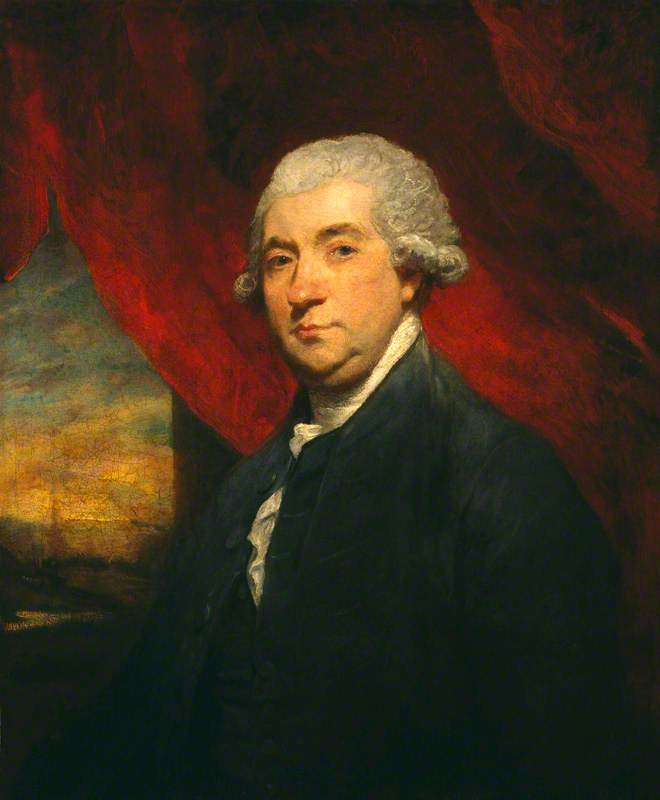
Portrait of James Boswell
The Man Who Wrote Everything Down
It is December 1764, and James Boswell—laird-in-waiting of Auchinleck, runaway from his father's law, collector of great men—has talked his way into the Château de Ferney to meet Voltaire. When Voltaire, baited into confession, presses his hand to his breast and nearly faints with his own performance, Boswell does what he always does: he goes back to his lodging and writes down exactly what was said and how it felt. “He was like a dying man.” The scene survives because a star-struck tourist could not stop taking notes.
That tourist became the author of The Life of Samuel Johnson (1791), still widely called the greatest biography in the English language—built not from research but from decades of obsessively recorded talk and a private diary so candid it could not be published in full until the twentieth century. The psychological profile that explains it all is the ESFP: dominant Se devouring the living scene, auxiliary Fi driving radical private candor, tertiary Te marshaling the mountain of scraps into the architecture of the Life, and inferior Ni leaving him blind to his own future while he built it. He was not the deep thinker of his circle. He was its great recording instrument—and that turned out to be a form of genius.
Boswell was the ESFP who turned pure sensation into literature—dominant Se devouring the concrete, social, spoken real of every room he entered, fused to an auxiliary Fi that kept the most candid private record any Englishman had ever dared to write.
The Eye and Ear That Missed Nothing
Se — dominant
Dominant Se grips the present and wants more of it. Boswell was this faculty given a pen—an insatiable conversationalist whose journals are a torrent of sensory particulars: who sat where, what was on the table, exactly how Voltaire pressed his hand to his chest, the precise phrase with which Johnson demolished an opponent. He did not summarize; he recorded, so concretely that two centuries later we still seem to be in the room.
The genius of the Life of Johnson is a Se genius. Boswell did not write a study of Johnson's ideas; he wrote a transcript of Johnson alive—eating, arguing, joking, contradicting himself. He would steer dinner toward a topic, provoke one of Johnson's thunderous pronouncements, then race home to set it down while the sound was still in his ears. That method—truth by direct sensory witness— also ran his private life hard. He drank, chased women, accrued infections and debts, walked up to Rousseau and David Hume on his deathbed simply because he wanted the experience of those men in the flesh. The hunger that made the masterpiece and the hunger that made the wreckage were the same appetite.
The Confessional Self
Fi — auxiliary
Auxiliary Fi turned the same recording instrument back on Boswell himself. The journals were not written for an audience; they were a place to track his own soul with a fidelity that spared nothing—his vanity, his lust, his terror of damnation, his black depressions, his resolutions and their immediate breaking. He wrote down his humiliations as carefully as his triumphs, because the point was not to look good but to get the self down accurately. To confess, in an age of polished public personae, that you got drunk and despised yourself for it, requires an Fi user's loyalty to his actual interior over any version of himself fit for company.
Fi also explains his attachments. Boswell did not admire great men in the abstract; he loved them with a need wholly his own. His hero-worship of Johnson was not deference but felt, almost filial devotion. The same inward compass that made him a worshipper made him a confessor—an interior life steered by love, shame, and dread, all of it recorded without flinching, because to an Fi user the interior is the realest thing there is.
The Architect of the Mountain
Te — tertiary
For most of his life Boswell looked like a man with no executive function at all— scattered, impulsive, perpetually in debt. But tertiary Te surfaced when it finally had to: in the enormous labor of turning decades of journals, letters, and recorded conversations into the structured, chronological Life of Johnson—more than a thousand pages deliberately arranged. That is Te ordering raw Se material toward a finished result, and the Life is its monument.
The tertiary position is exactly right for how the work came. Boswell assembled the Life with Edmund Malone pushing and steadying him through years of revision, because he could organize a brilliant evening far more easily than a long campaign. He built one magnificent structure out of an undisciplined existence—and then went back to the wreckage. The competence was genuine and never quite in charge; it could shape the Life and could not balance his accounts.
Blind to His Own Future
Ni — inferior
Inferior Ni is a relationship to the long horizon—and it is precisely the faculty Boswell lacked. The man who could capture another life with miraculous clarity was strikingly blind to his own. He lurched from scheme to scheme—soldier, courtier, barrister, laird—each seized with present enthusiasm and abandoned when the next bright thing appeared, arriving at the end of his life having squandered the worldly career he kept imagining. When the present moment dimmed, he fell into the black, futureless dread he called hypochondria—a melancholy with no horizon, no sense that things were tending anywhere. The same constitution that made him gloriously alive in the now left him nothing to stand on when the now went quiet.
There is a deep irony here. Boswell built his immortality out of moments and could not, for the life of him, see what those moments were building toward. He wanted to be a statesman, a laird of consequence, and judged himself a failure by the long-range standards his Ni could not operate. The future he should have trusted—that the obsessive recorder would outlast every politician he envied—was invisible to him precisely because seeing it would have required the one function he had least of all.
Why ESFP Over ENFP
Why not ENFP?
The ENFP is tempting because Boswell was so gregarious and hungry for people. But the ENFP leads with Ne: it chases ideas and abstract potential it sees flickering behind a person. Boswell's genius was the opposite. He recorded the concrete, sensory real—exactly what was said, worn, drunk, and done in a room—not the ideas hovering above it. The test is the Voltaire encounter: an Ne-led mind would have generated a spray of implications; Boswell gave us the hand pressed to the breast, the near-faint, the exact words. He did not generate possibility; he seized actuality. The ENFP lives among things that might be. Boswell lived, helplessly and brilliantly, among things that were.
Connected Figures
Further Reading
- James Boswell: The Earlier Years, 1740–1769 — Frederick A. PottleThe definitive scholarly biography of Boswell's first three decades, drawing on the Yale Boswell Papers.
- James Boswell: The Later Years, 1769–1795 — Frank BradyCompletes Pottle's biography, covering the years of the Johnson friendship and the composition of the Life.
- The Life of Samuel Johnson — James BoswellThe primary text — the 1791 biography that made Boswell's reputation and remains the greatest biography in English.
- Boswell's London Journal, 1762–1763 — James Boswell, ed. Frederick A. PottleThe first and most celebrated of the private journals recovered from Malahide Castle, published 1950.
- The Yale Editions of the Private Papers of James Boswell — Various editors (Yale University Press)The multi-volume scholarly edition of Boswell's diaries and correspondence — the backbone of modern Boswell scholarship.
