 Historical Figure MBTI
#323 · 3-27-26 · The Enlightenment
Madame Denis
Marie Louise Mignot · Voltaire's Niece and Companion · Mistress of Ferney
1712 — 1790
6 min read
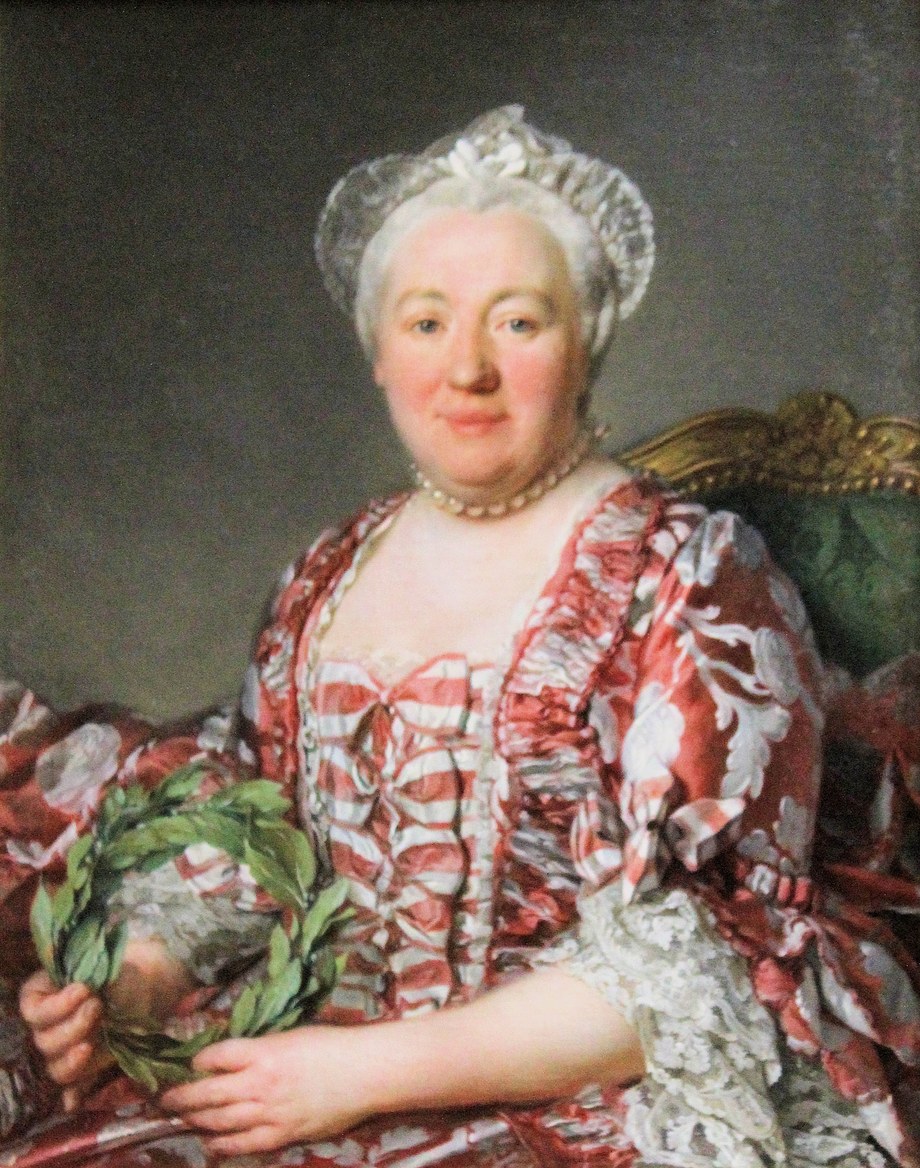
Portrait of Madame Denis
The Warmth He Could Not Manufacture
Picture Ferney on a winter evening in the 1760s: candles, a card table, a private stage, and the most famous mind in Europe watching his niece play the lead in one of his own tragedies. Madame Denis was not a great actress, and the grander visitors said so behind their hands. But she filled the room. She loved the costumes and the applause, the supper that followed, the company of anyone amusing. She presided over Voltaire's table for nearly thirty years, and the table was never dull.
She arrived in 1749, the year Émilie du Châtelet died, and the contrast could not be more total. Where du Châtelet translated Newton and argued physics in print, Madame Denis read little, theorized nothing, and cared about the next party. She became his hostess, his companion, and—as their Italian letters, unpublished until the twentieth century, confirmed—his lover. To the philosophes she was an embarrassment: extravagant, grasping, shallow. They were not entirely wrong about the facts. They were entirely wrong about the meaning.
What she gave Voltaire was the one thing his never-resting intelligence could not manufacture: ordinary warmth, comfort, and fun. The profile that explains her is the ESFP—dominant Se alive to the pleasures of the present, auxiliary Fi steering by her own wants, tertiary Te running a great household, inferior Ni serenely indifferent to the long horizons her uncle agonized over. She was not the deep one. She was the living one.
Madame Denis was the ESFP who kept the great house warm—dominant Se reaching for the costume, the card table, and the supper, fused to an auxiliary Fi that loved exactly whom and what it pleased, with no apology owed to the philosophes who found her shallow.
The Keeper of the Present Moment
Se — dominant
Dominant extraverted sensing lives in the immediate, the pleasurable now—the heat of a good supper, the buzz of a full room, the risk and rush of the gaming table. Everything the record tells us about Madame Denis is the record of a woman organized around this faculty. She loved fine clothes and spent freely; she kept Voltaire's table lavish; she gambled with the frank appetite of someone for whom the present moment was the only moment that pressed.
Her theater was the purest expression of Se. Voltaire built a private stage at Ferney and she took the leading roles—not as a polished tragedienne but as a woman who needed the costume, the footlights, the applause arriving in the same breath as the performance. Where her uncle wrote the plays as instruments of argument, she acted them because acting was a pleasure of the body. For three decades the most consequential household in Europe ran on her capacity to fill a room.
The Heart That Pleased Itself
Fi — auxiliary
Auxiliary introverted feeling decided which pleasures, which people, and which loyalties were hers—by an inward compass that answered to no one's standard but her own. In Madame Denis it ran warm and unapologetic. The Italian letters leave no doubt that her love for her uncle was genuine, physical, and durable across decades. But she also loved on her own account: she conducted her own affairs while living under his roof and weighed her own happiness from the inside out.
This is the function the philosophes most misread. To Friedrich Melchior Grimm and the savants, a woman who took lovers and showed no interest in the great causes looked simply selfish. But Fi is not selfishness; it is selfhood. She declined to pretend to care about Newton or the infame her uncle spent his life crushing. She stayed through three decades of exile, ran the household of a man the French crown would happily have silenced, and was at his side at the end— not betraying her pleasures, but never pretending they were his.
The Competent Mistress of a Great House
Te — tertiary
The philosophes painted her as a lightweight, but Madame Denis actually ran Ferney. Voltaire's estate had servants, accounts, a watchmaking colony, and a master forever publishing, scheming, and dodging the authorities. Tertiary Te gave her the practical machinery to manage it: a house that hosts half of Europe does not run on charm alone.
Tertiary Te in an ESFP is competence in the service of appetite rather than an end in itself. She organized so that suppers could be lavish, theatricals staged, and guests impressed. A more dominant Te would have disciplined the accounts; in Madame Denis the executive faculty was real but subordinate, recruited to serve her pleasures. She could organize a brilliant evening but not a prudent budget.
Blind to the Long Horizon
Ni — inferior
Where her uncle planted trees for a posterity he would never see and kept himself near the Swiss border against a danger that might never come, Madame Denis lived in the present and let the long horizon take care of itself. She got along without Ni nearly all the time.
The clearest expression came in 1778, when she encouraged the eighty-three-year-old Voltaire to return in triumph to Paris—the theater, the crowds, the present sensory glory of it. To dominant Se it was irresistible. What inferior Ni could not weigh was the toll. Paris feted him to exhaustion, and within weeks he was dead. As his legatee she sold Ferney and sent the library to Catherine the Great. A custodian governed by Ni would have built a shrine. To Madame Denis it was an asset in the present.
Why ESFP Over ISFP
Why not ISFP?
The ISFP shares the same auxiliary Fi and lives close to the senses—which is why the temptation is real. But the ISFP leads with introverted feeling and prefers intimacy and a small circle to the open room. Madame Denis did the reverse. She needed the crowd, the stage, the full salon—the outward, audience-hungry Se in the dominant seat, not the private inwardness of the ISFP who would have shrunk from the footlights she lived for. She urged the aged Voltaire back into the roar of Paris because the roar was the thing she loved. That hunger for the room settles the type.
Connected Figures
Further Reading
- Voltaire: A Life — Ian DavidsonThe most readable modern biography; fully covers the Ferney years and Madame Denis's role as hostess, companion, and heir.
- Voltaire in Love — Nancy MitfordA vivid popular account of Voltaire's relationship with Émilie du Châtelet and the transition to Madame Denis — indispensable for the household dynamics.
- The Letters of Voltaire — Voltaire (tr. various)The published correspondence, including the Italian letters to Madame Denis, provides the primary evidence for the nature of their relationship.
- Voltaire's Revolution: Writings from His Campaign to Free Laws from Religion — Voltaire (ed. Graham Gargett)Contextualizes the intellectual world of Ferney against which Madame Denis's domestic role stands in relief.
