 Historical Figure MBTI
#863 · 6-21-26 · The American Civil War
John Buford
Union Cavalry General · First Day at Gettysburg
1826 — 1863
6 min read
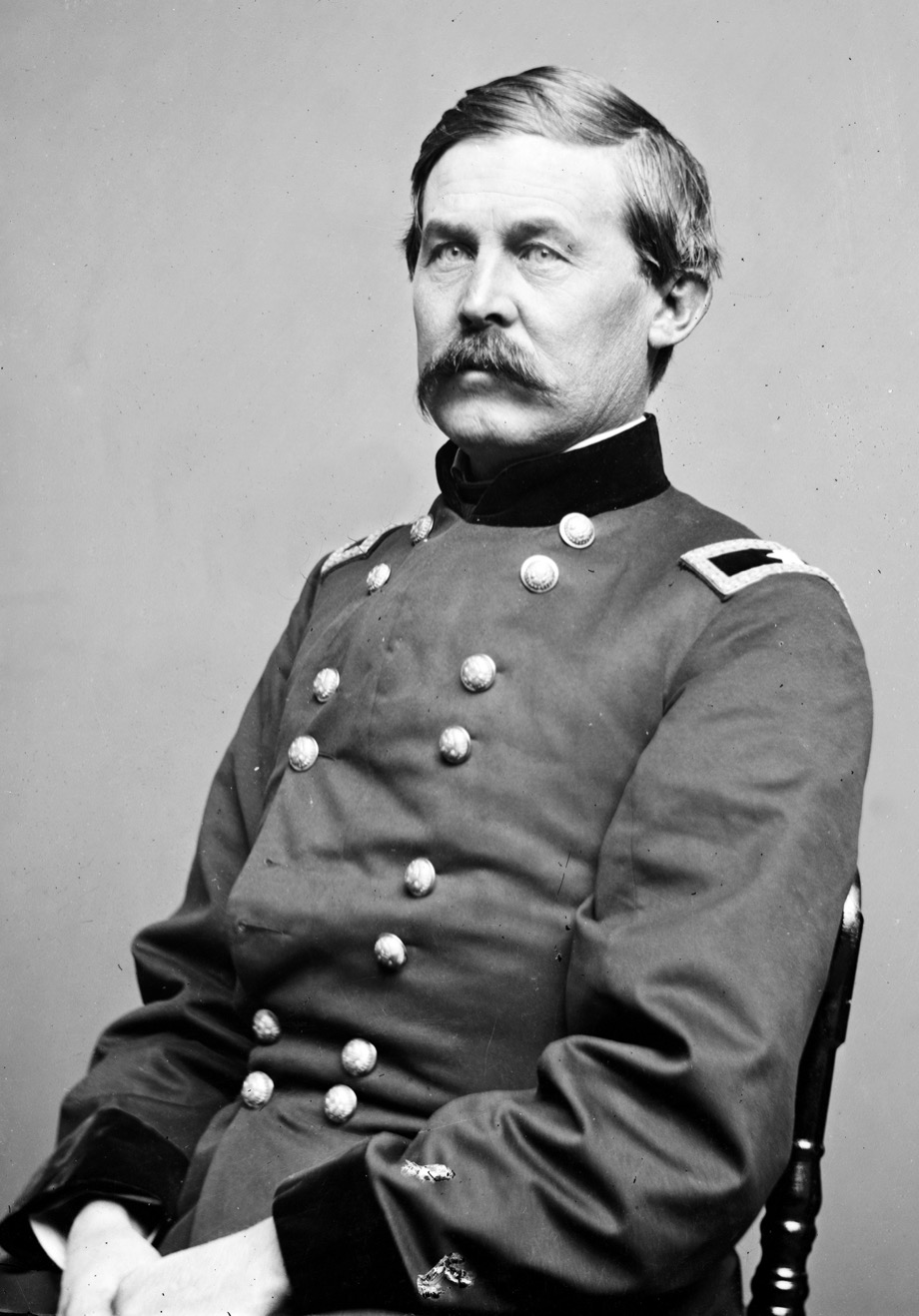
Photographic Portrait of John Buford
The Ridge He Read Before Anyone Else Saw It
On the last morning of June 1863, John Buford rode into a Pennsylvania crossroads town he had never had reason to visit before, sat his horse on the high ground west of it, and understood the coming battle before it had a name. His two brigades of cavalry were screening for an army that was still a day's march behind him, and Confederate infantry was already probing in from the northwest. A cavalryman's job in that situation was to observe, skirmish lightly, and fall back — nobody outside his own staff would have blamed him for doing exactly that. Instead Buford climbed the cupola of the Lutheran seminary, looked at the ridgelines ringing the town, and made a decision that historians still credit with shaping the entire battle of Gettysburg: he would dismount his troopers, arm them as infantry with breech-loading carbines, and hold the ground.
He is said to have told a subordinate, flatly, that whoever held those hills by nightfall would win the fight. It was not a hunch dressed up after the fact — it was a real-time read of terrain, timing, and consequence, made alone, under pressure, with no orders authorizing it and no guarantee the infantry he was buying time for would arrive before his own men were overrun. That is the whole of Buford's psychology in one morning: a mind built to size up a live physical situation and act on its own analysis immediately, without waiting to be told, without performing the decision for an audience, and without much interest in what came after the guns stopped.
Buford was an ISTP down to the marrow — a Ti mind that reasoned in silence and an Se eye that never blinked at the moment in front of it.
The Private Calculus of Ground and Time
Buford's Ti did not look like brilliance from the outside — it looked like a man staring quietly at a map, then a ridge, then a watch. What he was actually doing was running a private, internally consistent model of the problem in front of him: how many men he had, how long dismounted cavalry with carbines could hold a line against infantry, how far away Reynolds's I Corps was, and what the terrain would be worth to whoever occupied it first. He did not explain this reasoning to anyone before acting on it, and he didn't need to — the logic only had to satisfy himself.
That internal, self-contained certainty is why he committed a heavily outnumbered cavalry division to a stand-up fight rather than the textbook screen-and-withdraw his branch of service was built for. He had already worked out, in his own head, that the ground was worth more than his division's survival margin, and once the calculation closed, the order followed without hesitation or appeal to higher authority.
A Battle Fought With the Eyes First
Se gave Buford the raw material his Ti reasoned over — an acute, moment-by-moment awareness of physical space, distance, and tempo. He didn't theorize about Gettysburg's terrain from a report; he rode it, climbed a cupola to see it from above, and clocked exactly how the ridgelines west and south of town commanded the roads converging on it. That kind of sensory command of a landscape, absorbed in minutes and trusted immediately, is Se operating at its sharpest.
It also explains the shape of the fight itself. Buford's dismounted troopers didn't dig in and wait passively — they fed themselves into successive defensive lines as Confederate pressure built, buying minutes at a time with a controlled, physical, constantly adjusting defense. That is not a plan executed on faith; it is a man responding to what he could see happening in front of him, second by second, until Reynolds's infantry finally reached the field.
Whoever Holds the Hills by Nightfall
Underneath the sensory read of the terrain sat something quieter and further-reaching — a flash of Ni that let Buford project the battle's whole future shape from its first hour. He didn't just see that the ridges were defensible; he saw what would happen if the Confederates took them first, and what the entire Army of the Potomac's fortunes would hinge on in the days after. His remark that whoever held the high ground by nightfall would win the battle wasn't a boast — it was a prophecy he then spent his division's blood making true.
That capacity to compress a sprawling, multi-day campaign into a single decisive image, and to act immediately on that image rather than wait for the picture to become obvious to everyone else, is what separated Buford from cavalry officers who were merely brave. He acted on a conviction about the future that no order yet supported, and history vindicated it within hours.
Why ISTP Over ESTP
Why not ESTP?
An ESTP would have made the same bold, decisive stand on the Gettysburg ridges — but for a different reason and with a different flavor. ESTP judgment is extraverted, performed in the moment for the people around it, quick to seek visibility and reward. Buford's decision was the opposite in texture: quiet, internally reasoned, made without an audience and without seeking credit, closer to a man solving a private equation than a man making a statement. He didn't announce the stakes to his superiors before acting; he simply acted, and let the terrain and the outcome speak for him.
The distinction matters because Buford's fame rests entirely on a decision nobody ordered and few around him fully understood until the battle's shape became clear in hindsight. That is Ti-Se, not Se-Ti — judgment held privately and tested against reality, rather than reality bent toward an outward performance. It is also why he receives comparatively little of the era's spotlight next to showier commanders: he did the era's most consequential thinking in near-total silence.
Connected Figures
Further Reading
- John Buford: A Military Biography — Edward G. LongacreThe standard biography, tracing his rise through the antebellum cavalry to Gettysburg and his death months later.
- Gettysburg — Stephen W. SearsA comprehensive campaign history that credits Buford's July 1 stand as decisive to the battle's shape.
- The Devil's to Pay: John Buford at Gettysburg — Eric J. WittenbergA close tactical study of Buford's delaying action west of town on the battle's first morning.
