 Historical Figure MBTI
#477 · 4-15-26 · The Wars of Scottish Independence
John Comyn
The Red Comyn · Bruce's Murdered Rival
c. 1274 — 1306
7 min read
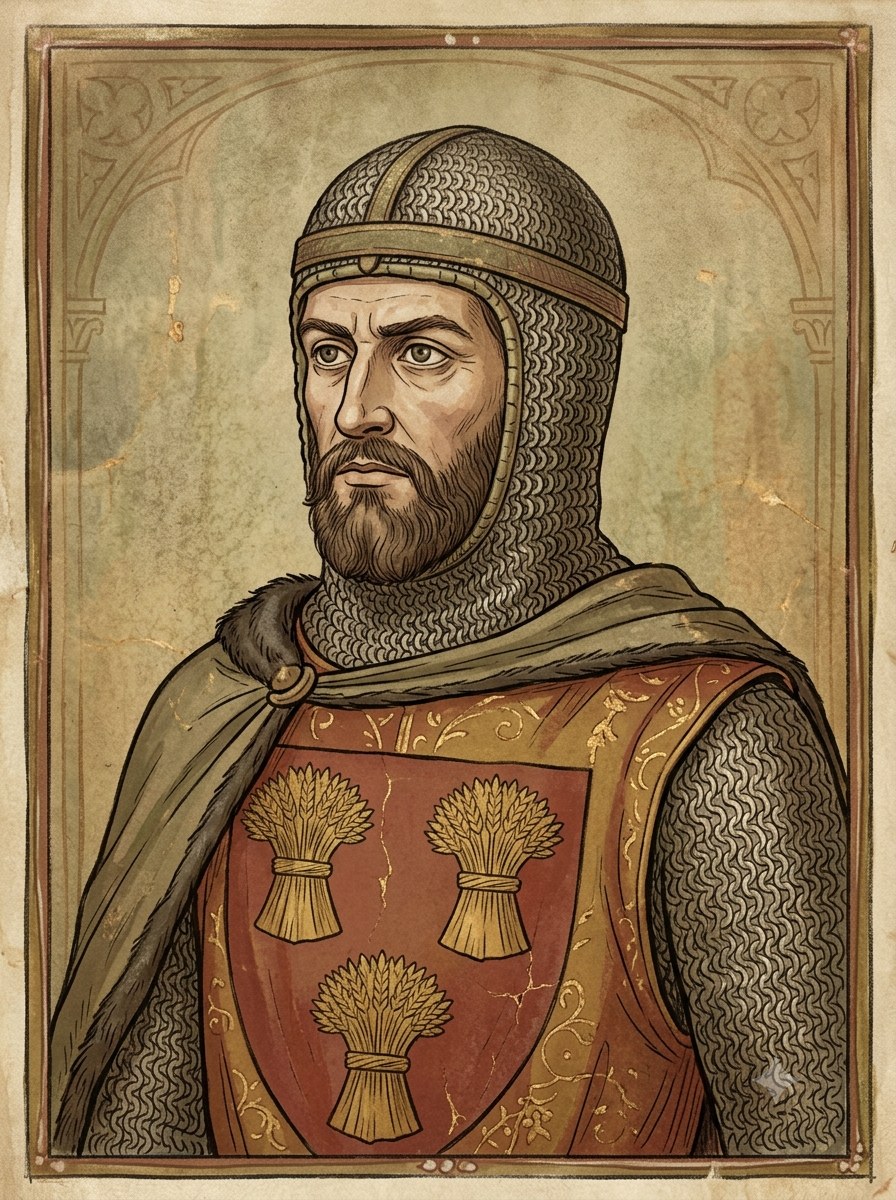
AI-assisted Portrait of John Comyn
The Most Powerful Man in Scotland
For a brief, dangerous span at the turn of the fourteenth century, John Comyn — known to history as the Red Comyn — was arguably the most powerful noble in Scotland. He was head of the mightiest baronial kindred in the realm, a family whose castles and alliances laced the country from Badenoch to Buchan, and he carried a royal claim of his own: nephew and heir to the deposed king John Balliol, whose cause he never abandoned. When William Wallace fell from the leadership of the Scottish resistance, it was Comyn who stepped into the breach, serving as a Guardian of Scotland and holding the war against Edward I together through its hardest years.
He had exactly one rival who mattered: Robert the Bruce. The two men were the poles of the Scottish cause — Comyn the established magnate defending the legitimate Balliol line, Bruce the ambitious earl pressing his family's competing claim to the throne. Their feud could not be reconciled, and on a February day in 1306 it ended in blood. The two met at Greyfriars Church in Dumfries, before the high altar, and there Bruce stabbed Comyn to death. The murder cleared Bruce's path to the crown — and it turned the whole Comyn kindred into his most implacable enemies, the wound from which the early disasters of his reign would flow. Comyn was a ESTJ: a commanding, conventional magnate who stood for the order of things as they were.
Comyn's strength and his doom were the same thing — the ESTJ pillar of the old order, the head of a great house asserting its authority and the legitimate line, cut down before an altar by a man willing to murder to change the world he defended.
The Magnate Who Commanded
Te — dominant
Dominant Te is the function of command — the instinct to organize people, resources, and territory into working order and to enforce a structure on the world. Comyn was its living example. He did not lead by inspiration or by the romance of a lost cause; he led because he held the levers and knew how to pull them. The Comyn affinity was the largest private power-bloc in Scotland, and Comyn ran it the way an effective executive runs an institution: through retainers, marriages, landholding, and the hard arithmetic of who owed what to whom.
His Guardianship after Wallace is the clearest proof. Guiding a fractious coalition of Scottish lords against the most formidable king in Europe demanded administration, not heroics — mustering men, coordinating the great families, keeping a divided resistance functioning as a single instrument of war. Comyn did that. At the Battle of Roslin in 1303, Scottish forces under his leadership inflicted a sharp defeat on an English column, the kind of result that comes from a commander who plans and directs rather than improvises. He was, by every measure that the medieval world recognized, a capable man of authority doing the work authority requires.
What makes the Te specific to Comyn is that it was never untethered ambition. He commanded on behalf of an existing order — the realm of Scotland and the legitimate kingship — and he expected the order to reward those who upheld it. That assumption was reasonable, and it was wrong. It cost him his life.
The Keeper of the Line
Si — auxiliary
Auxiliary Si gives the Te commander something to command for: the established order, the inherited claim, the way things have rightly been done. It is loyalty to precedent and continuity, and it shaped the whole of Comyn's politics. His cause was not an idea of his own invention. It was the defense of a dynasty — his family's traditional pre-eminence — and of a legitimate kingship, the Balliol line that the established process had chosen and that Edward I had unjustly deposed.
This is why Comyn never simply seized the throne for himself, despite holding both the power and a blood claim. He upheld his uncle John Balliol's right because Balliol's was the right that the old order had conferred. Where Bruce treated the kingship as a prize to be won, Comyn treated it as a legitimacy to be guarded. The Si magnate believes that authority flows from precedent and proper succession, not from whoever is bold enough to grasp it — and he organizes his loyalties accordingly.
It made him the anchor of the conservative, legitimist wing of the Scottish cause: the men who wanted the realm restored as it had been, not refounded under a new king. That rooted, traditional strength was real. It also set him on a collision course with the one man who saw the old order not as a thing to defend but as a thing to break.
The Limits of the Possible
Ne — tertiary
Tertiary Ne in an ESTJ is a real but secondary capacity: an ability to read shifting circumstances and weigh options that serves the dominant Te, without ever becoming a taste for open-ended speculation. Comyn was no plodder. The politics of the independence wars demanded constant maneuver — when to fight Edward, when to negotiate, when to submit and bide one's time — and Comyn navigated that shifting ground for years. After the cause faltered, he made terms with Edward I in 1304, a pragmatic reading of the possible that kept his family and his standing intact when outright defiance would have destroyed both.
But tertiary Ne also marks the boundary of his imagination, and that boundary is where his story turns. Comyn could calculate within the existing game with great skill. What he could not do was conceive that his rival might overturn the board entirely — that Bruce would gamble on a course so radical and so ruthless that no conventional magnate would have predicted it. The murder at Greyfriars was, in part, a failure of Comyn's Ne: he met Bruce expecting the negotiations of men who shared his assumptions about order and limit, and he did not see that the man across the altar recognized no such limits at all.
The Pride That Could Not Bend
Fi — inferior
Inferior Fi in an ESTJ surfaces as a fierce, mostly unexamined sense of personal and family honor — not introspective values held at a reflective distance, but a hard pride about one's standing and one's due. In Comyn this was the heat beneath the cool administrator. He carried the dignity of the greatest house in Scotland, and he was not a man to be slighted by an upstart claimant. The chronicles record a long enmity between Comyn and Bruce, with at least one reported quarrel turning physical years before Dumfries. Two proud men, each certain of his own claim, neither able to defer to the other.
That inferior Fi is the likeliest key to the catastrophe at Greyfriars. Whatever actually passed between the two men before the altar — accusation, betrayal, insult — it struck at exactly the register where Comyn was least guarded and Bruce most volatile. Honor, when it is felt rather than reasoned, does not negotiate; it takes offense. Comyn's pride would not bend to Bruce, and Bruce's would not bend to Comyn, and in a church meant to guarantee their safety the two collided fatally. The dominant Te built him an empire of authority. The inferior Fi, in a single ungoverned moment, helped get him killed.
Why ESTJ Over ENTJ
Why not ENTJ?
The ENTJ is the visionary commander — the strategist who remakes the board to fit a future only he can see. That was Robert the Bruce, not Comyn. Comyn was a conventional magnate defending his family's established position and the legitimate kingship the old order had already conferred. His power flowed from precedent and his loyalty from tradition (Te paired with Si), where the ENTJ's flows from a self-authored design for what ought to be. Comyn stood for things as they were; the ENTJ exists to change them.
The whole tragedy of the Scottish cause is captured in that single distinction. Two able Te leaders faced each other, but one was rooted in Si and the other reaching with Ni toward a crown he would seize by any means. Comyn's strength — that he was a pillar of the legitimate order, immovable and proud — was exactly what made him unable to imagine, or survive, a rival who would commit sacrilege and civil war to refound the realm under himself. The conservator does not see the revolutionary coming. That is why ESTJ, not ENTJ, and that is why he died at the altar.
Connected Figures
Further Reading
- Robert the Bruce's Rivals: The Comyns, 1212–1314 — Alan YoungThe essential study of the Comyn kindred — the fullest account of Comyn power and its collision with Bruce.
- Robert Bruce and the Community of the Realm of Scotland — G. W. S. BarrowThe classic scholarly biography; definitive on the politics of the cause and the killing at Dumfries.
- Robert the Bruce — Michael PenmanA modern, balanced life of Bruce that weighs the Comyn feud and the cost it exacted on his early reign.
