 Historical Figure MBTI
#478 · 4-15-26 · The Wars of Scottish Independence
John Balliol
King of Scots · Toom Tabard, the Empty Coat
c. 1249 — 1314
7 min read
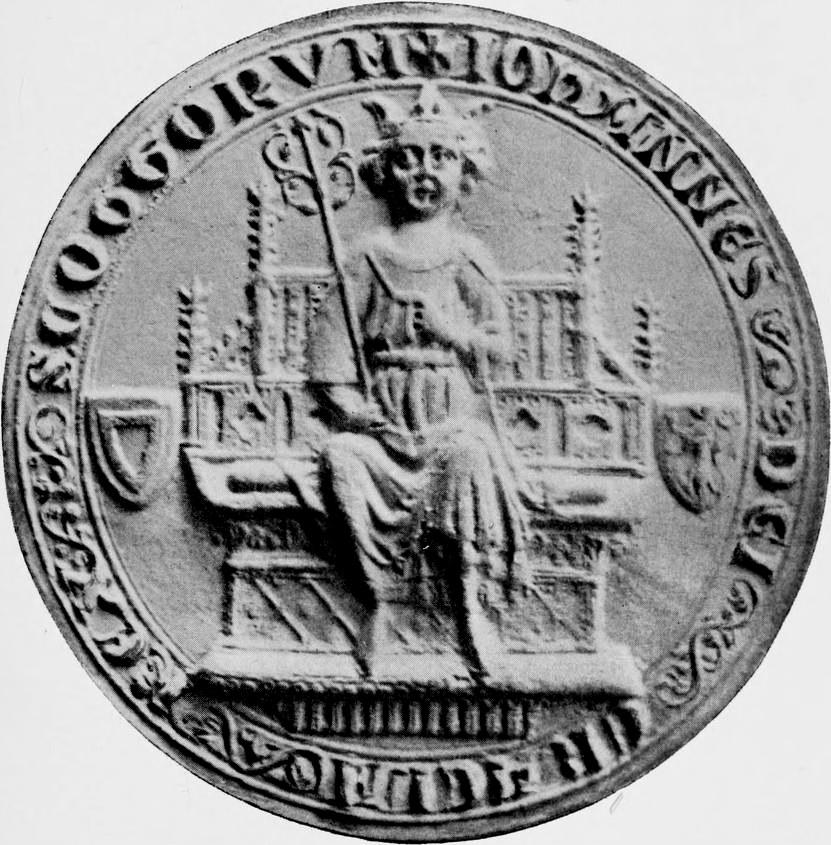
AI-assisted Portrait of John Balliol
The Empty Coat
History remembers John Balliol by an insult. When the Scots rebelled against their English overlord and the campaign collapsed, Edward I had the royal arms physically torn from Balliol's surcoat in a ceremony of degradation, and the Scots gave their deposed king a name that has clung to him for seven centuries: Toom Tabard, the Empty Coat. It was meant as contempt—a king reduced to a stripped garment, the form of authority and none of its substance—and it stuck because it felt true.
He had not seized the throne. In 1292 he was awarded it. The Scottish royal line had died out, a tangle of claimants pressed their cases in the great legal contest known as the Great Cause, and Edward I of England was invited in as arbiter. Edward chose Balliol over the rival claim of Robert the Bruce's grandfather—then made it brutally clear that the crown came with a leash, summoning King John to answer in English courts like any common vassal and demanding Scottish troops for England's wars. Balliol bent, and bent, and bent. When at last the Scottish magnates forced his hand into open defiance—sealing the Auld Alliance with France against England—Edward invaded, shattered the Scots, and unmade the king he had made.
Balliol is the ISFJ caught in the wrong century—dominant Si's reverence for established order and proper place married to auxiliary Fe's instinct to accommodate, yield, and keep the peace, in a role that demanded a man willing to defy everything and fight.
The Man Who Knew His Place
Si — dominant
Dominant Si is rooted in precedent and established form—it honors the way things are supposed to be done and takes its bearings from the conventional order rather than from some private vision of how the world might be rearranged. In its strengths it produces steadiness and conscientious duty; in its weaknesses, a man who cannot imagine acting against the framework he was handed.
Balliol's whole tragedy is legible as Si deferring to a hierarchy it deemed legitimate. He had submitted to Edward as overlord during the Great Cause because that was the established procedure—so when Edward later pressed his rights as feudal superior, Balliol had no ground to stand on, because in his own mind the relationship was real and binding. He had done homage; homage meant obedience. An Ne-led claimant might have treated that oath as a tactical fiction to be discarded the moment it grew inconvenient. Balliol could not: the framework that trapped him was a framework he believed in. This is why he reads as so passive in the record—not stupid, not cowardly in any simple sense, but constitutionally inclined to find the rightful structure and submit to it, deferring upward to Edward and sideways to his own nobles alike.
The Instinct to Accommodate
Fe — auxiliary
If Si explains why Balliol respected the structure, auxiliary Fe explains why he was so easily dominated within it. Fe orients toward harmony and social expectation; it reads what others want and feels the pull to provide it. In a confident person it produces tact and diplomacy—in a man with no countervailing steel, a chronic inability to say no.
Edward understood exactly what he was dealing with. Each humiliation—the summonses to Westminster, the public reversals of Scottish verdicts, the demand that the King of Scots appear as a defendant—was a test, and each time Balliol's instinct was to comply, to smooth the friction, to keep the peace with a man who had no intention of keeping it. Fe wants the relationship to work and reads confrontation as failure; against an overlord who weaponized that wish, accommodation was simply surrender on the installment plan.
The most telling detail is that the defiance, when it finally came, was not really his. It was the Scottish nobility—through the governing council—who drove the realm to resist and to seal the Auld Alliance with France; Balliol was carried along by the men around him as helplessly as he had earlier been carried along by Edward. He rebelled because his community demanded a rebellion, not because a will of his own had awakened. That is the quiet horror of his position: even his one act of resistance was an accommodation.
The Letter of the Law
Ti — tertiary
Tertiary Ti gives the ISFJ a capacity for private, principled reasoning—a sense of internal consistency about what is and is not properly owed. In Balliol it surfaced as a lawyer's literalism: a fixation on what the rules actually said rather than on the realities of power they were supposed to govern. His claim to the throne itself was won on exactly this terrain—he was the senior heir by the strict logic of primogeniture, and the Great Cause was decided in the end on that legalistic principle over the Bruce counter-argument about nearness of blood.
The trouble was that paper was all he won. Tertiary Ti can follow a consistent rule but lacks the dominant strategist's feel for when the rules are about to be rewritten by force. Balliol kept appealing to what was legally correct while Edward simply changed what the law would be made to mean.
No Vision of Another Way
Ne — inferior
Inferior Ne is the ISFJ's weakest faculty: the imagination of alternatives, the leap to what might be rather than what has always been. In Balliol's story its absence is the whole point. A king facing Edward I needed precisely the gift inferior Ne could not supply—the ability to envision a Scotland that owed England nothing, and to act decisively to create it.
Robert the Bruce, when his turn came, had exactly that: the imaginative audacity to break every oath, murder a rival on holy ground, and gamble a kingdom on a future no one could yet see. Balliol had none of it. He could not conceive of himself as anything but the lawful vassal-king the existing order had defined, so when that order turned against him he had no second picture of the world to fall back on. Stripped of his arms in 1296, he abdicated, was imprisoned, and was eventually released to live out his years quietly on his family's estates in France—a man who, given a crown, could only ever wear it as it was handed to him.
Why ISFJ Over ISTJ
Why not ISTJ?
The ISTJ shares Balliol's dominant Si—the same reverence for precedent and proper procedure—but pairs it with Te, the impersonal drive to administer, decide, and impose order. An ISTJ king would have been a self-directed manager: cold, dutiful, and capable of saying no on principle. Balliol was not that. He was deferential and accommodating, governed by others' expectations and the wish to conform rather than by any internal standard he was prepared to enforce. He yielded where a Te-led monarch would have asserted, which points to Fe, not Te, in the auxiliary seat.
The distinction locates the exact nature of his failure. An ISTJ can be rigid and unimaginative and still rule, because Te will draw a line and defend it; Balliol's undoing was softer and more total. He did not lose Scotland because he made the wrong impersonal calculation. He lost it because he was constitutionally built to defer—and Edward I had measured that to the inch.
Connected Figures
Further Reading
- The Balliol Dynasty, 1210–1364 — Amanda BeamThe definitive study of the family itself — recovers John Balliol from caricature and traces the dynasty's claim across a century and a half.
- Robert Bruce and the Community of the Realm of Scotland — G. W. S. BarrowThe classic account of the period; indispensable on the Great Cause and the political world that Balliol failed to master.
- Under the Hammer: Edward I and Scotland — Fiona WatsonA focused study of Edward's domination of Scotland in the 1290s — the machinery of overlordship that ground Balliol down.
