 Historical Figure MBTI
#956 · 7-14-26 · The Pacific War
Jonathan Wainwright
General · Left Behind · Survivor of Bataan
1883 — 1953
5 min read
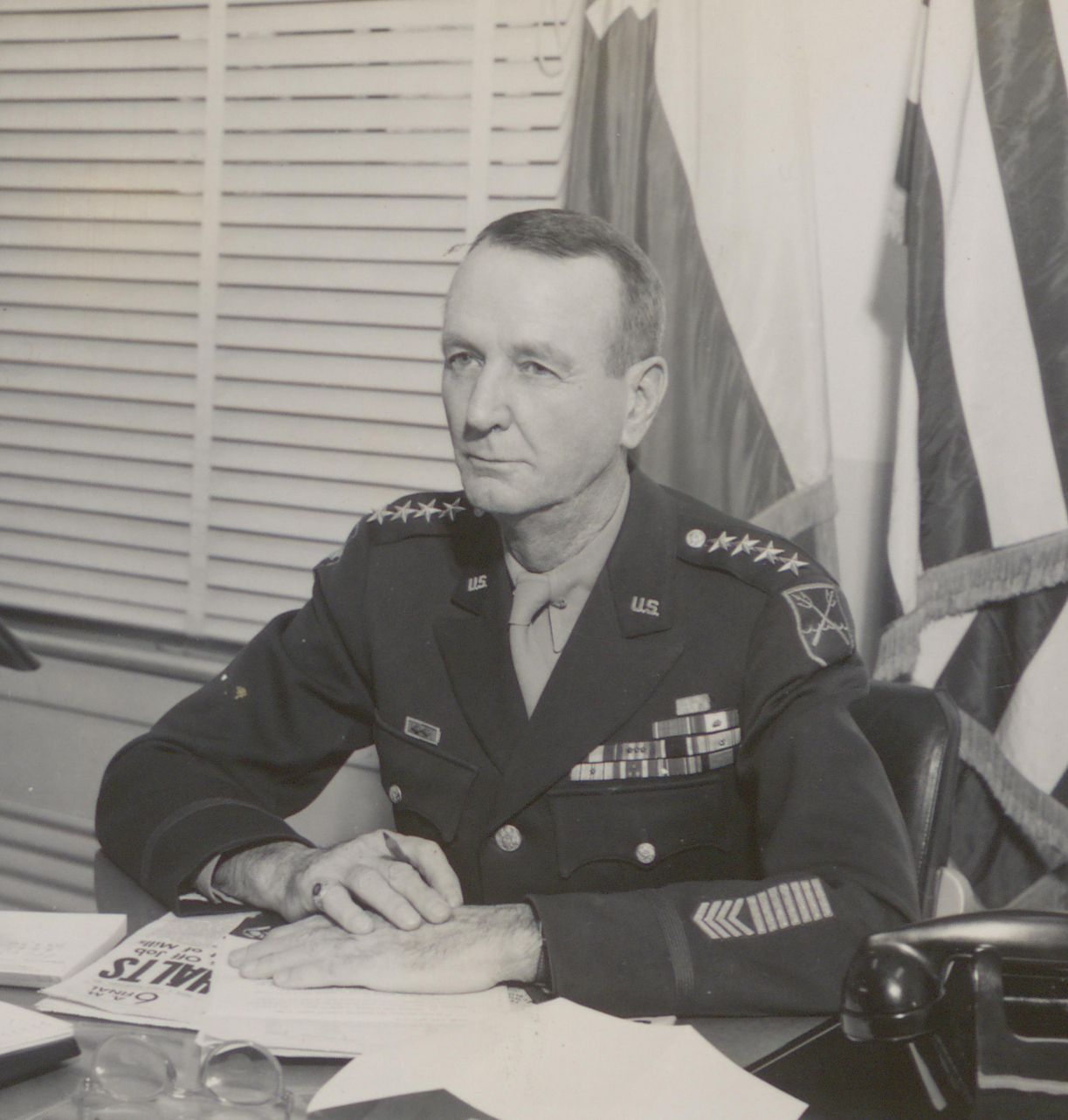
Portrait of Jonathan Wainwright
The General Who Stayed
Skinny Wainwright was a cavalryman of the old school — tall, gaunt, profane, fond of horses and whiskey and the company of enlisted men — and in March 1942 he inherited the worst job in the United States Army. Roosevelt had ordered Douglas MacArthur out of the Philippines. Someone had to remain with the starving, malarial garrison on Bataan and the tunnels of Corregidor, hold as long as flesh allowed, and then do the thing no American general wants his name attached to. Wainwright stayed.
He held longer than anyone in Washington expected. His men were on half rations and then quarter rations, eating cavalry mounts and carabao, riddled with malaria and dysentery, without relief or any prospect of it. Bataan fell in April; Corregidor was shelled to rubble through May. When Japanese troops got onto the island and the choice narrowed to surrender or the annihilation of eleven thousand sick men in a tunnel, Wainwright went on the radio and gave up the Philippines, knowing exactly what it would cost his name. Then he spent three years as a prisoner in Luzon, Formosa, and Manchuria, convinced he would come home to a court-martial.
Wainwright was an ISFJ: a Si-dominant soldier whose loyalty ran to the men in front of him rather than to the record behind him, and who paid for it with his reputation before history returned it.
Thirty-Six Years of Doing It Properly
Introverted Sensing is memory as a working instrument — the accumulated, concrete sense of how things are done and what they have cost before. Wainwright was the product of it: West Point 1906, the son of a cavalry officer who died on service in the Philippines, four decades in a branch that was already obsolete when he entered it. He knew his regiments by their horses and his officers by name, and he ran the defense of Luzon with a stubborn, unglamorous competence, conducting the fighting withdrawal down the peninsula that got a beaten army into the Bataan line at all.
The same faculty kept him upright in captivity. Through three years of beatings, starvation, and deliberate humiliation — paraded for propaganda, reduced to skin over bone — he held to the small observances of an officer: he kept his rank, kept a record, kept his men’s conditions in view, and blamed himself in a private accounting he never stopped keeping. When he was pulled out of a camp in Manchuria in August 1945, his first concern was not liberation but whether he would be permitted to remain in the Army he had, as he saw it, failed.
The Surrender That Cost Him Everything But His Men
Auxiliary Extraverted Feeling is attunement to the people actually present, and it is the whole explanation of May 1942. Wainwright was under standing instruction not to capitulate, and he had every conventional incentive to fight to destruction: the last stand is what the histories reward, and he knew it. He walked the batteries, saw what dysentery and shellfire had done, and understood that a symbolic finish would purchase nothing but the deaths of men who could not stand up. So he broadcast the surrender — and then, when the Japanese threatened the Corregidor garrison to force it, extended it to all American forces in the Philippines, an order that enraged commanders still free in the south and that he carried as a personal shame for the rest of his life.
Fe also shows in how he was regarded. He shared the garrison’s rations and its shelling, visited the forward positions, and was called Skinny with affection by men who had a mocking nickname ready for the general who had gone. In prison camp he intervened for his officers at direct physical cost to himself. The instinct that made him a beloved commander is the same one that made him unable to spend his men for an abstraction, and it is precisely the trait that a purely procedural soldier would not have had.
History settled it in his favor. Restored, gaunt and unsteady, he stood on the deck of the Missouri in September 1945 beside Arthur Percival as MacArthur signed the Japanese surrender, and was handed one of the pens. Congress voted him the Medal of Honor, and he went home a hero to men who had never doubted him.
Why ISFJ Over ISTJ
Why not ISTJ?
Everything about the career says ISTJ — West Point, the cavalry, thirty-six years of correct service — until the one decision that mattered. Te-driven duty had an unambiguous answer in May 1942: the orders said hold, the doctrine said a fortress fights, and a Te-auxiliary officer would have obeyed the standing instruction and let the record absolve him. Wainwright did the opposite, and did it knowing the record would not absolve him at all. The criterion he actually applied was the condition of the men in front of him — Fe over procedure — and he compounded it by surrendering forces beyond his tactical reach to spare the garrison being used as hostages. That is a feeling judgment overriding a thinking one, made by a man temperamentally incapable of pretending otherwise.
The tell is the guilt. An ISTJ who had followed the humane course against orders would have built a case for it; Wainwright never did. He accepted that he had broken the rule, expected to be court-martialed for it, and would not argue his own defense — because in his own mind he had chosen his men over the standard and simply had to live with the bill. Si supplied the unbreakable sense of what an officer owes; Fe decided what, in the end, he owed it to.
Connected Figures
Further Reading
- General Wainwright's Story — Jonathan M. Wainwright (ed. Robert Considine)His own postwar account of Bataan, Corregidor, and captivity — plainspoken and self-accusing.
- Hero of Bataan: The Story of General Jonathan M. Wainwright — Duane SchultzThe standard full-length biography, strong on the surrender decision and its aftermath.
- Tears in the Darkness: The Story of the Bataan Death March and Its Aftermath — Michael Norman and Elizabeth M. NormanThe definitive narrative of what happened to the army he surrendered.
- But Not in Shame: The Six Months After Pearl Harbor — John TolandContemporary-style reconstruction of the Philippine collapse from both sides.
- Ghost Soldiers — Hampton SidesThe 1945 Cabanatuan raid — the fate of the prisoners Wainwright left behind in the camps.
