 Historical Figure MBTI
#957 · 7-14-26 · The Pacific War
Manuel Quezon
President of the Philippines · Exile · Nation-Builder
1878 — 1944
5 min read
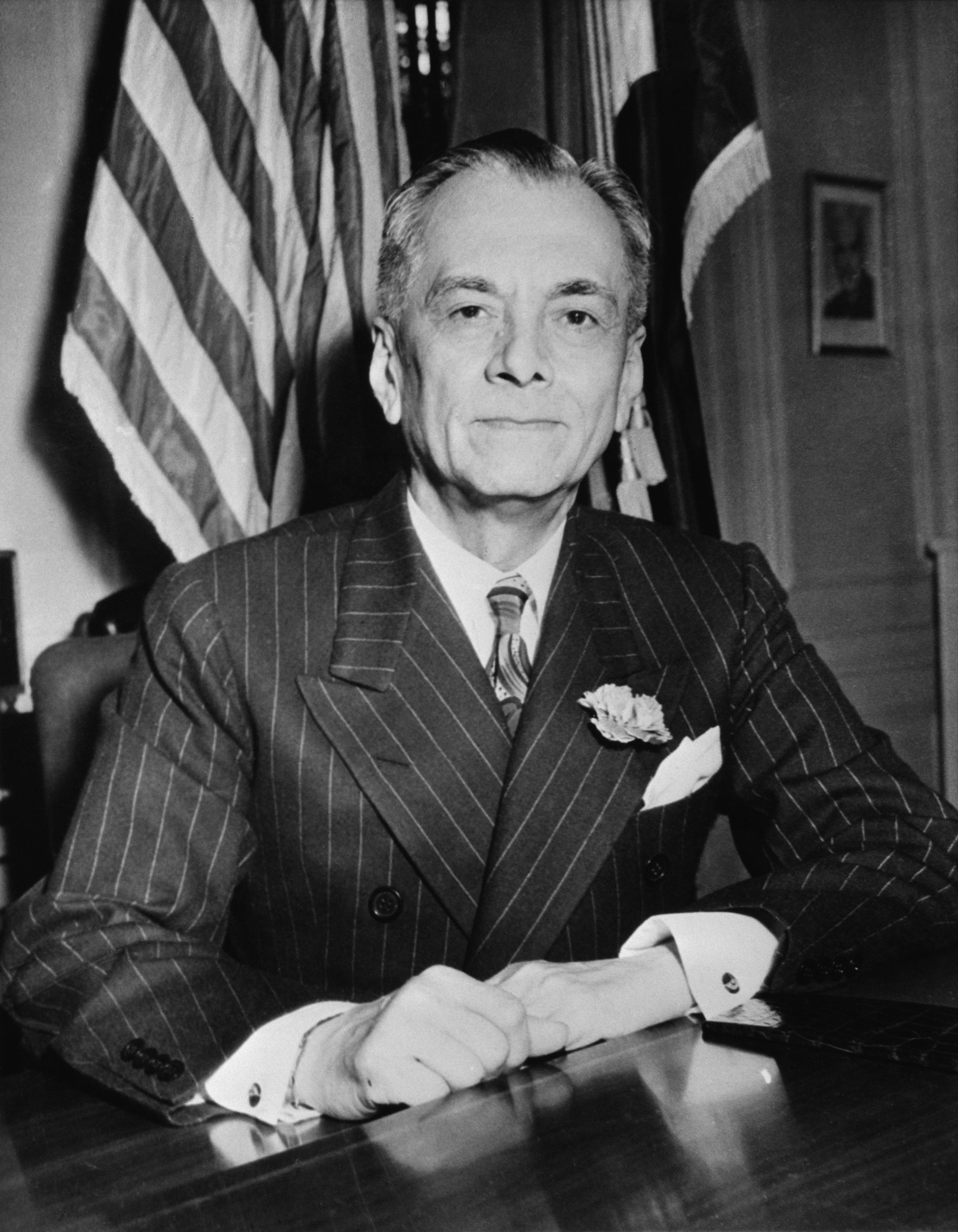
Portrait of Manuel Quezon
A Country Carried in One Man’s Voice
Manuel Quezon had a gambler’s charm and a revolutionary’s résumé — a major under Aguinaldo at twenty-one, a lawyer and provincial prosecutor under the Americans who had just beaten him, then the most effective lobbyist any colonized people ever sent to Washington. He spent two decades in the American capital cultivating congressmen, and he did not win Philippine independence by argument alone. He won it by making people like him, and then by making liking him and supporting the Philippines the same act.
He became the first president of the Commonwealth in 1935 and had six years to build a state before the Japanese arrived. When they did, in December 1941, he withdrew with Douglas MacArthur to Corregidor, was sworn in for a second term inside a tunnel, and was taken out by submarine and bomber to Australia and then Washington. There he ran a government-in-exile from hotel rooms and a house in Virginia, sat as an equal on the Pacific War Council, put a Filipino signature on the Declaration by United Nations, and coughed his way through it all with tuberculosis he had carried for years. He died in August 1944 at Saranac Lake, two months before the landings at Leyte.
Quezon was an ENFJ: dominant Fe turned into statecraft, a man who governed by winning people and who spent his last strength keeping a nation that did not yet exist alive in other people’s imaginations.
Persuasion as a Form of Sovereignty
Quezon had no army worth the name and no leverage but sympathy, so he made sympathy an instrument. As Resident Commissioner in Washington from 1909 he learned the capital’s rooms the way a general learns terrain — who could be flattered, who needed to be seen to have won, which committee chairman would move if the request came as a favor rather than a demand. The Jones Act of 1916, with its promise of eventual independence, and the Tydings-McDuffie Act of 1934, which set the clock running, were both extracted this way. When the rival Hare-Hawes-Cutting bill came back first under another man’s name, Quezon killed it in Manila and returned with a near-identical bill of his own — because the point was never only the text, it was who the Filipino people would follow afterward.
He governed the same way. Fe is attunement made authoritative: he read what a crowd needed and gave it, in Spanish, English, or Tagalog as the room required, and his social justice program — minimum wage, an eight-hour day, tenancy reform — was pitched as the state’s obligation to the man with nothing. His decision in 1939 to open the Philippines to Jewish refugees fleeing Europe, when almost every other government was closing its doors, was a characteristic act: personally driven, publicly staged, and unmistakably about who he believed a Filipino should be seen to be.
The Nation He Would Not Live to See
Auxiliary Ni gave the charm a destination. Quezon was building toward a single image of a Philippines that did not yet exist and could not be pointed at — one people with a national language, a national army, a national school system — and he pursued it with the long patience of a man who could see the finished thing. He convened the institute that selected Tagalog as the basis of a national language; he brought MacArthur to Manila as Field Marshal to build an army from a standing start; he moved the capital to a new city bearing his own name because a nation should be founded, not merely inherited. His famous line that he would rather have a government run like hell by Filipinos than one run like heaven by Americans is Ni speaking: the future is not a set of outcomes to be optimized, it is a condition to be reached.
Exile tested the vision in the cruelest way. In February 1942, sick and watching the promised American relief fail to arrive on Corregidor, he proposed to Roosevelt that the Philippines be granted immediate independence and neutralized — a plan that would have taken his country out of a war it was losing. Washington refused, MacArthur backed the refusal, and Quezon accepted it and turned the whole of his remaining strength to the opposite course: keeping Filipino loyalty and American obligation welded together until the islands could be retaken. He held that line from a sickbed for two more years, and the independence he had spent his life arranging arrived on 4 July 1946, twenty-three months after his death.
Why ENFJ Over ENTJ
Why not ENTJ?
Quezon was undeniably a power politician — he dominated the Nacionalista Party, outmaneuvered Osmeña for a decade, and pushed the Commonwealth constitution toward a stronger presidency. But the ENTJ operates by controlling structures, and Quezon almost never had a structure to control: no army until he borrowed one, no treasury that mattered, no sovereignty at all until 1935. His instrument was relational throughout — loyalty, sympathy, personal obligation, reputation — and it kept working in Washington in 1942 precisely when he had no institutional power left whatsoever. Set him beside MacArthur, an actual Te dominant, and the difference is visible in the same room: MacArthur built and commanded the machine, Quezon moved the men who decided what the machine was for.
The dying is the final evidence. A Te-dominant in his condition would have consolidated an apparatus and named a successor to run it; Quezon spent his last two years doing interviews, broadcasts, and dinners — keeping the Philippine cause emotionally present to an American public with a great many other allies to think about. He was, at the end, a president with no territory whose entire remaining power was that people believed him. That is Fe carried to its outer limit.
Connected Figures
Further Reading
- The Good Fight — Manuel L. QuezonHis memoir, dictated as he was dying in exile — the case for the Philippines in his own voice.
- Quezon: Paladin of Philippine Freedom — Carlos QuirinoThe standard Filipino biography, close to the party politics of the Commonwealth years.
- In Our Image: America's Empire in the Philippines — Stanley KarnowThe American colonial relationship Quezon spent his career working from inside.
- The Philippines: A Past Revisited — Renato ConstantinoThe nationalist counter-reading, skeptical of Quezon's accommodation with American power.
- Tears in the Darkness: The Story of the Bataan Death March and Its Aftermath — Michael Norman and Elizabeth M. NormanThe war that overtook the Commonwealth, told from the Bataan front he left behind.
