 Historical Figure MBTI
#1095 · 8-15-26 · The Warring States
King Xuan of Qi
The King Who Collected Philosophers
c. 350 – 301 BCE
3 min read
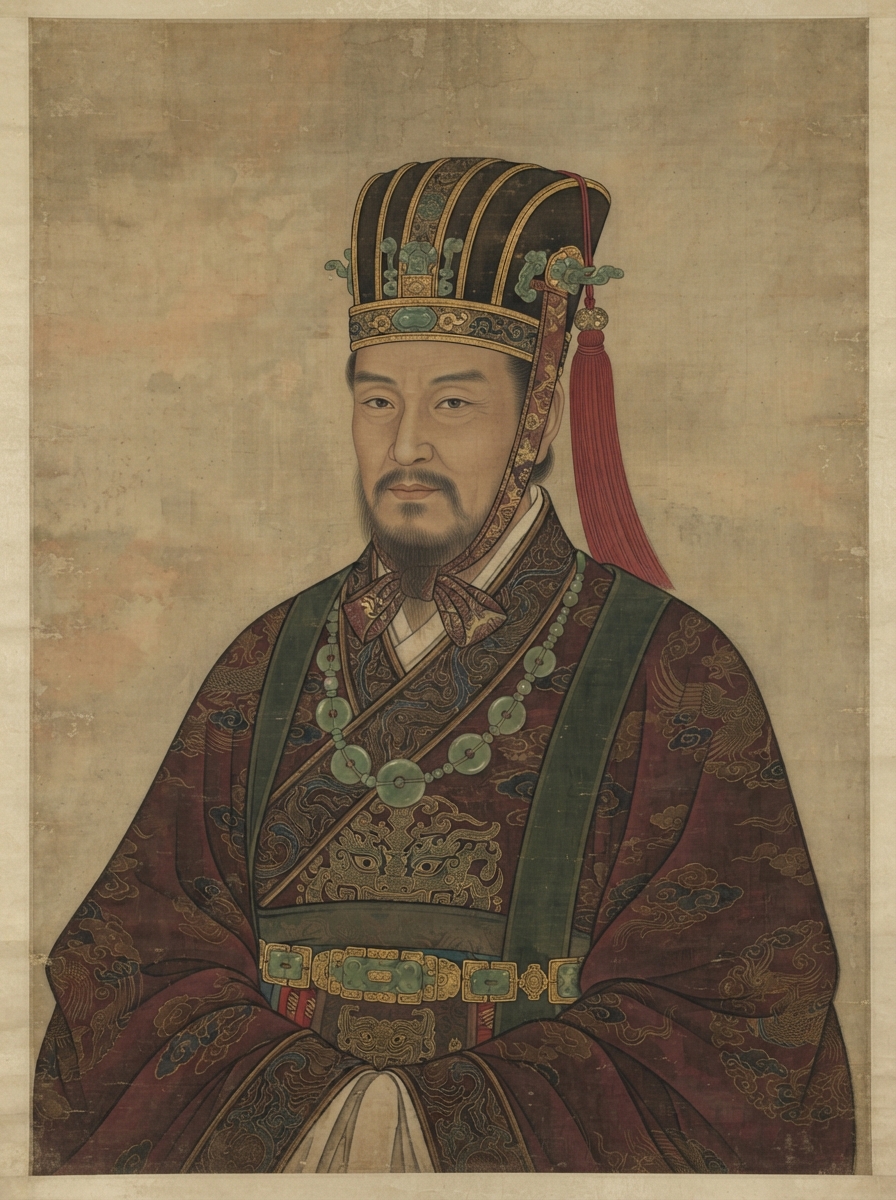
AI-assisted Portrait of King Xuan of Qi
A Court Built for Applause
King Xuan of Qi never won a war worth remembering, never codified a law, never left behind an idea that bears his name. What he built instead was an audience — the Jixia Academy, already founded by his predecessors, swelled under his patronage into the largest gathering of philosophers the Warring States world had seen, hundreds of thinkers drawn from every rival school, housed, salaried, and set loose to argue in his capital. He did not ask them to agree with one another, and he did not, in the end, ask much of himself either. He asked to be seen surrounded by wisdom.
That distinction — between wanting wisdom and wanting to be seen wanting it — runs through everything we know of him. His dialogues with Mencius, preserved almost verbatim, show a ruler who leaned forward at every mention of benevolent government, who professed real admiration for the ancient sage-kings, and who then, asked to actually govern with restraint, confessed instead to a weakness for war, wealth, and music, as if these were mitigating personal details rather than the entire question at hand. He wanted the philosopher's blessing. He did not want the philosopher's terms.
He collected philosophers the way another king might collect tribute — not to be changed by them, but to be completed by their presence, gathered around him, adding their prestige to his.
Psychological Verdict
Xuan reads as an ESFJ, and the evidence is less in any single decree than in the shape of his ambition. Expanding Jixia was, at bottom, a social act — an investment not in a doctrine but in a reputation, in the warmth and stature that came from being the king under whom Mencius, Zou Yan, and a hundred lesser names chose to gather. An introverted or purely strategic ruler might have funded one school and ignored the rest; Xuan wanted the whole chorus, because the chorus itself was the point. That is dominant Fe: a hunger for harmony, esteem, and belonging that expresses itself through generosity toward a community, rather than through private conviction.
His exchanges with Mencius complete the picture. He does not argue philosophy for its own sake — he wants approval, then quietly negotiates the approval down to something he can actually afford, citing his fondness for music and treasure as though a king's tastes were a fixed inheritance rather than a choice. That is a man governed by what looks good and feels affirming in the moment, not by an internal architecture of principle he is prepared to defend against his own comfort. He built the grandest salon in China and still went home unreformed — generous with his court, careful with himself.
Connected Figures
Further Reading
- Mencius — trans. D. C. LauBook I preserves Xuan's dialogues with Mencius nearly verbatim, the best window into his temperament.
- Shiji (Records of the Grand Historian) — Sima QianThe standard early account of the Qi court and the Jixia Academy's rise.
- The Jixia Academy and Early Chinese Thought — General histories of the Warring StatesSurveys the academy's scale and its role as an intellectual clearinghouse under Xuan.
