 Historical Figure MBTI
#907 · 7-3-26 · The Rise of Fascism
Lord Halifax
Foreign Secretary · The Diplomat Who Nearly Succeeded Chamberlain
1881 — 1959
6 min read
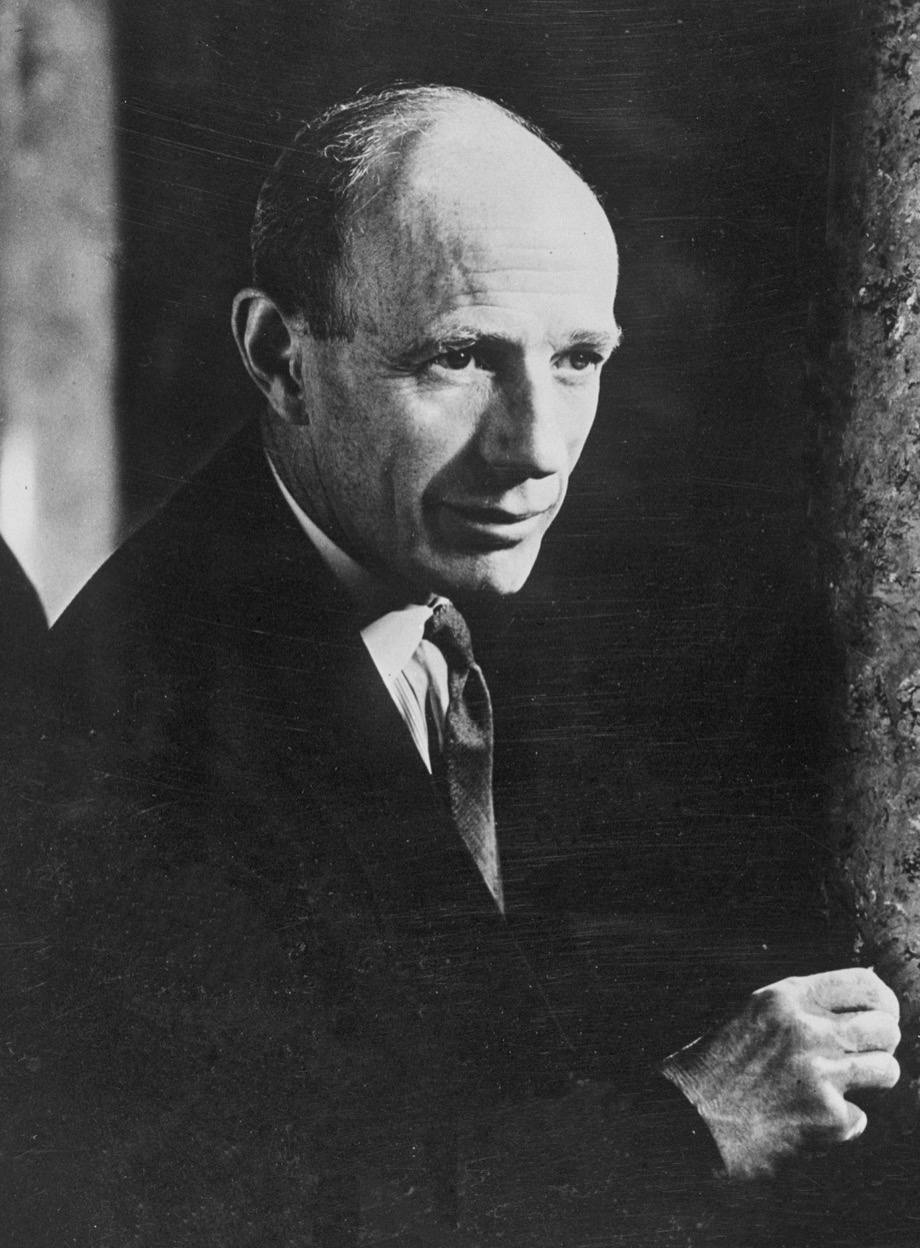
Portrait of Lord Halifax
The Man Who Reasoned His Way Out of Downing Street
In May 1940, as France collapsed and the phoney war became a real one, the office of Prime Minister was Edward Wood's to take. Chamberlain preferred him. The King preferred him. Most of the Conservative Party preferred him. Lord Halifax — cool, devout, immaculately credentialed after four years as Foreign Secretary and five as Viceroy of India — needed only to say yes. He said no, and handed the war to Winston Churchill instead.
It is the strangest non-decision in modern British politics, and it is also the clearest window into who Halifax was. He did not talk himself out of power because he lacked ambition or nerve — he had governed a subcontinent and negotiated with Hitler face to face. He talked himself out of it because, sitting in the War Cabinet room turning the problem over, he concluded that a Prime Minister in the House of Lords could not command a House of Commons at war, and that Churchill, whatever his faults, was better built for the moment. It was a private argument won against himself, not a public one lost to a rival.
Halifax was an INTP, and nothing marks the type more precisely than a man who reasons his way out of the greatest prize of his career because the internal logic will not close.
Everywhere else in his career the same instrument is visible: not conviction radiating outward, but a mind working a problem in private until it arrives, quietly and without theater, at a conclusion — appeasement included.
The Logic That Removed Him From Power
The War Cabinet debates of 26–28 May 1940 are the single best-documented instance of Halifax's dominant Ti in action, because for once the internal process was overheard. He did not simply defer to Churchill out of loyalty or timidity. He circled the actual structural question — could a peer, cut off from the Commons, direct a war ministry that depended on the confidence of elected MPs? — turning it over aloud, testing it, refusing to let sentiment or ambition settle it prematurely. Churchill's biographers have often read this as Halifax losing his nerve on the substance of the war (whether to explore peace terms through Mussolini). It was more precisely a man applying rigorous internal analysis to a constitutional problem and finding that the categories did not permit the outcome he was being offered.
The same faculty runs through his diplomacy. As Foreign Secretary from 1938, Halifax pursued appeasement not with Chamberlain's moralizing hopefulness but through careful, almost legalistic argument — treaty structures, the balance of continental power, the arithmetic of British military unreadiness. When he flew to meet Hitler in 1937, his notes on the encounter read less like a statesman recoiling from evil than an analyst cataloguing a specimen: cold, precise, oddly unmoved by what should have alarmed him. That detachment could look like moral failure from the outside. From the inside, it was Ti doing exactly what it does — holding the emotional temperature down so the structure of the problem could be seen clearly, for better and for considerably worse.
Even his conversion from appeasement, when it finally came after the occupation of Prague in March 1939, arrived not as an emotional break but as a recalculated premise: the model of Hitler as a rational actor who could be satisfied had failed a test, so the model was discarded and a new one built. Ti does not repent. It revises.
A Viceroy Who Negotiated in Possibilities
Halifax's auxiliary Ne shows most clearly not in the 1940 crisis but in the earlier one he actually resolved: India. As Viceroy from 1926 to 1931, he broke with the instincts of most of his caste by meeting Gandhi as a serious interlocutor rather than a problem to be suppressed. The Irwin–Gandhi Pact of 1931 — an agreement Churchill despised him for, memorably sneering at the spectacle of a Viceroy negotiating with a "half-naked fakir" — was the product of a mind willing to entertain an unconventional configuration of the relationship between Britain and India rather than defend the existing one by reflex.
That same openness to alternative framings shaped his approach to Germany in the later 1930s, for better and worse: he could imagine, sincerely, a Europe in which German grievances were addressed through negotiated concession rather than confrontation, and he pursued that imagined arrangement with real intellectual energy rather than mere hope. It was Ne generating the possibility space appeasement required — and Ti, too slow to test that space against Hitler's actual intentions, that let the possibility outlive its usefulness.
The High Anglican Constant
Underneath the analysis sat a tertiary Si that never wavered: devout, ritual-bound High Anglican faith, a lifelong attachment to fox hunting and the rhythms of his Yorkshire estate, and an unshakeable loyalty to constitutional propriety even when it cost him the premiership. Halifax's piety was not performed for political effect — it was the settled ground beneath a restlessly analytical mind, the fixed point his Ti circled back to when the arguments ran out. It is visible, too, in his later posting as Ambassador to Washington from 1941, where he executed a role that required steadiness and procedural correctness — building the Anglo-American wartime relationship brick by careful brick — rather than improvisation.
Why INTP Over INTJ
Why not INTJ?
An INTJ facing the May 1940 crisis would have arrived at a decisive, structured verdict and driven toward it — Ni-Te does not linger. Halifax instead circled the question for three days of War Cabinet debate, testing the constitutional logic from multiple angles rather than committing early and executing. His discomfort was not strategic caution masking resolve; contemporaries described a man visibly uncertain in the room, still working the problem when the moment for decision had effectively passed. That is Ti processing, not Ni converging — analysis for its own sake, comfortable staying open rather than closing down on a plan.
The distinction matters because Halifax is so often read backward through the outcome — surely a man who nearly became Prime Minister must have been driven by some steely long-range design. The record says otherwise. He was most himself not when seizing the moment but when explaining, carefully and to himself first, why he should not.
Connected Figures
Further Reading
- The Holy Fox: A Life of Lord Halifax — Andrew RobertsThe definitive biography, unusually sympathetic to Halifax's reasoning in May 1940.
- Appeasing Hitler — Tim BouverieA sharp narrative account of the Chamberlain-Halifax diplomacy that preceded the war.
- The Reckoning: How the Second World War Reshaped Anglo-American Relations — David ReynoldsCovers Halifax's crucial wartime ambassadorship in Washington.
