 Historical Figure MBTI
#1162 · 8-26-26 · The Three Kingdoms
Lu Su
The Alliance-Builder · Architect of the Sun-Liu Pact · Wu's Quiet Strategist
172 — 217
6 min read
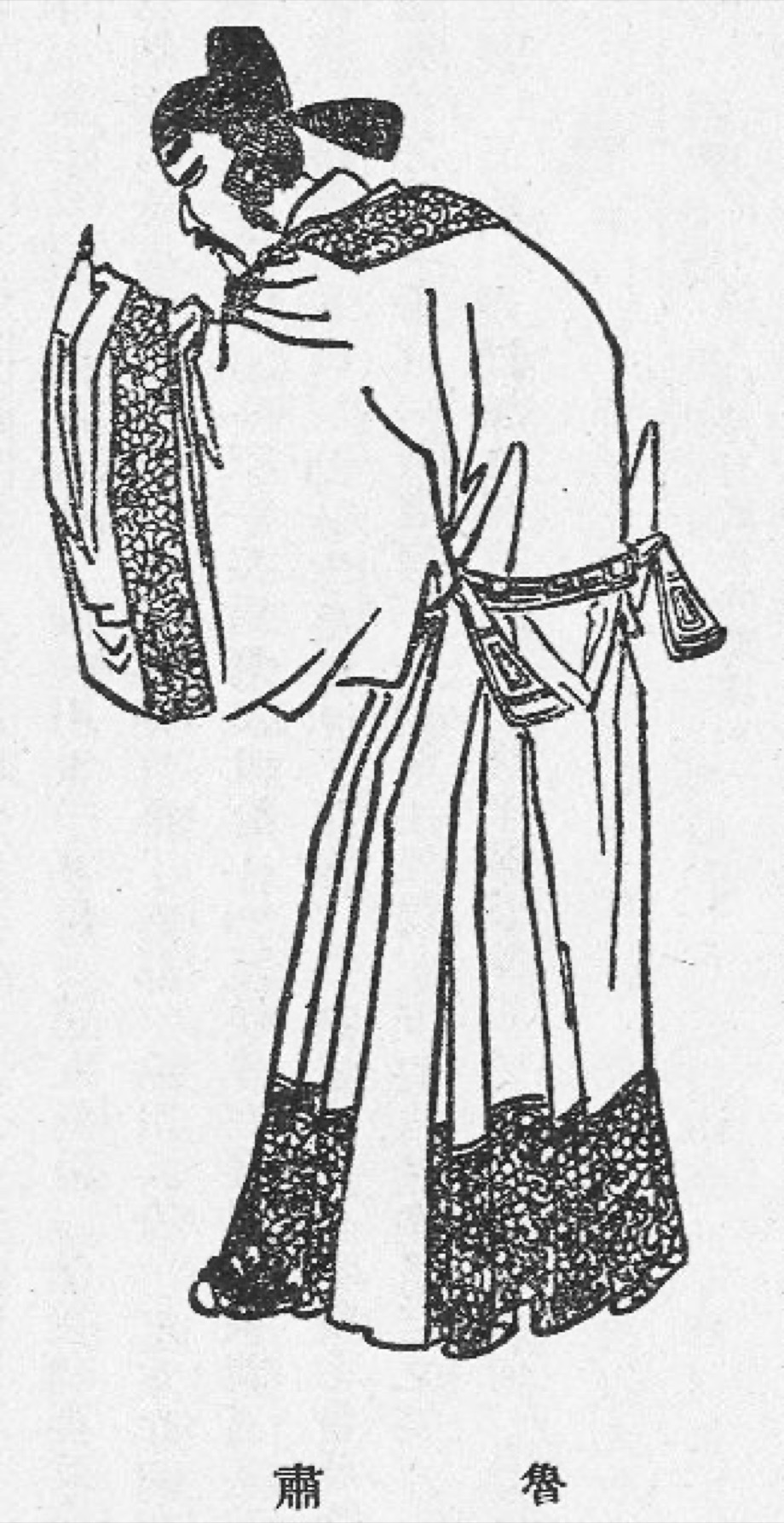
Portrait of Lu Su
The Man Who Chose the Weaker Ally
When Zhou Yu brought Lu Su before Sun Quan, the young lord expected another officer eager to talk of conquest. Instead, in a private tent conversation later recorded almost word for word, Lu Su told him to give up on restoring the Han altogether — to hold the south as its own realm, watch Cao Cao and Liu Biao exhaust themselves in the north, and build toward empire on his own terms. It was 209 years before anyone called it the Three Kingdoms, and Lu Su had already seen the shape of it.
That vision — arrived at alone, held quietly, and offered only when he trusted the listener — is the signature of an INFJ. Where Zhou Yu supplied the fire of Red Cliffs, Lu Su supplied its logic: that Wu could not survive Cao Cao by standing alone, and that the weaker, more erratic Liu Bei was nonetheless the only ally worth the risk. He spent the rest of his life proving it, first at the council table and later, unarmed, across a negotiating mat from Guan Yu himself.
Lu Su was Wu's dominant Ni given a diplomat's face — a strategist who saw the three-way balance of power years before it existed, and then spent a career persuading everyone else to protect it.
Seeing the Shape of a Continent Others Saw as a Province
Lu Su's tent strategy for Sun Quan was not a plan for a campaign — it was a map of the next several decades. Restoring the Han was hopeless, he argued; the only realistic future was a divided China, and Wu's task was to consolidate the south first, then look for the moment to expand. This is the tripartite vision usually credited to Zhuge Liang's Longzhong Plan, delivered to Liu Bei two years later. Lu Su reached it first, alone, without needing to see the whole board laid out by anyone else.
That same long lens governed his advocacy before Red Cliffs. While much of Sun Quan's court, led by Zhang Zhao, argued for submission to Cao Cao's overwhelming force, Lu Su saw past the immediate arithmetic of armies to the structural question underneath: a Wu that surrendered would cease to exist as anything but a province, while a Wu that fought — allied to the weaker but still resisting Liu Bei — had a future worth having. He pressed Sun Quan toward war not from bravado but from a settled, internally reasoned certainty about where each path led.
He held that same read for the rest of his career. After Zhou Yu's death in 210, when Wu's hawks wanted to press their advantage and seize Liu Bei's territory outright, Lu Su kept arguing for the same structural truth he had seen from the start: an alliance was worth more than any single province, because it was the alliance, not the province, that kept Cao Cao from swallowing them both.
Diplomacy Without a Sword
When Lu Su succeeded Zhou Yu as Wu's chief strategist, he inherited a court that expected him to finish what Zhou Yu had started — pressure Liu Bei, retake Jing Province, and grow Wu's territory by force. Lu Su instead spent his tenure holding the alliance together, absorbing the resentment of officers who wanted a harder line, because he judged Wu's institutional survival to depend on it. This was service to the state's long-term interest, not a private crusade; Lu Su's cause was always Wu, delivered through patient persuasion at Sun Quan's side rather than proclaimed as personal conviction.
That patience found its clearest expression at Yiyang in 215, when the dispute over Jing Province brought Wu and Shu to the edge of open war. Lu Su proposed a direct meeting with Guan Yu — and insisted both sides come unarmed, each general accompanied only by a single sword rather than an army. The meeting became a byword for good-faith diplomacy precisely because it worked: two commanders who had every reason to distrust each other sat down, argued the border on its merits, and stepped back from war. It is difficult to imagine Zhou Yu, or almost anyone else in Wu's command, choosing that room over a battlefield.
Lu Su's diplomacy was never about being liked. It was about holding a fragile, mutually suspicious coalition together long enough for it to keep serving its purpose — a project of sustained, outward-facing goodwill in service of a structure he had privately mapped years before anyone else saw it.
The Logic Beneath the Goodwill
Lu Su's insistence on preserving the alliance was not sentimentality about Liu Bei or Guan Yu — men he negotiated with as adversaries as often as allies. It rested on a cold structural argument he could defend on its own terms: if Wu destroyed Shu outright, it would remove the one buffer standing between Cao Cao's armies and Wu itself, and Cao Cao's full weight would then fall on Wu alone. Keeping Liu Bei alive and armed, even at the cost of disputed territory, was the rational price of Wu's survival.
That logic is why Lu Su could hold his position for years against louder, more immediately satisfying counterarguments from his own side. He did not need the room to agree with him emotionally — he needed the balance of power to hold, and he could show, argument by argument, why it would not hold any other way.
Why INFJ Over INFP
Why not INFP?
An INFP's feeling is introverted — a personal, individually held sense of right that resists being bent to institutional demands. Lu Su's Fe runs the opposite direction: it is the feeling of a court diplomat and consensus-builder, exercised on behalf of Wu's collective interest rather than a private moral vision. He did not resign to preserve an inner ideal when the court disagreed with him; he stayed inside the hierarchy and kept persuading Sun Quan, negotiating with Shu's emissaries, and absorbing his colleagues' anger until the structure he had foreseen held together.
Strip away the diplomacy and the same pattern holds: a dominant Ni that reached the tripartite balance of power before anyone else, and an auxiliary Fe that spent years making that private insight everyone else's practical policy. That is INFJ's signature — vision translated into consensus — and it is the specific shape of Lu Su's whole career.
Connected Figures
Further Reading
- Records of the Three Kingdoms (Sanguozhi) — Chen ShouPrimary source for Lu Su's tent strategy and his advocacy at Red Cliffs.
- Generals of the South — Rafe de CrespignyThe standard English-language study of Wu's founding and its command structure.
- A Biographical Dictionary of Later Han, Three Kingdoms and Jin — Rafe de CrespignyReference entries on Lu Su, Zhou Yu, and the Yiyang negotiations.
