 Historical Figure MBTI
#1161 · 8-26-26 · The Three Kingdoms
Sun Ce
The Little Conqueror · Founder of Wu's Fortunes · Zhou Yu's Brother in Arms
175 — 200
9 min read
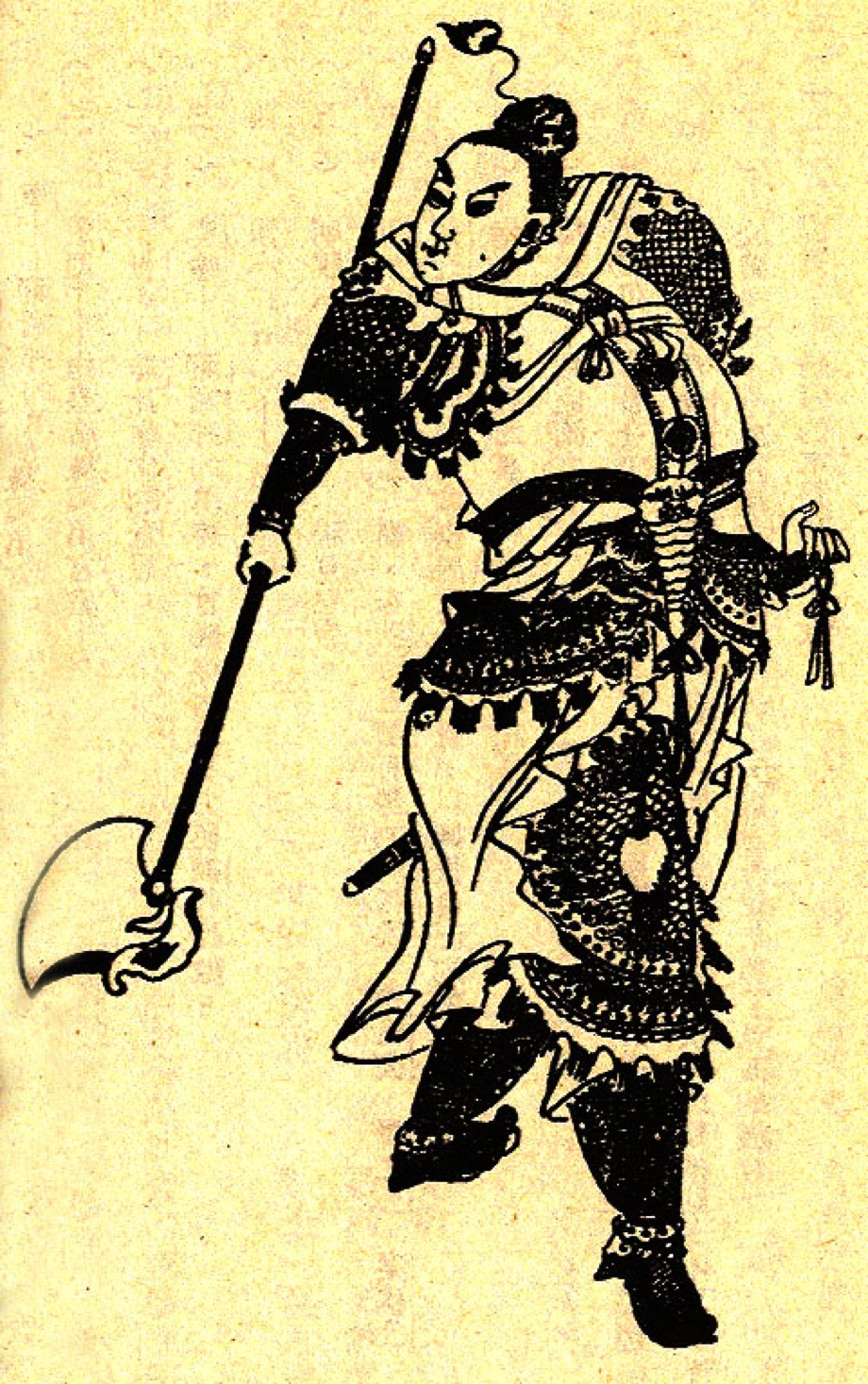
Portrait of Sun Ce
Five Years, One River, One Man
He was twenty when he started and twenty-five when he died, and in between he took the whole south bank of the Yangtze. Sun Ce inherited nothing but a name and a few hundred of his dead father's soldiers — Sun Jian had been killed in a skirmish against Liu Biao's men, leaving a household of children and a reputation with no land under it. What Sun Ce did with that inheritance between 194 and 199 was less a campaign than a detonation. He crossed the river, and the patchwork of governors and bandit-lords and inherited magistrates that ruled the southeast simply came apart in front of him, one after another, faster than any of them could combine.
The Chinese tradition calls him the Little Conqueror, measuring him against Xiang Yu, and the comparison is apt in both directions: unmatched in motion, fatally short of patience. He did not build institutions. He did not negotiate long alliances or plan a decade ahead. He rode at things and they fell over. When he could not out-plan a man he out-arrived him — appearing where no one had budgeted for him to be, striking before the defenders had finished arguing about whether he was real. The territory that would become the Kingdom of Wu, that his brother would rule for half a century and that would hold off Cao Cao at the Red Cliffs, existed because a young man in a hurry took it personally, in the field, with his own hands.
And then, at twenty-five, hunting alone in the woods with a handful of attendants, he met three retainers of a man he had killed, and the whole thing nearly ended before it began.
Sun Ce is ESTP conquest at its purest: dominant Se, a man who solved strategic problems by physically arriving at them first — and who died because the one thing he could not see was the future.
The Man Who Was Always Already There
Dominant Se is the faculty of the immediate physical field — terrain, timing, the body, the opening that exists right now and will not exist in an hour. Sun Ce's entire career is an argument that this alone, pushed hard enough, can be a strategy. He borrowed troops from Yuan Shu on a pretext, crossed the Yangtze with a force small enough to be dismissed, and then never stopped moving. Liu Yao's position at Qu'a collapsed. Wu commandery fell. Kuaiji fell. Each conquest fed the next: the defeated soldiers were absorbed on the spot, and the army that beat the next warlord was largely composed of men who had been fighting Sun Ce a season earlier.
He fought in person, constantly, which is the tell. Commanders of comparable rank directed from behind; Sun Ce was in the line, and the anecdotes that survive are physical ones — the duel with Taishi Ci at Shenting, two young men grappling until Sun Ce came away with his opponent's spear and Taishi Ci with Sun Ce's helmet, a fight that settled nothing tactically and everything about how his men saw him. He did not send for Taishi Ci afterward through intermediaries. He captured him, unbound him, and put him in command, and Taishi Ci did not defect.
The Se advantage compounds in a fragmented landscape. The southeast in the 190s was a dozen small powers, each of which could have held against him if given three months to prepare. None of them got three months. Speed was not a component of Sun Ce's method; it was the method, and it worked until it met the one problem speed cannot solve.
Improvisation With a Spine
It would be easy — and wrong — to read Sun Ce as pure impulse. Auxiliary Ti is what separates a conqueror from a raider: an internal, wordless logic of what will work, applied fresh to each engagement rather than drawn from doctrine. His battles are individually clever in ways that do not repeat. He used feints, night crossings, deliberate withdrawals that pulled garrisons into open ground, and the ruthless arithmetic of attacking whichever neighbour was least able to be reinforced. He read a position, found its one weak joint, and hit that.
Ti also shows in what he did not do. He was not sentimental about the men he broke. He killed rivals when killing them removed a problem and spared them when sparing them removed a larger one, and the decisions do not follow a moral pattern — they follow a structural one. His treatment of the local gentry of Wu was similarly cold: those who could be made useful were absorbed, those who could not were removed, and he did not appear to lose sleep over which category a man fell into.
This is the core that made hard men follow him rather than merely enjoy him. Zhou Yu — himself one of the finest strategic minds of the age — did not attach himself to a charming boy. He attached himself to someone whose judgment in the field he could trust with his own life, repeatedly, and did.
Recruiting on First Impression
Sun Ce built his officer corps almost entirely on personal rapport. He had no imperial commission to offer, no treasury, no ancestral prestige to speak of — what he had was the effect of being in a room with him. Chen Shou's account is blunt about it: men who met him gave him everything they had. Zhou Yu, of a far more distinguished family, met him as a boy, decided in that meeting, and thereafter provided troops, grain, housing for the Sun family and finally his own service. There was no formal offer. There was a friendship, sworn young and never renegotiated.
Tertiary Fe of this kind is warmth deployed at close range and at speed — the ability to make a stranger feel personally chosen. Zhang Zhao, an established scholar considerably his senior, took service under a warlord half his age and was treated as an elder rather than a subordinate. Huang Gai, Zhou Tai, Taishi Ci: an unusual number of Wu's founding generation were recruited on impression and stayed for life. The double marriage to the Qiao sisters — Sun Ce to Da Qiao, Zhou Yu to Xiao Qiao — reads like the same instinct extended into private life, two friends arranging to remain brothers.
But Fe here is a tool, not a governing value. He could be genuinely magnetic and genuinely brutal in the same week. The charm secured loyalty; it never softened a decision.
The Hunt He Should Not Have Taken
Inferior Ni is the inability to hold a long, dark, unfolding consequence in mind while the present is loud and going well. Sun Ce had made an enemy of a powerful local family by executing its head, and their surviving retainers were at large and had every reason to want him dead. This was not obscure information. It was the sort of fact that any advisor could state and that Sun Ce could presumably have repeated back on request. It simply did not translate into altered behaviour.
In 200, riding well ahead of his escort on a hunt — because his horse was fast and he enjoyed being fast — he was caught in the open by three of those retainers and shot in the face. He was twenty-five. Cao Cao and Yuan Shao were about to collide at Guandu; the whole northern order was in play; and the man best positioned to exploit it was dying of an arrow wound taken while chasing a deer. Every element of the death is dominant Se rewarded too long and inferior Ni never consulted at all.
And yet the deathbed itself is the finest thing he ever did. He had a son. Dynastic logic, vanity, and every instinct of the age said name the boy. Sun Ce named his nineteen-year-old brother Sun Quan instead, on the explicit ground that he himself was the better conqueror and Sun Quan the better ruler — that taking territory and holding it were different trades, and the one he was good at was finished. It is Se pragmatism at its most clear-eyed: an accurate assessment of the actual situation, made without flinching, at the last possible moment.
Why ESTP Over ESFP
Why not ESFP?
The magnetism is real, and it invites the reading — an ESFP case would point to the personal recruiting, the sworn friendships, the fact that men loved him. But the ESFP arrangement puts Fi under Se: a private value system, a performer's attunement to whether he is landing well with the people in front of him. Sun Ce shows none of that. He never plays to a room; he never appears to need approval; his decisions about whom to spare and whom to kill follow no personal moral grain, only structural utility. What sits beneath his Se is a hard, impersonal Ti — the battlefield logic that Zhou Yu and Taishi Ci and Zhang Zhao could actually rely on. The warmth was a byproduct of force, not the engine of it. He is remembered for velocity, not for kindness.
The deathbed succession settles it. An ESFP with an inferior Te and a strong personal bond to his own child would have found the dynastic choice nearly unbearable; the pull of what feels right to me is exactly where Fi lives. Sun Ce made the call in a sentence, on the evidence, against his own line — the same faculty that had told him which garrison to hit first, turned one last time on his own succession. That is Se reading the real situation and Ti accepting the answer, with no room left for sentiment.
Connected Figures
Further Reading
- Generals of the South — Rafe de CrespignyThe standard English account of the founding of Wu — Sun Jian, Sun Ce, and the conquest of the lower Yangtze.
- Records of the Three Kingdoms — Chen ShouThe contemporary source; the Wu chapters preserve the Taishi Ci duel and the deathbed succession.
- A Biographical Dictionary of Later Han, Three Kingdoms and Jin — Rafe de CrespignyReference entries on Sun Ce and every warlord he overran, with the dating disputes laid out.
