 Historical Figure MBTI
#1164 · 8-26-26 · The Three Kingdoms
Taishi Ci
The Duelist of Shenting · Loyal to a Fault · Wu's Vanguard Archer
166 — 206
4 min read
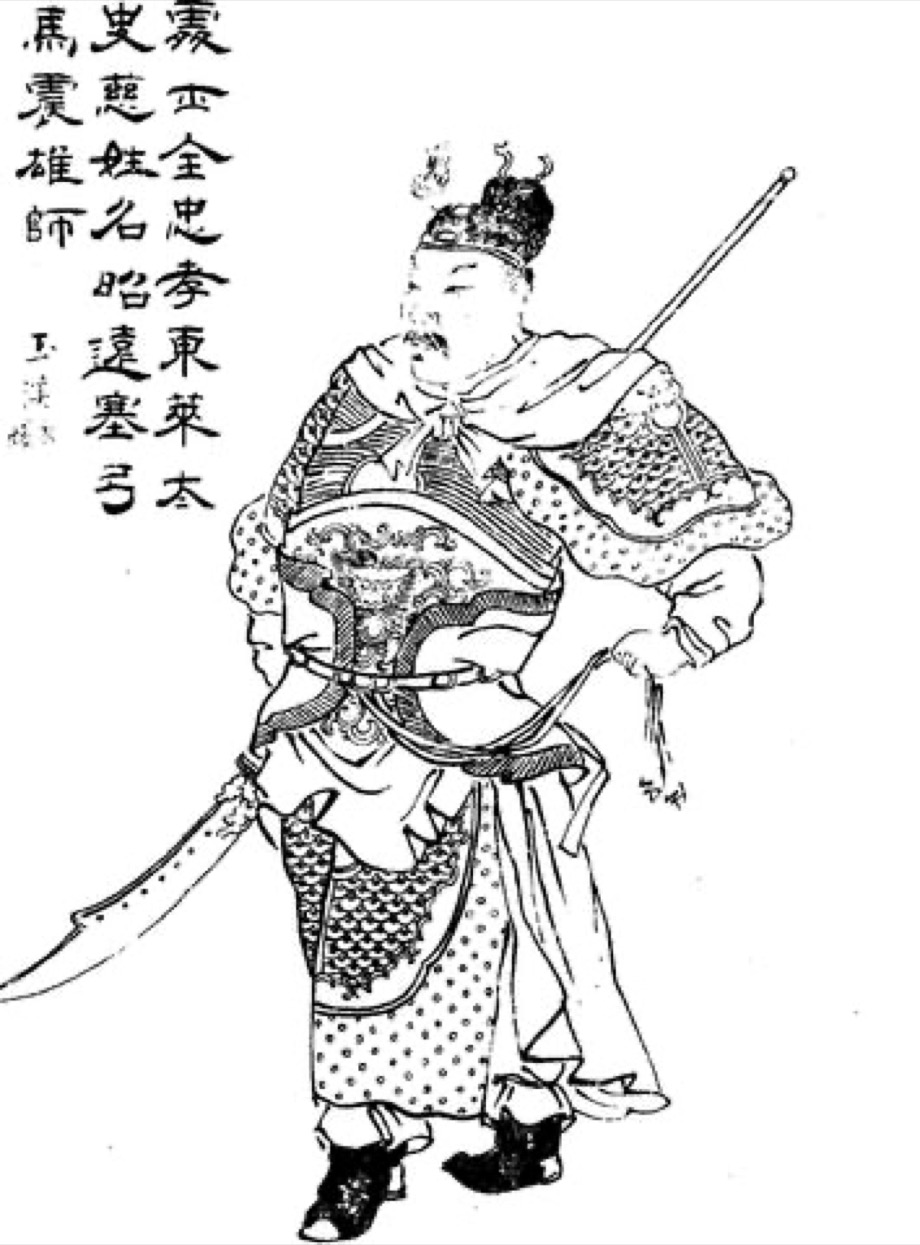
Portrait of Taishi Ci
A Spear Grabbed, a Helmet Grabbed
In the winter of 195, on a stretch of road below Shenting, two young men who did not yet know each other's names tried to kill one another and could not manage it. Taishi Ci, scouting alone, ran into Sun Ce's party of a dozen or so riders. Instead of retreating he charged. The two grappled off their horses — Sun Ce speared Taishi Ci's mount and snatched the short halberd from his back; Taishi Ci tore the helmet clean off Sun Ce's head. Neither landed the killing blow before their soldiers pulled them apart. It is the single scene the Chen Shou's *Records of the Three Kingdoms* preserves best about him, and it tells you nearly everything: this was a man who met the world with his hands, not his calculations.
He had already proven as much serving under Kong Rong, then under siege by Yellow Turban remnants at Beihai. With the city surrounded and starving for relief, Taishi Ci rode out through the enemy lines not once but repeatedly — feigning routine archery drills at the gate until the besiegers stopped bothering to react, then simply riding through the gap he'd trained them to ignore, to fetch reinforcements from Liu Bei himself. It was a plan built entirely out of nerve and timing, not intricate stratagem. When Sun Ce later took him prisoner after Shenting, Taishi Ci did not scheme or stall; he gave his word to return with reinforcements from his former lord Liu Yao's scattered men, and came back on the day he promised. Sun Ce, who had every reason to distrust a man who'd nearly caved his skull in, believed him.
Taishi Ci was an ESTP, an Se-dominant fighter for whom loyalty was never abstract — it was a debt owed to a man who had earned it in single combat and paid back in kept promises.
That trade — a duel for a bond — defined the rest of his short life. He fought for Wu under Sun Ce and then Sun Quan until his death from illness in 206, at forty, still garrisoned on the southern frontier he'd been trusted to hold. There was no betrayal in him to worry about, because there was no politics in him to exploit. He read the room the way a duelist reads an opponent's shoulders — for a physical shift, not a hidden motive — and once he'd taken the measure of Sun Ce as a man he could stand across a spear from, that measure never wavered.
Psychological Verdict
Everything reliably recorded about Taishi Ci happens in the body first: a solo ride through a siege line, a mounted collision on a country road, an archer's reputation good enough that "not one shot missed" became the standard line historians used to describe him. That is dominant Se — present-tense, sensory, unbothered by long odds because long odds are an abstraction and the terrain in front of him is not. His auxiliary Ti shows up not as elaborate planning but as pragmatic economy: the Beihai ruse worked because it was simple enough to execute under pressure and honest enough that his opponents' assumptions did the rest of the work. He was not a strategist in the Zhuge Liang mode, weaving contingencies; he was a problem-solver who trusted the shortest path between two points, even when that path ran through an armed camp.
What makes him more than a stock action-hero archer is the loyalty. An ESTP with no feeling function to speak of would have taken the best offer after Shenting and never looked back. Taishi Ci went the other way — he gave his word to a man he'd just tried to kill, and honored it past the point anyone would have blamed him for quietly disappearing. That is a man who reads people as concretely as he reads a battlefield: Sun Ce grabbed his helmet and didn't flinch from him afterward, and that was, for Taishi Ci, sufficient data. He died young and left no schemes, no writings, no court intrigues behind him — only the duel, the ride, and the debt he paid in full.
Connected Figures
Further Reading
- Generals of the South — Rafe de CrespignyThe standard English-language study of the early Wu regime and its warrior class, including Taishi Ci's career.
- Records of the Three Kingdoms (Sanguozhi) — Chen ShouThe primary source for the Shenting duel and the Beihai relief ride, in Taishi Ci's own biography chapter.
