 Historical Figure MBTI
#1165 · 8-26-26 · The Three Kingdoms
Huang Gai
The Old Guard of Wu · Architect of the Fire Ships · Master of the Feigned Defection
c. 150 — c. 220
3 min read
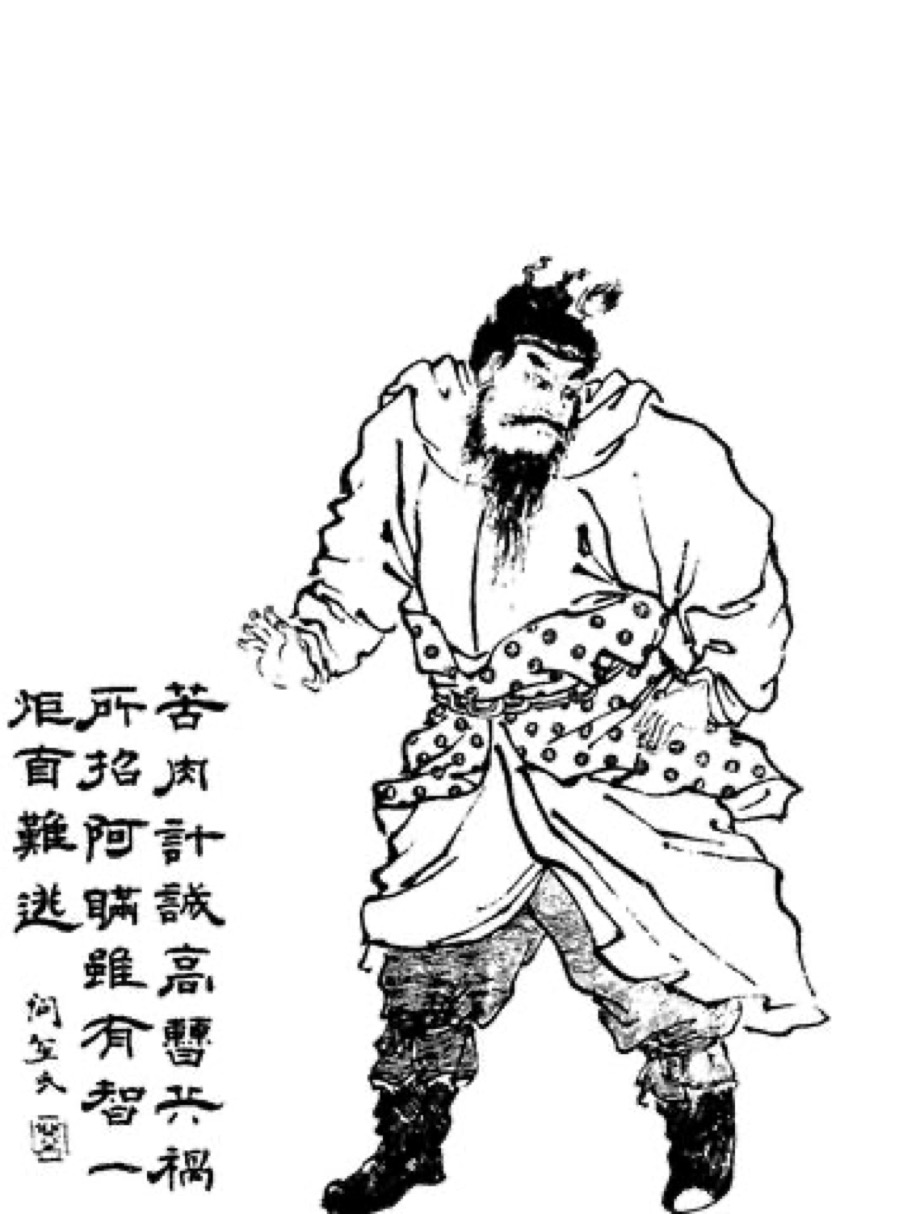
Portrait of Huang Gai
The Man Who Let Himself Be Beaten
Huang Gai does not appear in the record as a schemer or a strategist in the usual sense. He appears as an old soldier — already grizzled by the time Sun Jian raised his banners, still in harness under Sun Quan a generation later — a man whose reputation was built on garrisons pacified and mutinies put down, not on cleverness. Chroniclers remember him for iron discipline: he flogged his own troops for infractions others let slide, and unruly districts quieted when he was sent to hold them. He was, in the plainest sense, someone who did the job in front of him.
That is what makes Red Cliffs the one moment history bothered to record about his mind. In 208, with Cao Cao's fleet chained bow to stern across the Yangtze and Wu's smaller navy facing annihilation, Huang Gai proposed to Zhou Yu a plan built entirely on physical particulars — fire, wind, distance, the predictable vanity of an enemy expecting surrender. He would sail in under a flag of defection, ships loaded with kindling and oil, and light them only once close enough that the chains meant to steady Cao Cao's fleet would instead condemn it. To sell the ruse, tradition holds he took a public flogging from Zhou Yu himself, so that word of a grudge would reach Cao Cao's spies before the ships did.
Huang Gai was an ISTP: a man whose thinking ran through his hands, who solved the largest strategic problem of his life the way he solved every smaller one — by reading the physical situation coldly, then staking his own body on the answer.
There is no evidence he agonized over the plan, debated its ethics, or sought credit for conceiving it. He handed Zhou Yu a workable mechanism and volunteered himself as the instrument that would make it convincing. That is the whole of what survives of him — and it is enough to see the shape of the mind behind it.
Connected Figures
Further Reading
- Generals of the South — Rafe de CrespignyThe standard scholarly account of the Sun family's officer corps, including Huang Gai's career.
- Records of the Three Kingdoms (Sanguo Zhi) — Chen ShouThe primary historical source for the Red Cliffs campaign and Huang Gai's role in it.
