 Historical Figure MBTI
6 min read
#81 · 3-1-26 · The Founding Generation of USA
Marquis de Lafayette
French nobleman, revolutionary idealist, and international champion of liberty.
1757 — 1834
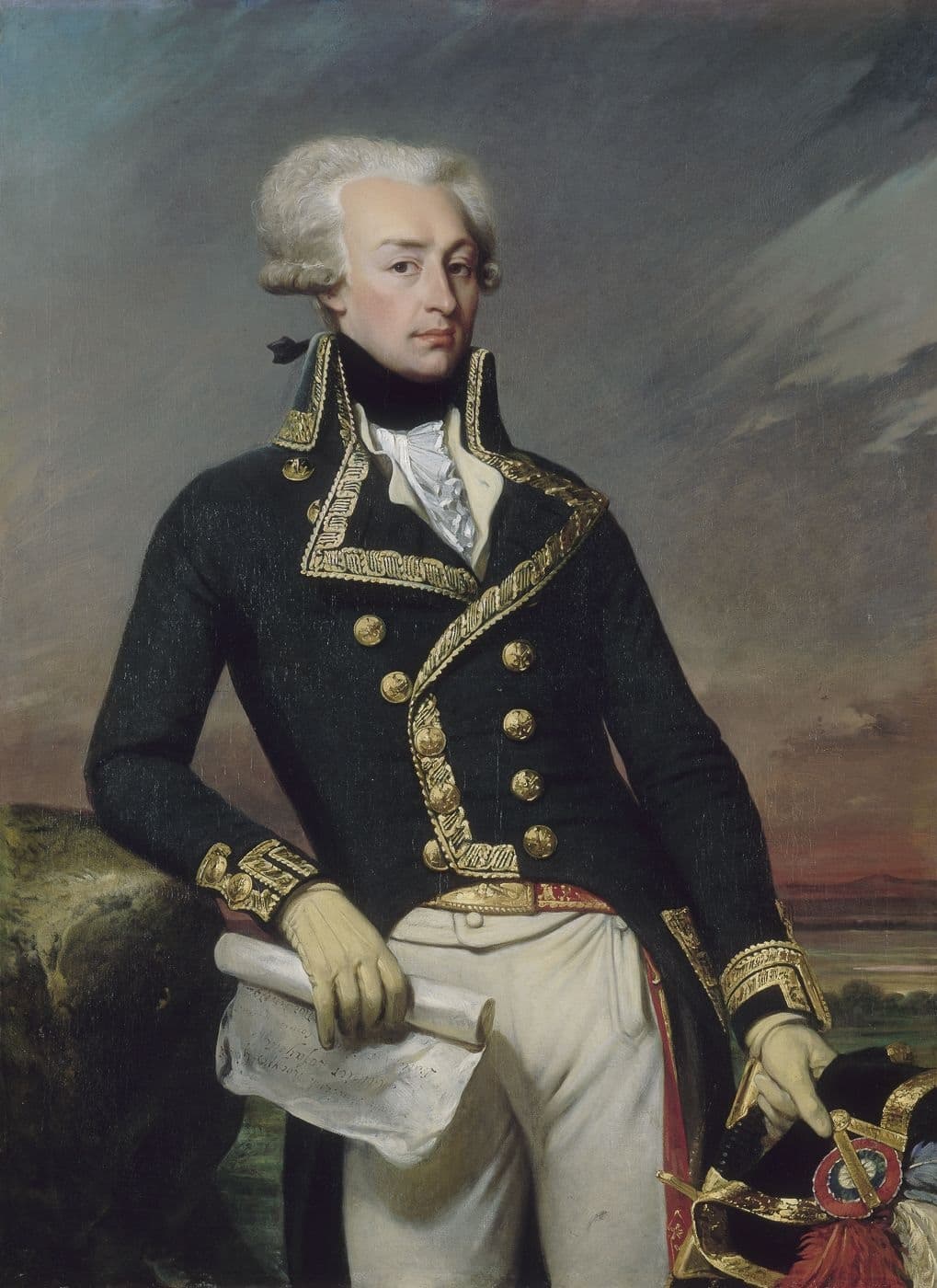
Portrait of Gilbert du Motier, Marquis de Lafayette.
The Romantic Champion of Liberty
Born in 1757 into one of France’s oldest noble families, Gilbert du Motier, Marquis de Lafayette seemed destined for a conventional aristocratic life. Wealth, military rank, and social prestige were already within his reach.
Yet Lafayette’s life would take a dramatically different path.
At only nineteen years old, inspired by the ideals of liberty emerging across the Atlantic, he secretly purchased a ship and sailed to America to join the revolutionary cause. The decision defied both the French crown and his own family, risking his fortune and political future.
In America he quickly became one of the most enthusiastic supporters of the revolution, forming a lifelong bond with George Washington, who came to treat him almost like a son. Lafayette distinguished himself in several campaigns and became an important bridge between the American revolutionaries and France.
But Lafayette’s devotion to liberty did not end with American independence. Returning to France, he would play a major role in the early stages of the French Revolution and help draft the Declaration of the Rights of Man, working alongside Thomas Jefferson.
Throughout his life, Lafayette pursued a single vision: that political liberty and constitutional government should define the modern world.
He was not merely a soldier of the revolution.
He was one of its most passionate believers.
The Psychological Verdict
Lafayette is sometimes typed as ENFJ due to his charisma and diplomatic role in revolutionary politics. However, his deeper motivations and behavioral patterns suggest a different configuration: ENFP.
Rather than operating primarily as a social organizer or political strategist, Lafayette consistently acted as an idealistic champion of liberty, driven by personal conviction and inspired possibilities for the future.
His life decisions repeatedly reflect the Ne–Fi cognitive axis: imaginative engagement with new possibilities combined with deeply held moral values.
Lafayette did not pursue power or institutional authority.
He pursued an ideal.
Ne — dominant
Lafayette’s defining trait was his ability to imagine political possibilities beyond the constraints of his time.
As a young French aristocrat, he had little personal reason to support colonial rebels across the Atlantic. Yet he saw in the American Revolution the potential birth of a new political order built on liberty and constitutional government.
This willingness to embrace bold, transformative ideas reflects dominant Ne — the drive to explore emerging possibilities and envision futures that others have not yet accepted.
For Lafayette, the American Revolution was not simply a war.
It was a glimpse of what the world might become.
Fi — auxiliary
While Lafayette’s political life placed him constantly among powerful figures, his decisions were guided less by political calculation than by personal conviction.
He repeatedly defended principles of liberty even when they conflicted with the interests of powerful factions in France. During the French Revolution he attempted to steer events toward constitutional reform rather than radical upheaval, holding fast to his belief in individual rights.
This internal commitment to moral ideals reflects Fi.
Lafayette did not pursue liberty because it was politically convenient.
He pursued it because he believed it was right.
Te — tertiary
Although primarily an idealist, Lafayette was capable of translating his vision into concrete action.
He organized military forces, negotiated political alliances, and played a key role in coordinating French support for the American war effort. These activities show the presence of Te — the ability to mobilize resources and structure action around a goal.
However, these efforts typically served his ideals rather than defining his identity.
Lafayette was not an institutional architect like Alexander Hamilton.
He was the advocate who carried the revolutionary spirit forward.
Si — inferior
Lafayette’s life consistently challenged tradition and inherited expectations.
Born into an aristocratic system that valued loyalty to monarchy and hierarchy, he instead aligned himself with revolutionary movements that questioned those very foundations.
His willingness to break from established structures reflects inferior Si — a relative detachment from the authority of tradition.
For Lafayette, the past did not dictate the future.
Liberty did.
Why not ENTP?
Lafayette’s adventurous personality can sometimes resemble ENTP at first glance. His bold decision to join the American Revolution and his energetic presence in political circles suggest strong extroversion and openness to new ideas.
However, the deeper pattern of his life points away from Ti-driven intellectual experimentation.
ENTPs typically approach ideas with curiosity and debate, exploring multiple perspectives and often shifting positions as arguments evolve. Lafayette, by contrast, remained remarkably consistent in his devotion to the ideal of liberty throughout his life.
His actions were not driven by analytical exploration of political theory but by values-based conviction.
Even when political circumstances changed dramatically during the French Revolution, Lafayette continued to advocate the same core principles of constitutional government and individual rights.
In short, Lafayette did not treat liberty as an interesting idea to debate.
He treated it as a cause to believe in.
The Revolutionary Circle
Lafayette’s personality becomes even clearer when viewed alongside the revolutionary figures he worked with.
George Washington represented stability and disciplined leadership.
Alexander Hamilton embodied strategic institution-building.
And Lafayette himself carried the emotional and ideological spirit of the revolution across nations.
If Washington led the army and Hamilton built the republic’s institutions, Lafayette helped ensure that the idea of liberty itself would inspire people beyond America.
The revolution created a nation.
Lafayette carried its ideals across the world.
Connected Figures
Further Reading
- Lafayette: Lessons in Leadership from the Idealist General — Marc LeepsonA focused assessment of Lafayette's military command and political vision, grounded in primary sources.
- Lafayette in the Somewhat United States — Sarah VowellAn accessible and witty account of Lafayette's role in the American Revolution and his legendary 1824 farewell tour.
- The Marquis: Lafayette Reconsidered — Laura AuricchioA scholarly biography that reassesses Lafayette's complex legacy — hero, prisoner, survivor — across the Atlantic revolutions.
- Witness to the Revolution: Remarkable Accounts of the War for Independence — Carol BerkinContextualizes Lafayette within the broader human experience of the American Revolution through first-person accounts.
