 Historical Figure MBTI
#1054 · 8-6-26 · The New Kingdom
Neferure
The Princess Who Died Young
c. 1478 – 1450 BCE
2 min read
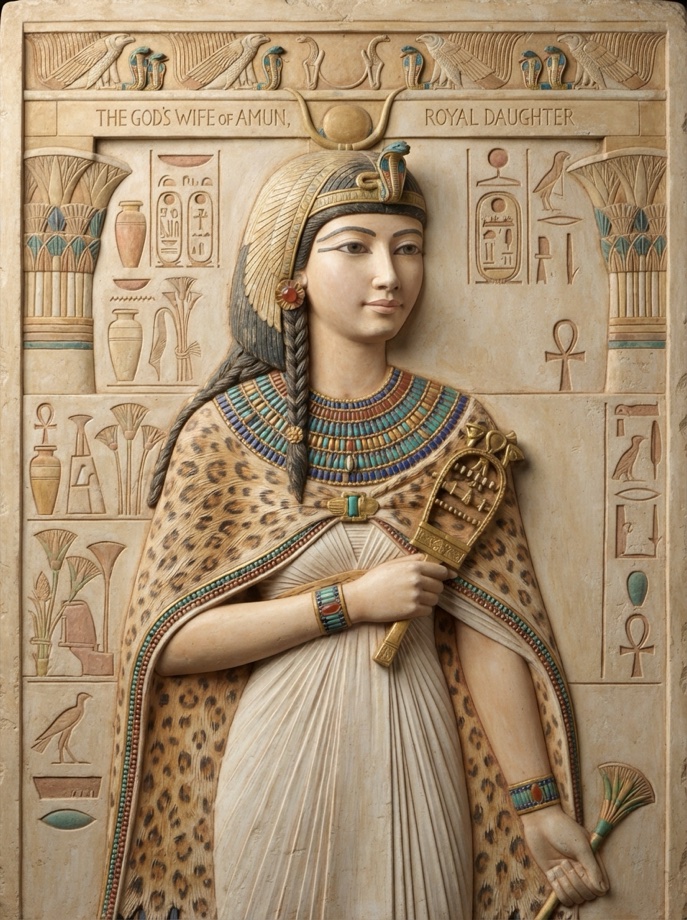
AI-assisted Portrait of Neferure
A Childhood Held in Stone
Neferure is one of the best-attested children of the ancient world and one of the least knowable people in it. From an early age she carried the weighty religious title God’s Wife of Amun, appeared in temple reliefs beside her mother, Hatshepsut, and was tutored by the powerful steward Senenmut, who had himself carved into more than one statue cradling her as a small child. She was, by every visual measure, groomed for a central role in her mother’s reign.
And then, sometime before Hatshepsut’s own death, Neferure simply vanishes from the record. No tomb securely identified as hers has ever been found; whether she died young of illness, or lived on quietly, possibly even married to her half-brother Thutmose III, is genuinely disputed among Egyptologists. What survives is a ceremonial outline — titles, statues, a few tender images of a girl on a courtier’s lap — and almost nothing of the person inside it.
Why She Stays Untyped
Every historical figure typed on this site is typed from evidence of how they thought, chose, and reacted — decisions, letters, arguments, the texture of a personality pressing against events. Neferure left none of that. Her inscriptions record what she was, not who she was: a title held, a ritual performed, a place beside her mother in a relief. There is no anecdote of her choosing anything, no recorded word in her own voice, not even a securely dated account of how her life ended.
That absence isn’t a gap this entry can responsibly fill in with speculation. A child raised for ceremony, in a court where her every public appearance was scripted by adults with their own political needs, could have been almost anyone underneath — curious or withdrawn, willing or resentful. Assigning her a cognitive-function profile would mean inventing a personality to fit a costume, and calling the invention history.
Connected Figures
Further Reading
- The Rise and Fall of Ancient Egypt — Toby WilkinsonCovers Hatshepsut's court and the uncertain fate of her daughter.
- The Monuments of Senenmut — Peter DormanExamines Senenmut's statues depicting Neferure as a child.
