 Historical Figure MBTI
#589 · 5-3-26 · The Age of Justinian
Procopius
Court Historian · Author of the Secret History · The Two-Faced Chronicler
c. 500 — c. 565
7 min read
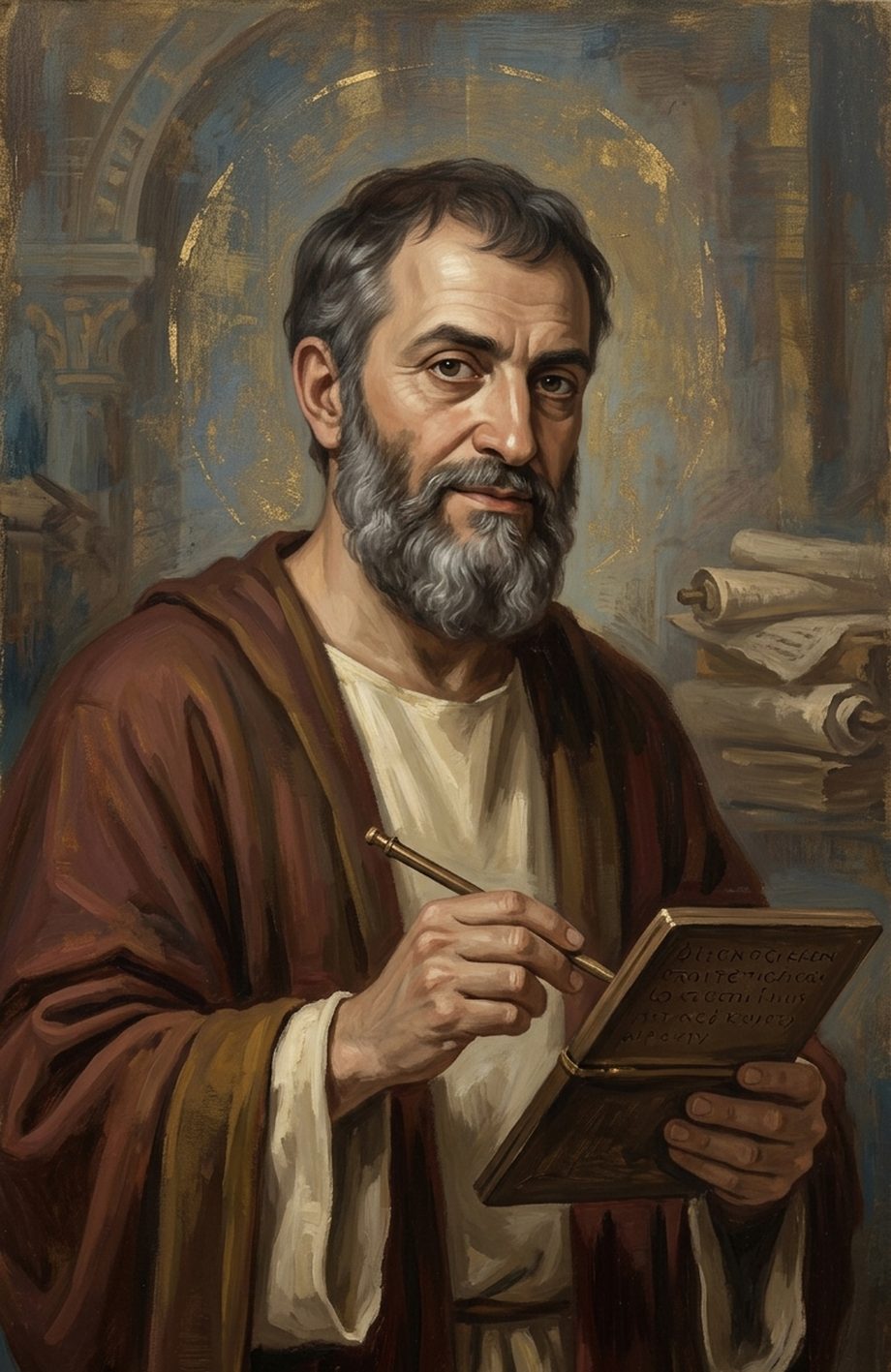
AI-assisted Portrait of Procopius
The Man with Three Faces
He wrote the same reign three times, and the three accounts do not agree. In one book, the age of Justinian is a march of Roman arms reconquering a lost empire, told with grave, measured judgment. In another, the emperor is a builder of dazzling churches, praised in prose so extravagant it curdles into flattery. In the third — locked in a drawer and shown to no one — the same emperor is a headless demon who walks the palace at night, his wife a monster risen from the brothel, the whole glittering enterprise a fraud rotted through with greed and blood. The astonishing thing is not that one man held all three views. It is that he wrote them all down, coolly, and let posterity sort out which was true.
Procopius of Caesarea — a trained lawyer and rhetorician who became legal secretary and assessor to the great general Belisarius — is the finest historian of the sixth century, and the one to whom we owe almost everything we know about the intimate scandal of Justinian's court. He rode with Belisarius through the Persian, Vandal, and Italian campaigns, an eyewitness to the reconquest of the West; then, in private, he used the same pen that had written the official record to dissect his masters like specimens on a table. The gap between his public panegyric and his secret venom is one of the great riddles of historiography — and it is a deeply INTP riddle: a mind that held truth as a private intellectual possession, entirely apart from public performance.
Procopius is the INTP as historian: Ti weighing evidence, causation, and character with a lawyer's cold judiciousness, and Ne unable to stop seeing the second face behind the first — the official glory and the hidden rot at once, both recorded, neither reconciled, the verdict left open for anyone patient enough to read all three books.
The Assessor's Cold Eye
Ti — dominant
Dominant Ti is a private tribunal — a mind that judges everything against its own internal standard of what is coherent, proven, or merely wishful. Procopius came to history as a lawyer comes to a brief. In the eight books of the Wars he weighs causes against effects, sifts rumor from testimony, and reserves judgment where the evidence runs thin, writing in the austere, classicizing manner of Thucydides, his acknowledged model. And the instrument turns on his own side: he assesses even Belisarius, the patron he admired, cataloguing the blunders beside the brilliance. This is Ti as method — the refusal to accept a proposition because it is official, and the insistence on testing it against the record he had seen with his own eyes.
It is Ti, too, that explains the deepest fact about him: his real verdict lived in a book he never published. For the INTP, truth is not something you owe the public; it is a private conclusion reached for its own sake, and whether you announce it is a separate question entirely. Procopius reached his verdict on Justinian and wrote it out in full in the Secret History. That he then locked it away is not cowardice so much as the perfect Ti separation of analysis from performance — the judgment complete in itself, correct in itself, requiring no audience to be true.
The Double Vision
Ne — auxiliary
Auxiliary Ne is the restless second sight that cannot look at one face of a thing without catching the other. Where a loyal chronicler sees an emperor rebuilding an empire, Procopius sees that and the tax collectors bleeding the provinces to pay for it; where the court sees Hagia Sophia rising from the ashes of a riot, he sees the riot too, and the thirty thousand dead in the Hippodrome that cleared the ground. The official narrative and its shadow arrive together, and Ne will not let him record the one without the other. This is why the same events generate three different books: he genuinely saw all three possibilities in the material — the glory, the fraud, the sober middle — and each work follows one to its end.
Ne also supplies the irony that gives the Secret History its strange, gleeful energy. The vanishing head, the demon-emperor, Theodora's monstrous appetites are not a prosecutor's earnest charges but the grotesque inventions of a mind delighting in how far the counter-image can be pushed. He is not calling the emperor to reform; he is following the dark possibility to its most extravagant conclusion, half in analysis and half in play, because Ne cannot resist finding out where the other reading leads.
The Weight of the Record
Si — tertiary
Tertiary Si gives the INTP a reverence for precedent and accumulated detail — indispensable in a historian. Procopius did not invent his form; he inherited it, writing consciously inside the tradition of classical historiography, borrowing Thucydides' structure, set-piece speeches, plague narrative, and very cadences, so that a reader steeped in the ancients would recognize the lineage at once. To understand Justinian's wars he reached back nine centuries for the template that had made sense of the Peloponnesian one.
Si is also the eyewitness's hoard of concrete particulars. Procopius had been there — at the siege of Rome, on the Mesopotamian frontier, in the harbor at Carthage — and his history is dense with specifics only a man who kept a careful internal ledger could preserve. The scandalous detail that makes the Secret History so vivid depends on the same retentive faculty: a memory that stored the small facts and dates and named names until the moment came to set them down.
The Public Mask and the Private Fury
Fe — inferior
Inferior Fe is the INTP's uneasy relationship with the collective — the sense of what a group expects and what one is supposed to say — and in Procopius it produces the very split that defines him. In public he performed the required emotion flawlessly. The Buildings is a masterpiece of Fe under duress: the correct chorus of praise, pitched exactly as a court demanded. A man with no feel for the collective mood could not have produced flattery so fluent; he knew precisely what note to strike.
But inferior Fe is performed, not felt, and it exacts a price — the Secret History, where everything the public mask suppressed came out at full pressure. Because his relationship to the group was performance rather than conviction, the mask and the truth could run on separate tracks — one for the court, one for the drawer — without ever having to reconcile; a dominant-Fe writer could not have done this. And that the venom stayed unpublished in his lifetime is the final Fe signature: he never risked the collective's wrath, never tested his verdict against the world's approval. The demolition was complete, and it waited in silence.
Why INTP Over INFJ or INTJ
Why not INFJ?
The Secret History is so morally scalding that it tempts one to read it as the cry of an INFJ prophet — a reformer writing from conviction toward a vision of how the world ought to be. But that is not its temper. An INFJ writes to call the powerful to account; Procopius writes to dissect. His masters are specimens, not sinners he hopes to save. The book is a corrosive, almost gleeful analytical demolition, not a plea — Ti detachment and Ne irony, not Ni–Fe moral mission. And crucially, the reformer publishes his indictment. The INTP files it in a drawer, because for him the truth was complete the moment it was understood, whether or not the world ever heard it.
Why not INTJ?
The INTJ shares the skeptic's detachment, but the INTJ builds — a system, a program, a future he intends to bring about. Procopius built nothing: no reform of the state, no doctrine, no design for a better empire. He observed, analyzed, weighed, and undercut. His genius is dissective rather than architectural — Ti–Ne turning the same reign over to see every face of it, not Ni–Te bending events toward an outcome. He is the analyst of power, never its would-be engineer.
What unites the negative cases is one distinction of motive. The INFJ and the INTJ both write toward something — a moral vision, a built future. Procopius wrote toward nothing but the truth of the matter as he privately understood it. He served an emperor and betrayed him only on paper, in secret, for no cause and no audience; the demolition was its own reward. That is the essential INTP signature — truth held as a cool intellectual possession, pursued for its own sake, kept entirely apart from the public self that went on performing the required praise.
Connected Figures
Further Reading
- Procopius of Caesarea: Tyranny, History, and Philosophy at the End of Antiquity — Anthony KaldellisThe most ambitious modern reinterpretation — reads Procopius as a subtle classical political thinker whose three works form a single, coherent critique of Justinian's tyranny.
- Procopius and the Sixth Century — Averil CameronThe standard scholarly study of Procopius as a whole — situates all three works in their historical and literary context and remains the essential starting point.
- The Secret History — ProcopiusThe drawer-book itself — the scandalous, savage exposé of Justinian, Theodora, Belisarius, and Antonina, and the reason we know the intimate life of the court at all.
- The Wars of Justinian — ProcopiusHis sober, classicizing military history in the tradition of Thucydides — the sane, judicious face of the same pen that wrote the Secret History.
