 Historical Figure MBTI
#672 · 5-18-26 · The Roman Republic
Tiberius Gracchus
Land Reformer · People's Tribune · Broken by the Optimates
163 BCE — 133 BCE
9 min read
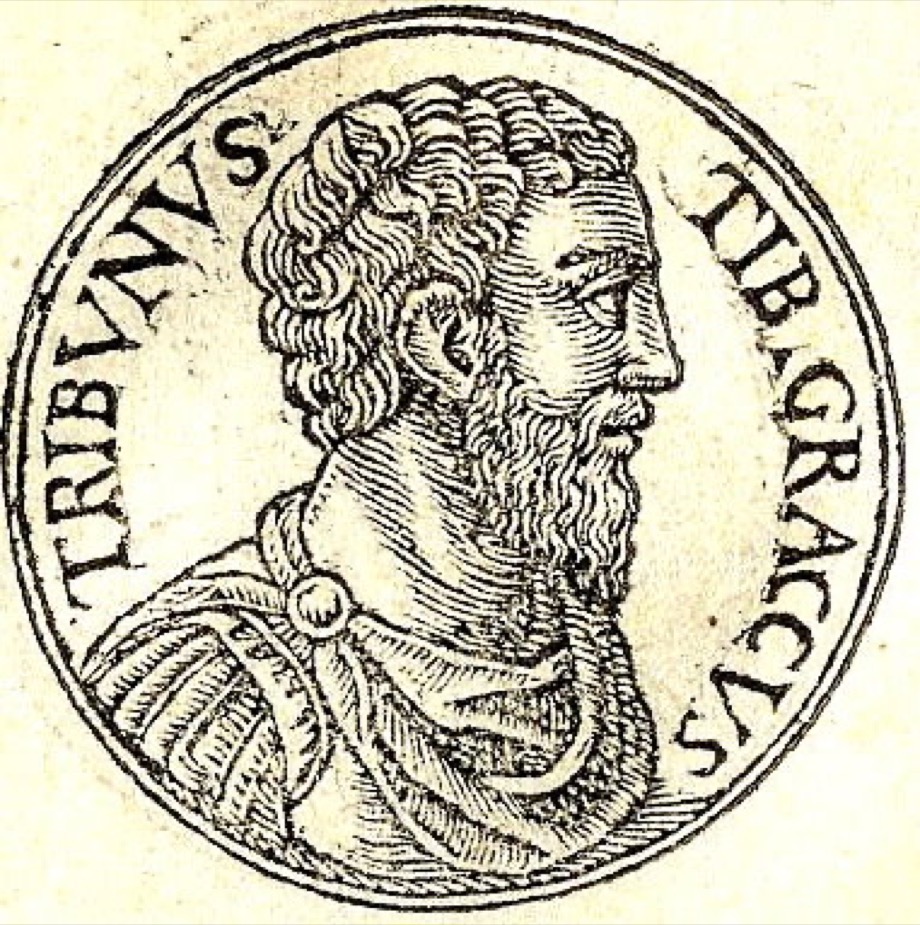
Portrait of Tiberius Gracchus
The Road Through Etruria
The story Rome told about Tiberius Gracchus always began with a journey. Traveling north through Etruria on his way to serve in Spain, he passed mile after mile of countryside worked not by the small farmers and discharged soldiers who had once tilled it, but by chained gangs of imported slaves, while the men who should have owned that land had been squeezed off it by senators consolidating estate after estate. Other Romans had seen the same roads. Tiberius saw them and could not put the sight down. That is the whole of him in a single image — a man who metabolized a public wrong as a personal wound, and who could not rest until he had done something about it on the community's behalf.
He was twenty-nine when he was elected tribune of the plebs in 133 BCE, born into one of Rome's great families — grandson of Scipio Africanus, son of Cornelia — and he could easily have spent his career managing that inheritance quietly. Instead he brought a bill, the Lex Sempronia Agraria, to redistribute public land to the dispossessed, took it straight to the Plebeian Assembly over the Senate's head, and when a fellow tribune vetoed it, had the man deposed by a vote of the people — a maneuver with no real precedent, and one that told Rome exactly what kind of politician had just arrived. He did not build committees or draft position papers. He stood in front of crowds and made them feel the wrong he had felt on that road, and he never let go of the microphone until it killed him.
Tiberius Gracchus was an ENFJ, and almost everything that made him remarkable and almost everything that got him killed trace back to the same function: an outward-facing, people-moving Fe that could not experience an injustice without turning it into a movement.
He did not theorize about justice for the Roman poor. He stood in the Forum and made them believe, together, that justice was already theirs to take — the reflex of a dominant Fe that turns a private grievance into a collective cause.
A Grievance Turned Into a Crowd
Fe does not simply notice an injustice — it feels obligated to the people harmed by it, and then goes looking for others who will feel that obligation too. Tiberius's entire tribunate ran on this reflex. He did not commission a survey of land tenure and circulate it among allies; he took the sight of Etruria's slave gangs and turned it into a story he could tell a crowd, over and over, until the crowd's outrage matched his own. The Lex Sempronia Agraria was, in substance, a fairly narrow redistribution measure. In Tiberius's mouth it became a referendum on whether Rome still owed anything to the men who had bled for her in her legions — a moral claim, not merely a legal one.
The deposing of Octavius is the clearest evidence of how his Fe worked under pressure. A more procedural mind would have negotiated, delayed, or waited out the veto within the system's existing channels. Tiberius instead walked out to the Assembly and asked the people directly whether a tribune who blocked the people's will was still a tribune at all — and let them answer by ballot. It was constitutionally unprecedented and it worked, because his authority was never really vested in his office. It was vested in the crowd's belief that he spoke for them, renewed each time he stood in front of it.
Even his fatal decision to stand for a second tribunate, breaking with custom, reads as Fe rather than ambition in the ordinary sense: he did not trust the reform to survive without him physically present to keep pleading its case. He needed to keep standing in the Forum, keep working the crowd face to face, because for an ENFJ the cause and the personal bond with the people carrying it are never fully separable.
A Rome That Ought to Exist
Underneath the crowd-work sat a single, stubborn conviction: that Rome's citizen-soldiery — the small farmers whose service filled her legions — was the actual foundation of the Republic, and that the latifundia quietly eating up the public land were hollowing that foundation out from underneath everyone, senator and pauper alike, whether they noticed yet or not. That is Ni doing its quiet work behind the Fe — not a plan for redistributing acreage so much as a settled, almost prophetic sense of where Rome was heading if nobody intervened.
It is why Tiberius pursued a fix that was, by the standards of Roman factional politics, strikingly single-minded: one bill, one clear mechanism, aimed at one structural rot, rather than a broader legislative program addressing the many grievances a tribune might have exploited. He was not managing a coalition's wish list. He had converged on a specific, symbolic act — restore the land, restore the soldier-farmer, and the Republic rights itself — and he pursued it with the tunnel-visioned certainty of a man who believes he has seen where the road actually leads.
That certainty is also what let him escalate past every established norm without apparently pausing to weigh the risk. Deposing Octavius, standing again for the tribunate, pressing forward as senators grew openly hostile — each looks less like miscalculation than like a man convinced his vision of Rome's necessary future outweighed the danger to himself in the present.
What the Road Actually Showed Him
It matters that the whole movement began with something Tiberius physically saw rather than something he was told or read. Plenty of Romans knew, abstractly, that the latifundia were expanding and that slave labor was displacing free farmers — it was a commonplace complaint. But it was the visceral fact of the chained gangs on the Etrurian road, encountered in person, that converted abstract knowledge into an urgent personal mandate. That is Se in its tertiary register: not a life organized around sensation, but a sudden, physical jolt that a more Ni-led or Ti-led thinker might have filed away as one more data point.
The same tertiary Se shows up in how he governed once in office — not from a desk, but on his feet, in the Forum, reading the mood of the crowd in real time and adjusting his pitch to it. He was a man who needed to be physically present among the people he represented, working the room rather than working a memorandum, and that same instinct for the live, immediate moment is what led him, fatally, to keep showing up in person even as the temperature around him turned murderous.
The Legal Architecture He Left Unbuilt
Where his brother Gaius would later construct an entire, interlocking legislative program — grain law, judicial reform, colonization, road-building, each piece reinforcing the others — Tiberius worked from a single bill and never bothered to armor it with the surrounding structure that might have protected it. The Lex Sempronia Agraria addressed land, and essentially nothing else, and Tiberius appears to have given little sustained thought to the second-order legal and constitutional consequences of deposing a sitting tribune by popular vote.
That gap is inferior Ti showing itself exactly where theory predicts: not as incompetence, but as a blind spot in a mind otherwise fully occupied with people and vision. He could feel precisely what was owed to Rome's dispossessed and could see precisely where the Republic was headed if nothing changed, but the dry work of anticipating how the Senate's clients might construe his actions, or how thin the ice under a second tribunate actually was, was never where his attention wanted to go.
It cost him everything. When Scipio Nasica led a mob of senators and their followers onto the Capitoline in 133 BCE, they did not need a legal argument — they clubbed Tiberius to death in broad daylight, the first political killing in Rome in centuries. He had built the movement his Fe demanded and glimpsed the Rome his Ni foresaw, but he never built the fortifications a colder, more Ti-attentive politician might have insisted on first.
Why ENFJ Over INFJ
Why not INFJ?
An INFJ who saw what Tiberius saw on that Etrurian road would have carried the vision inward first — turning it over privately, refining it into a conviction, perhaps eventually working through a trusted circle or a written appeal to the Senate's better nature. Tiberius did none of that. He needed the Assembly itself, the live crowd, the immediate up-close confrontation with Octavius on the rostra, not a private certainty he nursed until the moment felt right. His authority lived entirely in the extraverted, moment-to-moment bond with the people in front of him — Fe reaching outward at every turn, not Ni folded inward into a solitary conviction. An introverted-judging type does not depose a colleague by open vote in the Forum; that is the signature of a dominant Fe user who cannot separate the cause from the crowd carrying it.
The comparison sharpens what made Tiberius Tiberius: he was never a solitary visionary who reluctantly stepped into public life to execute a private plan. He was, from the first telling of the story about Etruria's chained fields, a man who needed an audience to complete his own conviction — and who built, and lost, his entire career in the full light of the Forum rather than in the quiet of a study.
Connected Figures
Further Reading
- Life of Tiberius Gracchus — Plutarch (Parallel Lives)The primary ancient account, and the source of the Etruria road story that anchors his motivation.
- SPQR: A History of Ancient Rome — Mary BeardSituates the Gracchan reforms within the broader unraveling of Republican political norms.
- From the Gracchi to Nero — H. H. ScullardThe standard narrative history of the period Tiberius's tribunate opens.
- The Gracchi — David StocktonA focused scholarly study of both brothers' reforms, careers, and deaths.
