 Historical Figure MBTI
#673 · 5-18-26 · The Roman Republic
Gaius Gracchus
Legislative Architect · Grain Dole · His Brother's Avenger
154 BCE — 121 BCE
8 min read
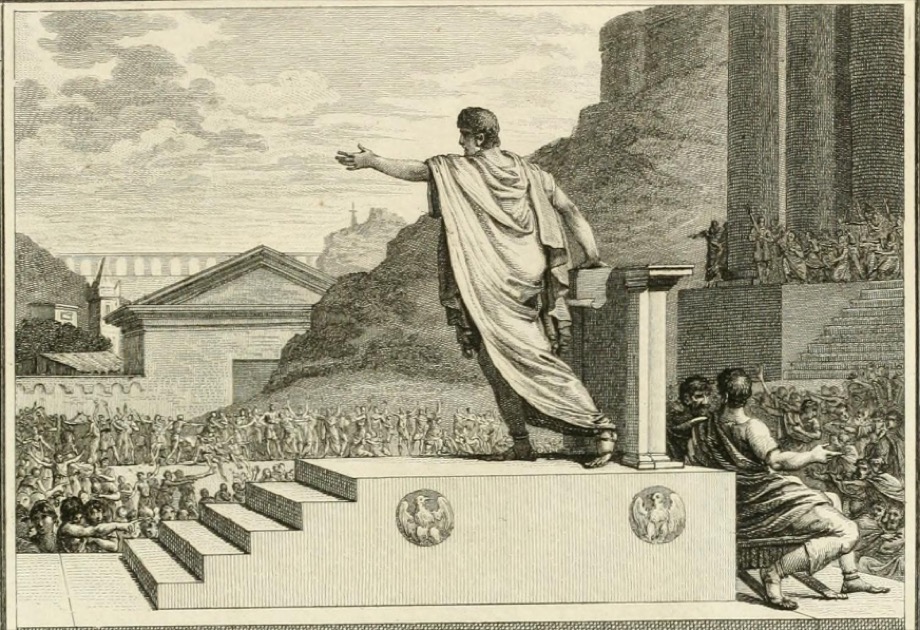
Portrait of Gaius Gracchus
The Second Gracchus Built a Machine, Not a Moment
Nine years after a mob of senators clubbed his brother to death on the Capitoline, Gaius Gracchus stood for the tribunate and won it — and Rome, expecting a sequel, got something else entirely. Tiberius Gracchus had staked everything on a single bill and a single crowd, a righteous man burning through the goodwill of a mob until the mob was all that stood between him and the fasces of his enemies. Gaius watched that crowd disperse into the vacuum left by his brother's murder, and he drew a colder lesson from it: a movement built on one grievance dies with the man who carried it. A structure survives its founder.
So when Gaius reached the tribunate in 123 BCE he did not bring one law, he brought a program — the Lex Frumentaria subsidizing grain for the urban poor, new colonies to resettle the landless who had nowhere else to go, roads cut across Italy that put his name, literally, into the ground people walked on, a reform of the extortion courts that shifted judicial power from senators to equestrians, and finally a proposal to extend citizenship to Rome's Italian allies. Each piece served a different constituency; together they built something no single crowd could dissolve, a coalition wired into the machinery of the state itself. He was re-elected for 122 BCE, breaking precedent as coolly as he broke ground on his roads, because the plan required more than one year to finish.
Where his brother lit a fire, Gaius Gracchus built an engine — the difference between an ENTJ's dominant Te and everything that came before him in his own family.
Five Laws, One Architecture
Gaius's tribunate reads less like a career than a punch list. The grain law fixed a price and a supply chain so the city's poor would never again be one bad harvest from starvation — and it bought him a permanent constituency that did not need convincing twice a year. The colonization law put land under people who had none, draining the resentment that had gotten his brother killed in the first place, but doing it through settlement and title rather than confiscation and street theater. The judiciary law handed the extortion courts to the equestrian class, splitting the propertied elite against itself so the Senate could no longer present a united front. None of this was improvised from a podium. It was assembled, law by law, the way an engineer assembles a bridge — load-bearing pieces that only work in combination.
This is Te at full extension: the compulsion to externalize a plan into institutions, deadlines, and voting blocs rather than leave it as a conviction in his own head. Gaius did not merely argue that Rome's poor deserved grain — he built the office, the price, and the distribution system that delivered it, and then moved to the next piece before the first had even finished proving itself. He courted the equestrians not because he loved them but because Te thinks in leverage, and the equestrians were leverage against the Senate that a lone tribune, however righteous, could never generate through crowds alone.
Even his second run for the tribunate in 122 BCE was a Te decision disguised as ambition: the program was unfinished, so the office needed renewing, precedent be damned. Where Tiberius pushed one bill until it killed him, Gaius kept building until the whole apparatus — grain, land, courts, roads — was standing on its own before the Senate could isolate and topple any single piece of it.
A Republic Redrawn, Seen Whole in Advance
Behind the individual laws sat a single, coherent vision of what Rome should become — a state where the Senate no longer monopolized the courts, where the urban poor were fed as a matter of policy rather than charity, where citizenship itself might stretch across Italy instead of stopping at the city's boundary. Tiberius had seen a wrong; Gaius saw a shape, the Republic restructured, and built toward it a piece at a time even when the pieces looked, individually, like separate causes to everyone but him.
This is Ni working in service of Te's machinery: not mystical foresight but a long-range read of where power actually sits and how it might be permanently redistributed rather than merely borrowed for a season. The citizenship push is the clearest evidence of it. It offered him no immediate votes — Rome's own poor had every reason to resent sharing the grain dole and the franchise with Italians — and he pursued it anyway, because it was the load-bearing piece of the future he had already mapped, the one reform that would have made his other reforms durable rather than reversible by the next hostile Senate.
It was also the piece that broke him. Ni auxiliary gives an ENTJ conviction about the destination; it does not always warn him when the ground under his feet has already given way. Gaius pushed the citizenship bill past the point where his coalition could hold, misreading how much the urban poor — his own base — would tolerate diluting their privileges for people they had never met.
The Man Who Stayed in the Room
Gaius did not govern from a distance. He personally oversaw the road-building projects, walking the routes, setting the milestones that still bore his name generations later. He worked crowds directly, and ancient sources note he was the more forceful public speaker of the two brothers, pacing the rostra, using his voice and his physical presence the way his program used institutions — as instruments to be deployed, not sentiments to be expressed.
That same tertiary Se shows in how the end came. When the Senate passed its first-ever senatus consultum ultimum and armed men moved against him, Gaius did not retreat into argument or negotiation. He and his remaining supporters occupied the Aventine and prepared to fight, meeting force with a physical stand rather than a rhetorical one. It was outmatched and doomed — three thousand of his people were killed or executed in the aftermath — but it was consistent with a man who had always preferred to act directly on the world in front of him rather than wait it out.
In the final hours, cornered, he chose the terms of his own death — having a slave kill him rather than be taken — a last, brutally concrete decision from a man whose whole life had been about controlling outcomes rather than accepting whatever came next.
A Grievance He Never Once Named Aloud
Ancient sources agree on the fact that drove Gaius Gracchus into public life and never once record him dwelling on it in his own words: his brother's murder. Nine years passed between Tiberius's death and Gaius's tribunate, nine years in which the injury clearly did not fade — his entire program can be read as an answer to the specific failures that got Tiberius killed — and yet nowhere does Gaius deliver the kind of raw, personal lament that would come naturally to a dominant feeler. The grievance is structural evidence, inferred from the shape of his policy, not something he ever stood on the rostra and simply confessed.
This is Fi at the bottom of the stack: present, load-bearing, and almost entirely unvoiced. It surfaces obliquely — in the sheer durability of his resolve, in a program engineered so that no single senator's dagger could undo it the way one mob had undone his brother's single law — but it never becomes the content of his speeches. He argued policy, coalitions, and precedent. He did not argue pain.
Even his death completes the pattern. Rather than a final personal statement, rather than words about his brother or his cause, Gaius arranged a controlled, almost administrative end — instruction given, outcome executed. The interior world that must have driven a man to spend a decade rebuilding the Republic in his murdered brother's name stayed exactly where inferior Fi keeps it: felt, acted upon, and never spoken.
Why ENTJ Over ISTJ
Why not ISTJ?
An ISTJ reformer trusts precedent; he works patiently inside the system that already exists, and he does not run for the same office twice in defiance of custom. Gaius did the opposite at every turn — he created a new judiciary arrangement, founded new colonies, and proposed extending citizenship itself, none of which existing Roman practice offered a template for. He then broke the tribunate's own precedent by seeking a second term, not out of stubbornness but because his still-unfinished plan required it. That is Te directing a Ni-sourced vision of a restructured Republic, not Si conserving the structure Rome already had.
The comparison also clarifies what Gaius was not: a crowd-charging idealist like his brother, nor a rules-keeper content to legislate at the margins. He was a builder who treated the Roman constitution itself as raw material, willing to found new institutions and bend old ones past their breaking point to get a durable result — the signature of a dominant Te ENTJ operating at the scale of a state rather than an office.
Connected Figures
Further Reading
- Life of Gaius Gracchus — PlutarchThe core ancient source, paired with the Life of Tiberius Gracchus as a matched biography.
- SPQR: A History of Ancient Rome — Mary BeardSituates the Gracchi within the Republic's long crisis of land, citizenship, and power.
- The Gracchi — David StocktonThe standard modern study of both brothers' careers and their institutional legacy.
- From the Gracchi to Nero — H. H. ScullardTraces how Gaius's precedents shaped a century of Roman political collapse.
