 Historical Figure MBTI
#748 · 6-4-26 · The Portuguese Indian Ocean
Timoji
Privateer · Ally at Goa
fl. 1500 — 1512
3 min read
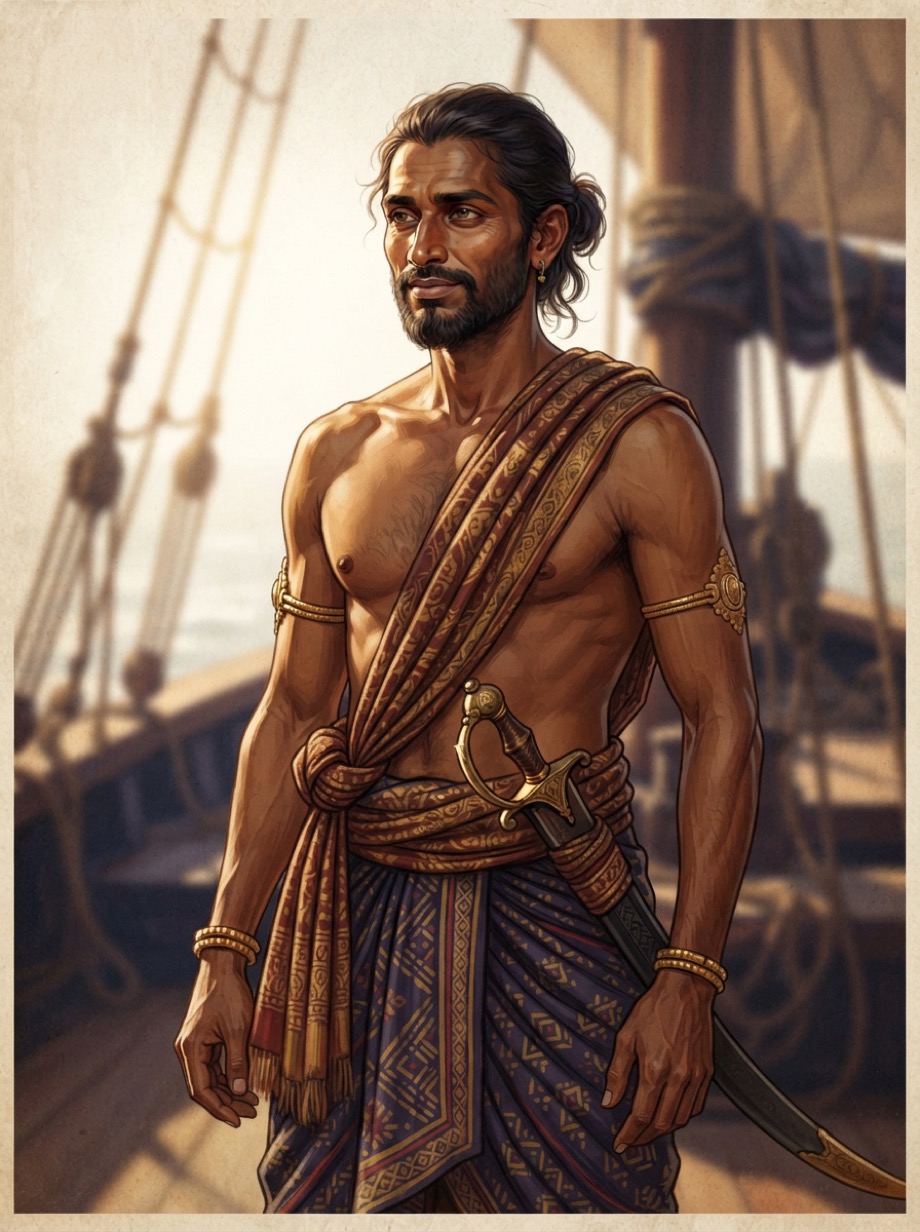
AI-assisted Portrait of Timoji
The Corsair Who Read the Tide
Timoji — Timmayya, Timoja, spelled a dozen ways by clerks who never learned to write his name properly — was a Hindu corsair working the Kanara coast in the service of the Vijayanagara empire, raiding Muslim shipping along the Malabar and Konkan littoral. Almost everything known about him comes from Portuguese chroniclers, above all Afonso de Albuquerque’s own Commentaries, written by men with an obvious interest in casting him as a grateful native ally who saw the light of Portuguese arms. His actual motives — profit, revenge on Muslim rivals, a wager on the stronger fleet — have to be inferred from what he did, not what he is quoted as saying.
What he did, in the spring of 1510, was hand Portugal the city that would run its Asian empire for four and a half centuries.
Timoji was a pure operator, an ESTP through and through: he read the balance of force in front of him and moved on the opening it left, indifferent to grand allegiance.
A Psychological Verdict
Albuquerque had sailed north in 1510 meaning to strike Calicut or raid the Red Sea. Timoji came to him instead with a live tactical picture: Goa, held by the Adil Shahi sultanate of Bijapur, was thinly garrisoned just then, because Yusuf Adil Shah had recently died and his forces were committed elsewhere; the city had a fine harbour, working shipyards, and a Hindu population with no love for its Muslim rulers. Take it now. Albuquerque took the advice and took the city, entering Goa in March 1510 essentially unopposed; Timoji was rewarded with the post of aguazil, chief revenue official over the Hindu population. That reading of an immediate, perishable window — not loyalty to Portugal, not hatred of Islam as doctrine, just an accurate count of who could fight and who couldn’t, right then — is the dominant Se of an ESTP mind. In May the Adil Shahi returned in force and drove the Portuguese back to their ships for a miserable monsoon blockade; Albuquerque returned in November and retook Goa a second time, with a massacre of its Muslim inhabitants. Timoji did not survive his own opportunism for long: within a couple of years other Indian officials accused him, plausibly, of embezzling revenue, and he was removed from the post he had engineered for himself. He disappears from the record around 1512, discarded once the fleet no longer needed a guide. The standard story says Albuquerque conquered Goa. What actually happened is that a local privateer spotted a dynastic window, sold the idea to a foreign fleet that had the guns to use it, and took a salary for the tip — the operator’s trade, run on someone else’s empire. The conquest of the Indian Ocean was full of Timojis; the epic just leaves them out.
Connected Figures
Further Reading
- The Commentaries of the Great Afonso Dalboquerque — ed. Walter de Gray Birch (Hakluyt Society, 1875–84)The main source for Timoji's role — and openly partisan, written to glorify the Portuguese conquest.
- Conquerors: How Portugal Forged the First Global Empire — Roger CrowleyA readable narrative of the Goa campaign and the Indian allies who made it possible.
- The Portuguese Empire in Asia, 1500–1700 — Sanjay SubrahmanyamPlaces Timoji within the wider pattern of local intermediaries the Portuguese depended on.
- The Portuguese in India — M. N. PearsonA concise account of how thin the Portuguese hold on the coast actually was without native brokers.
- Foundations of the Portuguese Empire, 1415–1580 — Bailey W. Diffie & George D. WiniusInstitutional background on the aguazil post and the administration Timoji briefly ran.
