 Historical Figure MBTI
#544 · 4-25-26 · The Mamluk Sultanate
Turanshah
Last Ayyubid Heir · The Murdered Sultan · Spark of the Coup
c. 1220 — 1250
5 min read
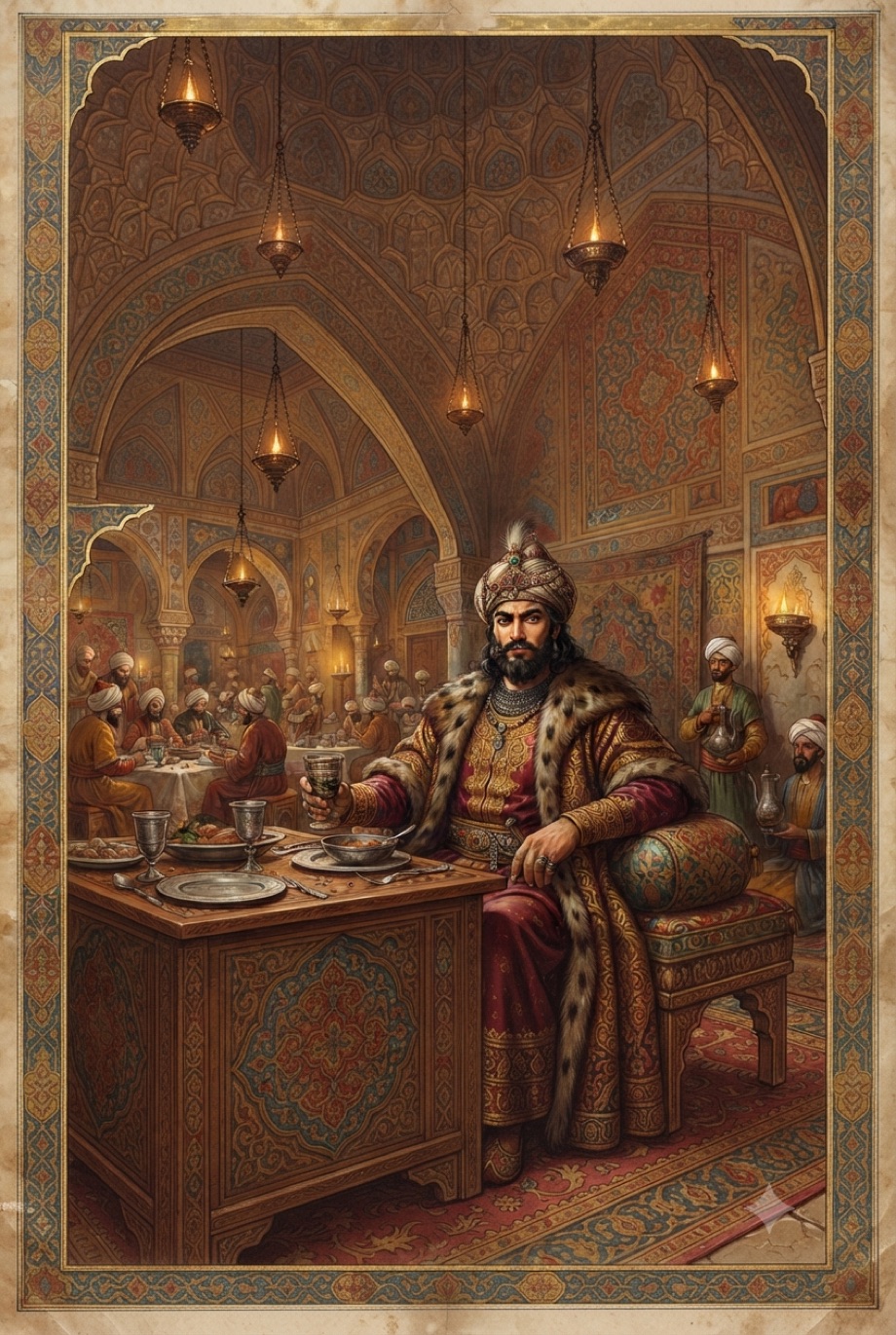
AI-assisted Portrait of Turanshah
The Heir Who Insulted the Men With the Swords
He inherited an empire at the exact moment it had been saved, and he threw it away in a matter of months. al-Mu'azzam Turanshah was the last Ayyubid sultan of Egypt—the great-nephew of Saladin, son of the formidable al-Salih Ayyub—and when his father died in 1249 with a French crusade camped on the Nile, the dynasty summoned him from the distant Jazira. By the time he arrived in February 1250 the crisis had been broken: the Bahri Mamluks, his father's elite slave-soldiers, had smashed the crusaders at Mansura and taken Louis IX of France himself prisoner. Turanshah rode into a victory he had not won.
What he did with it is a study in self-sabotage. He collected the credit, then set about insulting everyone whose swords had earned it: he passed over the veteran Mamluks to promote his own Jazira retinue; he menaced his stepmother, the queen Shajar al-Durr, for the treasury and jewels; and, drunk, he drew his sword at a feast and sliced the tops off the candles, telling the emirs that was what he would do to them. Within weeks they cut him down on the bank of the Nile. He was perhaps thirty.
Turanshah is the ESFP undone by his own appetites— Se living wholly in the pleasure and bravado of the moment, Fi ruling by wounded pride and personal loyalty, with no cold reading of the men who held the power to kill him.
The Sword and the Candles
Se — dominant
Dominant Se lives in the immediate physical world—in sensation, appetite, and the gesture that fills the room right now. Turanshah's short reign reads as a run of such gestures, made without a thought for the day after. He drank, he indulged, he enjoyed the spectacle of being sultan—treating the throne less as an instrument than as the best seat at the feast.
The candle-cutting is the perfect Se image, and it is why the story survives. Drunk at a banquet, wanting to frighten the emirs, he did not scheme—he drew his sword and hacked the wicks off the candles in front of them, a piece of theater that said, in effect, this is your neck. Even his death was Se to the last: wounded at Fariskur, he ran for a wooden tower, and when the Mamluks set it alight he leapt toward the river and was cut down on the bank. No plan, no reserve; only a body in motion until it stopped.
His Own People, His Own Pride
Fi — auxiliary
Auxiliary Fi is a private compass of personal loyalty and grievance—it decides by who feels like mine and what feels like an affront to me. It explains the choice that doomed Turanshah: he trusted his own, bringing his Jazira household and advancing them over the heads of the Bahri Mamluks who had just won the war. To a Fi that reasons from loyalty this was natural—these were his men; to the veterans passed over, it was the plainest signal that the new sultan meant to strip them of everything they had bled for.
The same wounded-pride logic drove his clash with Shajar al-Durr, who had held the state together in the interregnum. A colder heir would have courted her; Turanshah instead demanded her treasury and jewels and threatened her—treating the woman who had saved his throne as a rival to be put in her place. This is Fi without the temper of any objective judgment, feeling that never asks whether the person it snubs happens to command an army. He alienated the two forces that could destroy him and drove them into the alliance that killed him, because his loyalties and his slights ran along purely personal lines.
The Consequence He Could Not See Coming
Ni — inferior
Inferior Ni is the blind spot—the missing sense of where the present is heading and what the pattern of events must produce. It is the faculty a ruler most needs and the one Turanshah most lacked. His fall was entirely foreseeable: the Bahri Mamluks were a coherent, battle-hardened body of men who had just discovered they could win a war without their sultan. Insult them, threaten their queen, promote strangers over them, and only one outcome was possible. Any figure with a working sense of trajectory would have read it.
He read none of it. He behaved as though each moment were sealed off from the next, as though a threat made at a feast had no morning after. The candle-slashing is inferior Ni in one image: a gesture that felt powerful in the instant and functioned, in the long arc he could not perceive, as a rehearsal of his own murder. He was pointing a sword at his future killers and could not see it.
Why ESFP Over ESTP
Why not ESTP?
The two share the same dominant Se—the same nerve, the same taste for the bold physical gesture—so the drawn sword and the drink could belong to either. But the ESTP pairs that Se with Ti: a cold, shrewd reader of power. An ESTP in Turanshah's chair would have co-opted the Mamluks who had just won his war—flattered, paid, bound them to the new regime. Turanshah did the opposite, not by miscalculation but by feeling, snubbing the men with the swords because his Fi ran on loyalty and wounded pride rather than any assessment of the board.
The whole difference sits in that inverted middle. The ESTP's tragedy is overreach— reading the room correctly and still betting too big. Turanshah's was not a misread but a failure to read at all: Se–Fi self-indulgence, not ESTP opportunism—and it is why the last Ayyubid sultan lasted a season.
Connected Figures
Further Reading
- From Saladin to the Mongols: The Ayyubids of Damascus, 1193–1260 — R. Stephen HumphreysThe standard scholarly account of the Ayyubid confederation and its collapse — indispensable for the succession crisis that put Turanshah on the throne.
- The Middle East in the Middle Ages: The Early Mamluk Sultanate, 1250–1382 — Robert IrwinThe essential narrative of the regime born from Turanshah's murder — traces how the Bahri Mamluks turned a coup into a two-and-a-half-century state.
- Life of Saint Louis — Jean de JoinvilleThe eyewitness chronicle by a crusader who negotiated with Turanshah's people and witnessed the ransom and the sultan's killing firsthand.
