 Historical Figure MBTI
#543 · 4-25-26 · The Mamluk Sultanate
al-Salih Ayyub
Last Ayyubid Sultan · Builder of the Bahriyya · The Grim Patron
1205 — 1249
8 min read
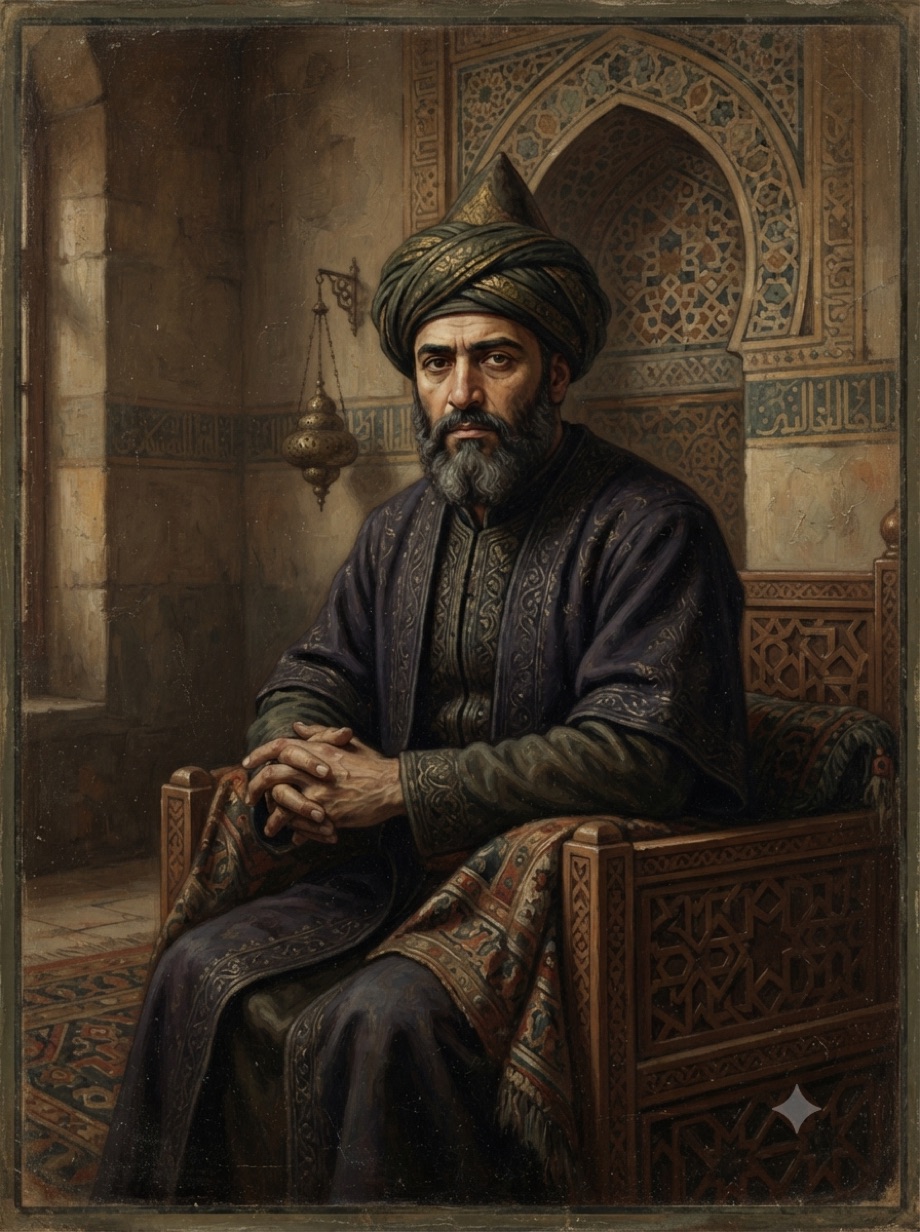
AI-assisted Portrait of al-Salih Ayyub
The Man Who Trusted No One Born Free
He was of Saladin's blood, and he governed like a man who had learned that blood was the least reliable thing in the world. al-Malik al-Salih Najm al-Din Ayyub — the last effective sultan of the dynasty his great-uncle founded — ruled Egypt from 1240 to 1249 as a grim, withdrawn figure who kept his own relatives at a distance and his ministers in fear. He had spent his youth as a hostage and watched uncles and cousins scheme one another out of provinces, and emerged with a settled conviction that the established Ayyubid elite — the free-born emirs, the great families, the kinsmen who shared his name — would betray him the instant it profited them. So he built a state around men who could not.
That was his defining act. al-Salih vastly expanded the Bahriyya, an elite corps of purchased Kipchak Turkic slave-soldiers quartered on the Nile island of Roda —bahr, the river, gave them their name. Bought as boys, converted, drilled into the finest heavy cavalry in the Near East, and bound to him alone, the Bahri Mamluks were the answer to his central problem: he could not trust anyone born free, so he manufactured a loyalty he could own. The corps he raised included two obscure young slaves named Baibars and Qutuz. Within a year of his death it would destroy his own house and seize Egypt for itself.
al-Salih is the ISTJ as fortress: Si's deep, precedent-bound distrust married to Te's hard executive control — a suspicious loner who governed not through charisma but through an apparatus he built, owned, and could personally verify.
The Memory of Betrayal
Si — dominant
Dominant Si stores experience as an internal ledger of what has proven true, and it reasons forward from that ledger with a caution that outsiders read as coldness. al-Salih's ledger was long and grim. He had been passed over, imprisoned, ransomed, and betrayed by his own kin during the succession struggles that followed his father al-Kamil's death, and he never unlearned the lesson. Where an extroverted ruler improvises fresh alliances, al-Salih trusted only what had already been tested — and almost nothing passed the test. He kept a small, controlled inner circle, quartered his slave-guard where he could watch them, and treated every free-born emir as a betrayal waiting for its moment.
The Bahriyya itself is Si reasoning made institutional. al-Salih did not invent the slave-soldier — the mamluk was old Islamic practice — but he leaned on that precedent harder than anyone before him, because it solved his problem in the one way his memory would accept: a boy bought young, cut off from family and faction, owned outright, had no rival loyalty to defect to. His whole reign has the texture of Si consolidation rather than Ne expansion — not reinventing the Ayyubid order but securing the one he inherited, by grinding, suspicious attention to what could go wrong. The result was a ruler feared more than loved, and by his own design.
Rule as Apparatus
Te — auxiliary
If Si supplied the distrust, auxiliary Te supplied the machinery to act on it. al-Salih did not merely feel that free-born men would betray him — he built a system to make their betrayal irrelevant. That is the Te move: convert a private conviction into an external structure that runs without depending on anyone's goodwill. The Bahriyya was an instrument of hard executive control, drilled and organized and answerable to the sultan alone, and through it he could project force without leaning on the fickle loyalty of the great emirs.
His discipline was austere and impersonal. He governed by control rather than by the warmth or public command that wins men's hearts; contemporaries remembered a silent, forbidding sovereign who inspired dread. He centralized authority, kept his own counsel, and removed those he suspected without ceremony. This is Te in an introvert's key — not the booming institutional charisma of the extroverted commander, but a quiet, ruthless efficiency that measured every man and every office by whether it served the sultan's security. It made him formidable and brittle at once: the apparatus was superbly effective, but it was welded to his person, not to the dynasty — and he never solved the deeper problem of what that tool would do once the hand that owned it was gone.
The Blind Spot That Ate the Dynasty
Ne — inferior
Inferior Ne is the ISTJ's weakest instrument: the imagining of unintended consequences, the second- and third-order futures that spin out of a present decision. It is precisely the faculty a man who reasons from proven precedent tends to neglect — and al-Salih's neglect of it was fatal. He solved the problem in front of him with brilliant thoroughness: a slave-army too loyal to betray him. What he did not see was the world that army would make once he was no longer there to own it.
The irony is almost geometric. Every safeguard he built pointed inward, at the threat he understood — the free-born emir who might defect. None pointed at the threat he had created — a corps of superb soldiers with their own cohesion, their own ambition, and no attachment to the dynasty beyond the dead sultan who had bought them. He died of illness in November 1249, at the height of Louis IX's crusade, with a French army in the Nile Delta. His son and heir, Turanshah, alienated the Bahriyya within months and was cut down by them. The Mamluks al-Salih had raised then took Egypt for themselves and ruled it for centuries.
He had built a fortress against betrayal and could not imagine that the fortress itself was the betrayer — inferior Ne in its purest tragic form: a meticulous man undone not by the danger he foresaw, but by the future his own solution quietly contained.
Why ISTJ Over ESTJ
Why not ESTJ?
The ESTJ and the ISTJ share the same hard executive discipline, so the question is whether al-Salih led through the outer world or retreated from it. An ESTJ rules through public command and institutional charisma — a confident organizer who works the elite, builds visible coalitions, and draws authority from the room. al-Salih did the opposite. He was a suspicious loner who trusted almost no one, withdrew from his court, and built a private slave-army precisely because he would not depend on the established emirs an ESTJ would have co-opted. His Te served an inner conviction, not an outer presence — Si-dominant, austere, and isolated, not the Te-dominant public ruler.
Why not INTJ?
There is a whiff of the strategist in the slave-army — but al-Salih was a consolidator, not a visionary. He leaned harder on the mamluk institution his forebears already used rather than reimagining the state from a private vision. The INTJ reinvents; al-Salih entrenched — genius for control and precedent, not the long forward leap.
The essential distinction is where the authority lived. An extroverted commander's power sits in the world — in alliances, in institutions, in the loyalty of a class he has won over. al-Salih's power sat in his suspicion. He did not trust the world enough to rule through it, so he built a mechanism he could own outright and govern from behind a wall of dread. That is the ISTJ sovereign at his most extreme: not the charismatic organizer of men, but the guarded keeper of a system, convinced that the only loyalty worth having is the kind you can purchase, verify, and lock inside the perimeter of your own control.
Connected Figures
Further Reading
- From Saladin to the Mongols: The Ayyubids of Damascus, 1193–1260 — R. Stephen HumphreysThe standard scholarly account of the dynasty's fractious politics — essential for understanding the family betrayals that shaped al-Salih's distrust.
- The Middle East in the Middle Ages: The Early Mamluk Sultanate, 1250–1382 — Robert IrwinTraces how the Bahriyya al-Salih built became the state that replaced him — the fullest narrative of the slave-soldiers' rise to power.
- Life of Saint Louis — Jean de JoinvilleAn eyewitness to the Egyptian campaign of 1249–50, written by a companion of Louis IX — the crusade during which al-Salih died.
- Mongols and Mamluks: The Mamluk–Ilkhanid War, 1260–1281 — Reuven Amitai-PreissFollows the later career of the military machine al-Salih created — its confrontation with the Mongols under Baibars.
