 Historical Figure MBTI
#660 · 5-14-26 · The Five Good Emperors
Vibia Sabina
Empress by Arrangement
c. 83 — 136/137 CE
3 min read
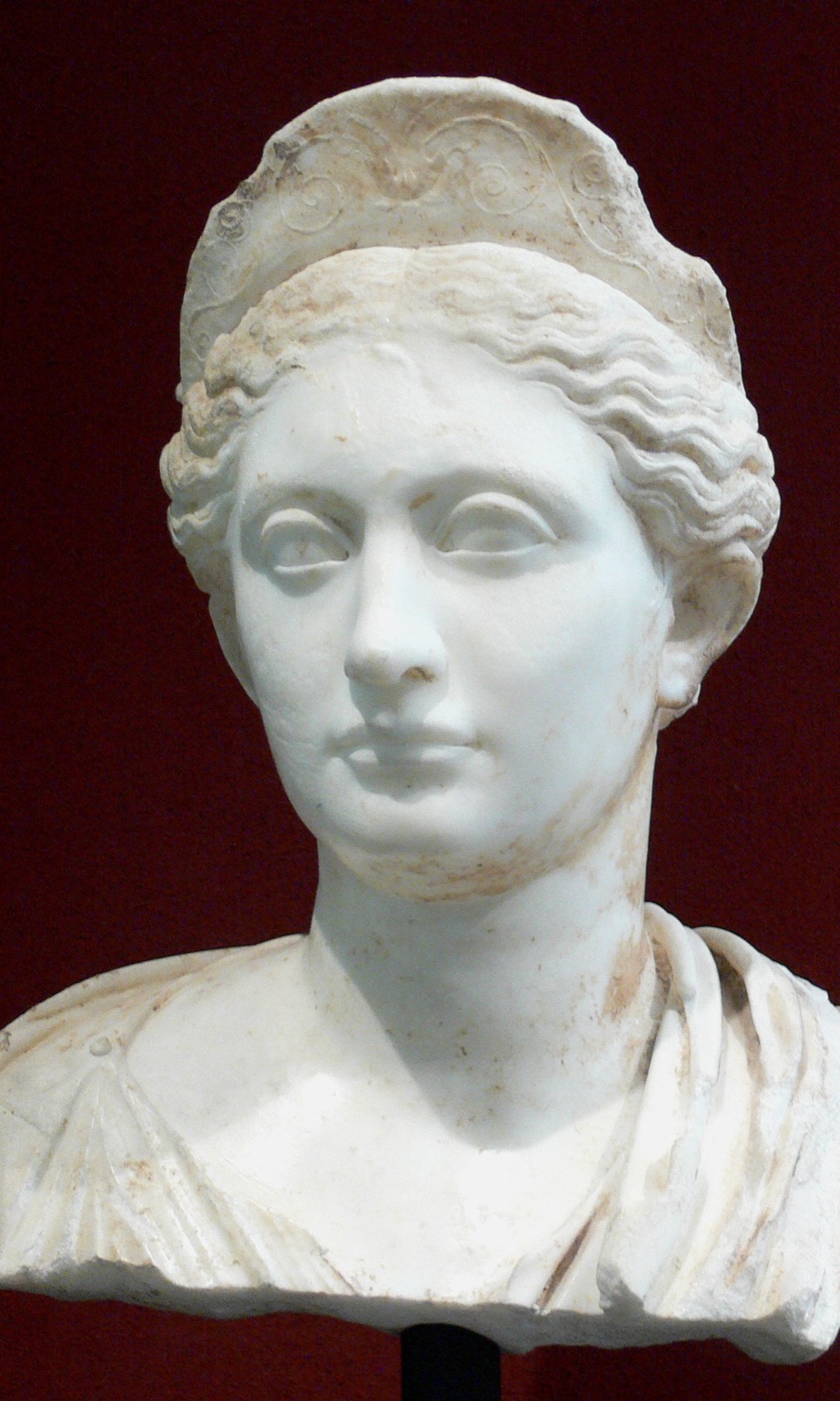
Portrait of Vibia Sabina
A Marriage That Was Never Hers to Choose
Vibia Sabina exists in the historical record almost entirely as a function of other people's ambitions. Around 100 CE, when she was barely into her teens, the empress Plotina — wife of the reigning emperor Trajan and Sabina's own great-aunt by marriage — arranged her betrothal to a promising young senator named Hadrian. The point was not romance but succession: tying Hadrian to the imperial family made him a plausible heir. Sabina did not choose the match, and nothing in the sources suggests she was consulted about it.
What followed was, by every ancient account, a marriage without warmth. The Historia Augusta — a late, often unreliable but frequently our only source — reports that Hadrian called her difficult and quarrelsome, and said that had he been a private citizen rather than emperor, he would have divorced her outright. A later, still shakier tradition has Sabina retorting that she deliberately avoided bearing his children, so as not to inflict another Hadrian on the world. Whatever the literal truth of either claim, both point to the same picture: two people bound together by dynastic necessity, tolerating each other for decades without any recorded affection.
She traveled with him at times — she is attested in Egypt during one of his great imperial tours — but travel was not influence. Sabina left no policy, no faction, no correspondence, no monument built at her own initiative. She was, as far as the evidence allows us to say, present and correct: dutifully occupying the role of empress without ever seeming to inhabit it. That flatness is not a gap in the record to be explained away; for a figure this thin, it is close to the whole of the available psychological evidence, and it points toward ISTJ — a woman who endured an assigned duty steadily, without rebellion and without recorded passion, because enduring it was simply what the role required.
Psychological Verdict
Reading Sabina as ISTJ is less an act of psychological excavation than an honest acknowledgment of the shape of the silence around her. Every surviving detail is consistent with dutiful reserve: she accepted a marriage she had no part in arranging, stayed in it for over three decades despite its coldness, accompanied her husband on official business without asserting a public voice of her own, and left no trace of scandal, faction, or personal cause. There is no hint of the impulsiveness, charm-seeking, or improvisational flair that would suggest an extraverted or intuitive temperament — only steadiness, obligation, and quiet endurance, the signature of someone who managed an unhappy situation by simply carrying it correctly rather than trying to change it. Hadrian deified her after her death, as was conventional for an empress; it reads as protocol observed, not grief expressed. Sabina's legacy is, fittingly, one of proximity rather than agency — she stands next to the historical record of Hadrian's reign without ever quite stepping into it.
Connected Figures
Further Reading
- Life of Hadrian — Historia Augusta, trans. David MagieThe main ancient source on the marriage — vivid, gossipy, and openly hostile to Hadrian, so read with caution.
- Hadrian and the Triumph of Rome — Anthony Everitt (2009)A readable modern biography that places Sabina's marriage within Hadrian's broader political calculations.
- Imperial Women of Rome — Mary T. Boatwright (2021)Context on the constrained, largely symbolic roles available to empresses like Sabina.
- Hadrian and the Cities of the Roman Empire — Mary T. Boatwright (2000)Documents Sabina's attested presence on Hadrian's tours, including Egypt.
