 Historical Figure MBTI
#473 · 4-15-26 · The Wars of Scottish Independence
William Wallace
Guardian of Scotland · The Martyr of Stirling Bridge
c. 1270 — 1305
9 min read
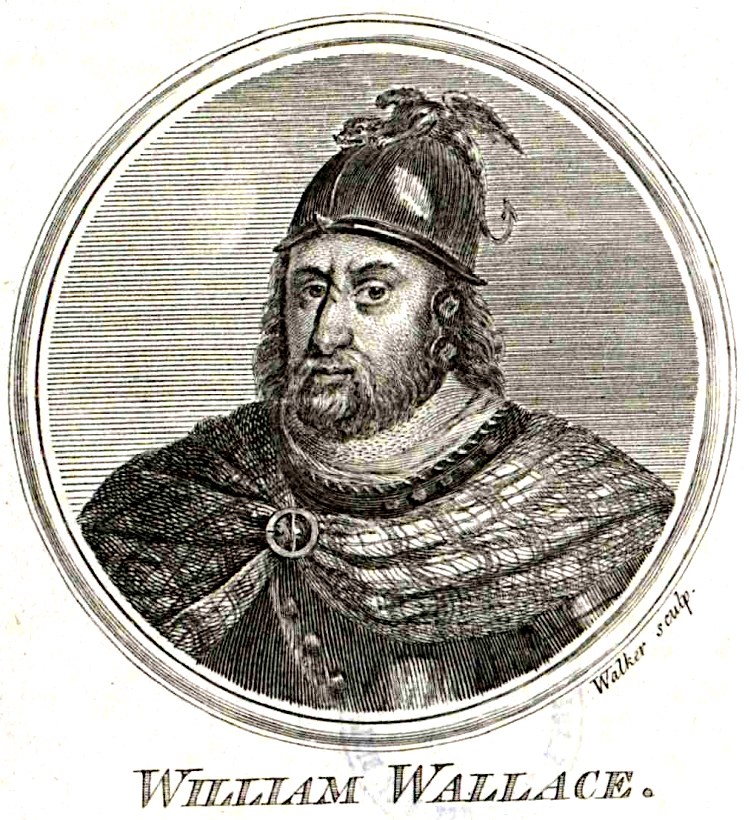
AI-assisted Portrait of William Wallace
The Man Who Would Not Bend
He was a knight of minor gentry — a second son from the western lowlands, of no great estate and no royal blood — and he became the most enduring symbol of Scottish freedom in the nation's history. When the chroniclers and the kings have faded into their footnotes, William Wallace remains: the patriot-martyr who rose against an empire on nothing but conviction, won a victory no one expected, and went to a butcher's death rather than concede that he had done wrong.
The bare arc is swift and brutal. In 1297, with Scotland under the boot of Edward I of England, Wallace rose in revolt and joined forces with the northern lord Andrew Moray. Together they met an English army at Stirling Bridge and annihilated it — one of the great upsets of medieval warfare. Knighted and named Guardian of Scotland, Wallace was at the summit of his power for barely a year before Edward came north in person and broke him at Falkirk in 1298. He resigned the guardianship, slipped into a fugitive war, and traveled to France and Rome to plead Scotland's case. Betrayed and captured in 1305, he was dragged to London, condemned in a show trial, and hanged, drawn, and quartered. He died denying he was a traitor — for he had never sworn loyalty to the English king, and so, by his own iron logic, owed him nothing.
What drove him was not ambition. He held no crown, sought none, and surrendered his one great office the moment it could no longer serve the cause. He fought for a thing he believed in absolutely, and that purity — not strategy, not statecraft — is the whole of him. He is the ISFP pushed to its furthest, most uncompromising extreme.
Wallace was the ISFP martyr of conviction — dominant Fi as a moral absolute, fused to the bold, physical courage of Se. He did not fight for power or position. He fought for what he believed, and he would not unsay it even on the scaffold.
Freedom as a Moral Absolute
Fi — dominant
Dominant Fi is an inner compass that answers to nothing outside itself. It does not ask what is advantageous, what is realistic, or what the powerful will permit; it asks only whether a thing is right, and once it has decided, it does not negotiate. In Wallace this compass pointed at a single word — freedom — and held there with a fixity that neither bribery, defeat, nor the threat of an agonizing death could deflect.
The clearest evidence is what he refused. After Falkirk shattered his army and his prestige, Wallace did not bargain his way back into Edward's peace as other Scottish nobles did; he gave up the guardianship and chose the harder, lonelier road of the fugitive. The great magnates of Scotland swore fealty to Edward when it suited them and broke it when it suited them better — politics as the art of the possible. Wallace never swore at all. And it was precisely this that he flung at his judges in Westminster Hall: charged with treason, he answered that he could not be a traitor to a king he had never accepted and to whom he had never given his word. The logic is pure Fi — loyalty is not a transaction owed to whoever holds the sword, but a bond freely given, and his had never been given to England.
This is what separates a martyr from a general. Wallace's war was personal before it was political. He was not assembling a faction or maneuvering toward a throne; he was acting out a conviction he experienced as non-negotiable, and he would rather be torn apart at Smithfield than betray it. The power he wielded over the Scottish imagination, then and for seven centuries since, was never the power of an office. It was the power of a man who meant it absolutely.
The Warrior in His Element
Se — auxiliary
If Fi gave Wallace his cause, auxiliary Se gave him his weapon: a bold, physical, fully embodied courage that read the terrain of a fight and seized its decisive moment. He was not a theorist of war. He was a man who threw himself bodily at the enemy and trusted his instinct for the immediate, the tangible, the now.
Stirling Bridge is the perfect Se victory. The English army had to cross the River Forth by a single narrow bridge, filing over only a few abreast. Wallace and Moray held their men until enough of the enemy had committed to the near bank to be cut off — then struck, severing the vanguard from the rest and slaughtering it against the water while the bulk of the English host stood helpless on the far side. It was not the product of grand strategy; it was a perfectly timed reading of a battlefield as it actually was, exploiting a chokepoint with ferocious immediacy. Se does not plan campaigns of attrition. It sees the opening and takes it.
The same instinct shaped his fugitive years after Falkirk. Stripped of an army that could meet Edward in the open, Wallace fought the war his senses were built for — raids, ambushes, hit-and-run resistance across a country he knew in his bones. He lived hard, struck fast, and vanished. The bold physical presence that the legend (and later Braveheart) seized on was real: this was a man most himself with a sword in his hand and an enemy in front of him.
The Single Idea
Ni — tertiary
Tertiary Ni in an ISFP is not the strategist's long game; it is something narrower and more haunting — the capacity to fix on one symbolic truth and let it organize an entire life. Wallace possessed exactly this. Where the magnates saw shifting alliances and survivable compromises, he saw a single, unchanging picture: Scotland free, or Scotland nothing. That vision never wavered, never updated, never made room for the half-measures that politics demands.
It shows in how far he carried it. After Falkirk, when the realistic verdict was that the cause was lost, Wallace went abroad — to the court of France and to the Pope in Rome — still pressing Scotland's claim as though the idea itself, kept alive, were worth any risk. He was not negotiating a settlement; he was tending a symbol. The same inward certainty steadied him at the end. A man without that fixed inner picture might have recanted to soften his death. Wallace held the line because, to tertiary Ni fused with dominant Fi, the meaning of the thing mattered more than the body that would pay for it.
The danger of tertiary Ni is exactly its strength. It cannot revise. It does not weigh the odds and adjust. It locks onto the one truth and burns. That is why Wallace became an undying emblem rather than a victorious statesman — he could embody a cause to the death, but he could not bend it into the patient, compromising shape that actually wins a war of kingdoms.
The Limits at Falkirk
Te — inferior
Inferior Te is the function Wallace lacked — the cool, systematizing competence that builds and runs a war machine: logistics, contingency, the impersonal management of force across a realm. He was a fighter and a symbol, not an administrator or a strategist of kingdoms, and the gap showed the moment he was forced to fight a battle on someone else's terms.
Falkirk in 1298 is where the missing function became fatal. There Wallace did not have a bridge and a chokepoint to exploit; he had to stand and fight Edward I in the open, the one situation his gifts were least suited to. He drew his spearmen into schiltrons — dense rings of pikes, formidable against cavalry but rooted and inflexible. Edward simply refused to break them with horsemen. He brought up the longbow and shot the schiltrons to pieces from a distance, then sent the cavalry into the gaps. It was a problem of combined arms and tactical adaptation, and Wallace had no answer. He could win the fight his instincts chose; he could not win the fight forced upon him.
This is the inferior Te of the type writ large across a whole career. Wallace could ignite a nation and embody its will, but the slow, calculating work of turning a rising into a durable kingdom belonged to colder, more strategic men — to Robert the Bruce, who would finish the cause Wallace could only consecrate.
Why ISFP Over ESTP
Why not ESTP?
The warrior, the raids, the perfectly timed strike at Stirling Bridge — the surface case for ESTP is real, and the two types share dominant-tier Se. But the ESTP fights from cool, adaptable opportunism: it reads the situation, takes the advantage, and bends when bending pays. Wallace did the opposite. His war flowed from a moral absolute he would not trade away even to live, and he refused the survivable compromise his peers all took. That is values-driven Fi leading the stack, not the pragmatic, situational reading of an Se-dominant. An ESTP would have cut a deal at the scaffold; Wallace denied he had ever owed one.
The whole distinction lives in the source of his power. Wallace mattered not because he was the most adaptable man in Scotland — he plainly was not — but because he was the purest. His force was the absolute clarity of what he stood for, a conviction he chose to die for rather than soften. That is the ISFP at its most uncompromising: a personal, inward certainty about what is right, defended to the last breath. The opportunist survives by reading the room. The martyr endures by refusing to.
Connected Figures
Further Reading
- William Wallace — Andrew FisherThe standard modern biography — sober, source-critical, and careful to separate the documented man from the legend.
- William Wallace: A National Tale — Graeme MortonLess a life than a study of the myth — how Wallace was remade across the centuries into the icon of Scottish nationhood.
- Robert Bruce and the Community of the Realm of Scotland — G. W. S. BarrowThe classic scholarly account of the Wars of Independence; indispensable for placing Wallace within the larger struggle and the cause Bruce completed.
