 Historical Figure MBTI
#1147 · 8-24-26 · The Fall of the Han
Xiahou Dun
The One-Eyed General · He Ate the Arrow and Kept Marching
d. 220 CE
6 min read
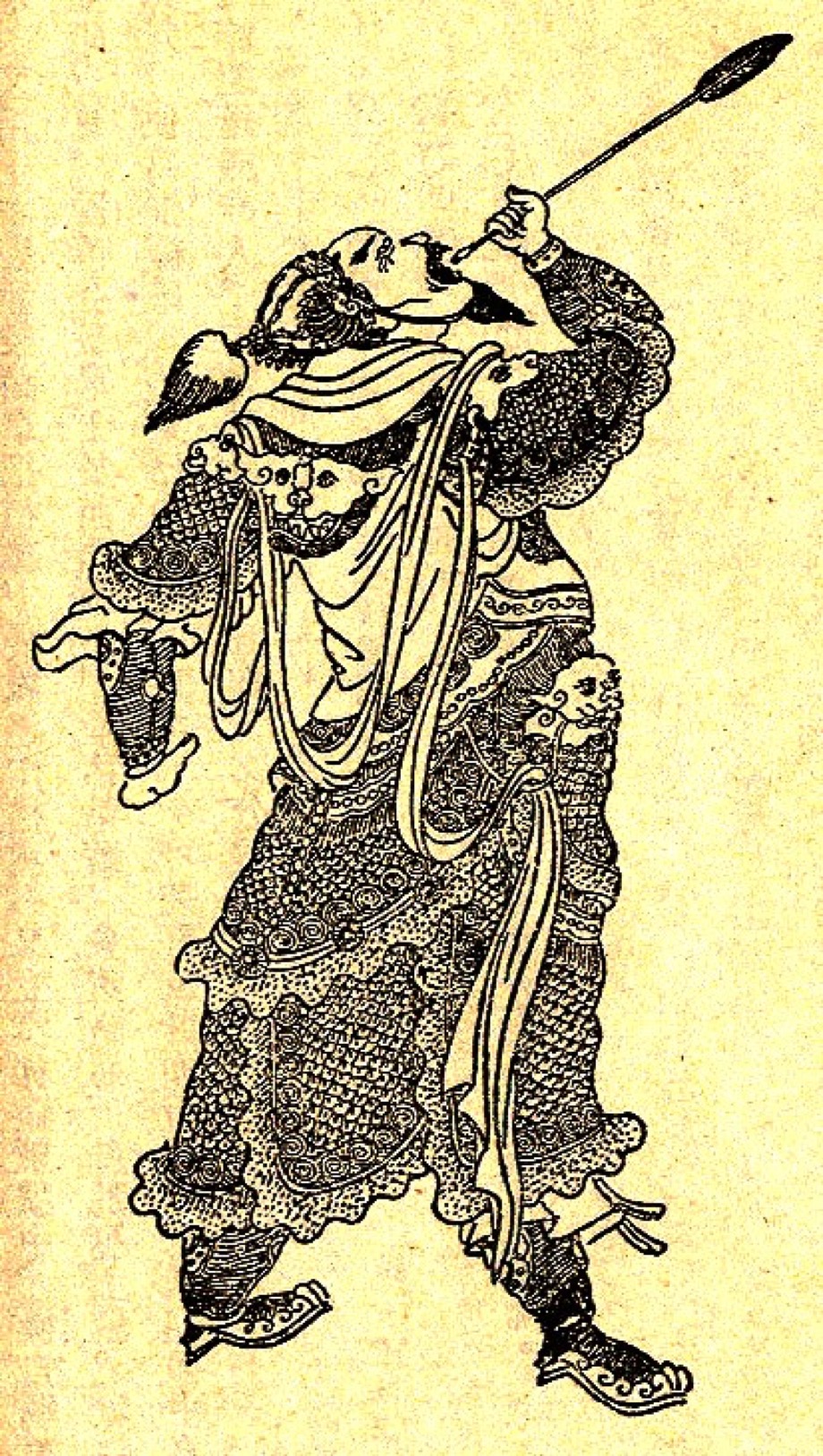
Portrait of Xiahou Dun
The Eye and the Arrow
Every dynasty needs a man who does not flinch, and Cao Cao found his in a kinsman who joined him before the cause had a name worth joining. Xiahou Dun belonged to the Xiahou-Cao clan network that formed the load-bearing wall of Cao Cao’s enterprise, and across three decades of shifting alliances he was the one commander whose loyalty never had to be tested twice.
The story that made him famous happened in the mid-190s, in the grinding campaigns against Lü Bu. An arrow took his left eye. The near-contemporary account is blunt: he pulled the arrow free with the eye still lodged on it, and rather than let it go to waste, he ate it, then kept fighting. Later tradition sanded the story into legend, but the shape of the act is the point — no ceremony, no anguish performed for an audience. An obstacle appeared, was handled by the fastest available method, and the day’s business resumed.
That instinct — solve the problem in front of you, immediately, without narrative — is the spine of an ESTJ. He was not only a fighter. He held frontier garrisons for years at a stretch, and in peacetime he ran irrigation and canal projects to keep Cao Cao’s armies fed and moving. A man capable of both the eye and the canals is not a berserker; he is an institution wearing armor.
The eye was in the way of fighting, so it stopped being in the way — that is the whole of Xiahou Dun’s psychology, and it is ESTJ Te-dominance rendered in a single, unbearable image.
The Man Who Runs the Garrison
Extraverted Thinking wants the world organized into working systems, and Xiahou Dun did exactly that in two registers at once. On campaign, he was the commander Cao Cao trusted with assignments that could not be improvised — holding a contested frontier, defending a supply corridor. That rewards not the flair of a breakthrough tactician, but the reliability of someone who will still be exactly where he was left, months later.
Off the battlefield, the same instinct turned to infrastructure — irrigation and canal works to keep armies supplied and farmland productive, administrative labor with none of the glory of a cavalry charge. A purely martial man delegates this work away. Xiahou Dun ran it himself, because for a Te-dominant mind fighting and ditch-digging are not different categories of work — both are simply what needs doing.
Three Decades in the Same Chair
Introverted Sensing is the function of precedent, of duty carried forward because it was carried yesterday and the day before. Xiahou Dun’s relationship to Cao Cao was built on that continuity. He joined the cause at its earliest, least promising stage, and never once wavered — not through the Lü Bu wars, not through the grind of consolidating northern China, not through the transition when Cao Cao died and his son Cao Pi took the throne.
That loyalty showed up as habit, repeated so consistently it became simply what people expected of him. When Cao Pi formalized the new dynasty in 220, Xiahou Dun held some of its highest military honors — a reward less for any single victory than for the accumulated weight of three decades of dependable service. He died that same year, steady service ending precisely when the institution it upheld had finally, formally, arrived.
The Engineer’s Sideline
Tertiary Extraverted Intuition does not turn a Te-Si soldier into a visionary, but it gives him range beyond the sword. It shows up where the record surprises readers expecting only a battlefield biography: the irrigation and canal projects, which required the kind of lateral, practical improvisation that Ne, harnessed to a Te-Si core, is good for — an unconventional application of existing resources, not a wholly new invention. It never became speculation for its own sake; Xiahou Dun is not remembered for grand theories of statecraft. The Ne stayed in service of the mission — widening what counted as his job, from soldier to civil engineer, without loosening his grip on Te.
What the Eye Did Not Say
Inferior Introverted Feeling is where private, unarticulated conviction lives for a Te-dominant type, and it surfaces in Xiahou Dun less as sentiment than as unspoken, absolute loyalty. He left no written testament of devotion to Cao Cao — the sources give us actions, not confessions — but three decades of unwavering service, honored through to his own death within the year of his lord’s dynasty finally being declared, describes a commitment too total to need stating. The eye story fits here too: eating it rather than discarding it was framed as defiance, but underneath is something closer to private conviction — a refusal, at the moment of maximum pain, to let an arrow become the reason the fight ended.
Why ESTJ Over ESTP
Why not ESTP?
The raw physical courage of the eye story invites an ESTP reading: unflinching, immediate, unsentimental under pressure. But ESTP describes a thrill-driven improviser who moves from crisis to crisis, not a man who spent decades administering frontier garrisons and running slow irrigation projects between campaigns. Xiahou Dun’s record is one of sustained institutional loyalty and procedural follow-through, which points to Te-Si stability rather than Se-Ti opportunism.
An ESTP takes the arrow, eats the eye, and rides toward the next rush. Xiahou Dun took the arrow, ate the eye, kept fighting because the battle was not over, and then — between battles — organized water and grain for an army that needed both to survive winter. That patient, administrative half of the record is what an ESTJ does and an ESTP does not.
Connected Figures
Further Reading
- Imperial Warlord: A Biography of Cao Cao — Rafe de CrespignyCovers Xiahou Dun's military career and the Lü Bu campaign in which he lost his eye.
- A Biographical Dictionary of the Later Han to the Three Kingdoms — Rafe de CrespignyReference entry on Xiahou Dun's life and service record.
- Sanguozhi (Records of the Three Kingdoms), Book of Wei — Chen ShouThe primary source biography underlying the traditional accounts of Xiahou Dun.
