 Historical Figure MBTI
2 min read
#55 · 2-18-26 · The Tang Dynasty
Zhang Jiuling
Chancellor · Remonstrator · Structural Guardian
678 — 740
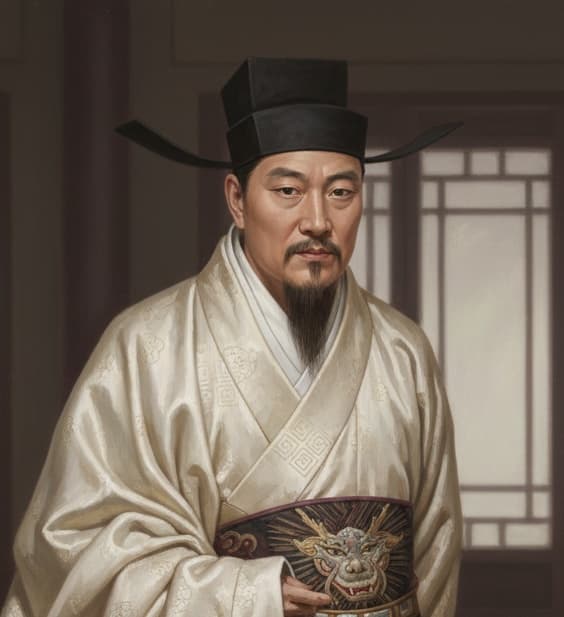
AI-assisted Portrait of Zhang Jiuling.
The Man Who Saw It Coming
Zhang Jiuling (678–740) rose from jinshi graduate to high chancellor under Emperor Xuanzong of Tang during the High Tang's golden age. He is remembered for one defining trait: he warned early.
Before the An Lushan Rebellion erupted, Zhang Jiuling cautioned the court about An Lushan's growing power. His advice was dismissed. He was eventually removed from influence. History vindicated him.
He does not read as a charismatic empire-expander. He reads as INTJ — Ni–Te conviction. A mind oriented toward long-term trajectory over short-term favor.
He did not command the room. He understood the system.
Ni — Dominant
He assessed underlying structural risk while others focused on present stability. Ni anticipates fracture before it becomes visible crisis. His legacy is foresight. While the court dismissed the danger of An Lushan's military consolidation, Zhang Jiuling perceived it as a systemic threat — not a diplomatic problem to be managed, but a structural imbalance that would eventually rupture.
Te — Auxiliary
He operated at the highest administrative level: drafting policy, advising the emperor, and defending governance principles. His Te was preservational, not expansionist. He used authority to protect institutional integrity rather than to consolidate personal dominance.
When pressured to compromise, he did not adapt socially to survive. He held his line and lost office. That signals structural conviction over political maneuvering.
Shared Ni–Te With Wang Wei
Zhang Jiuling was a friend and early patron of Wang Wei. Their connection likely reflects cognitive affinity. Both demonstrate long-range perception (Ni), structured execution (Te), and cool composure rather than emotional display.
When Zhang Jiuling fell from power, Wang Wei later memorialized him with respect. Their alignment was not merely social — it was philosophical. Ni–Te minds often recognize each other, not through dramatic bonding, but through shared clarity.
Connected Figures
Further Reading
- The Poetry of the Early T'ang — Stephen OwenFoundational study of High Tang verse that situates Zhang Jiuling's literary voice within the court milieu he navigated.
- The Great Tang Poets — Witter Bynner (trans.)Classic anthology including Tang court poets; useful for reading Zhang Jiuling alongside Wang Wei and Du Fu.
- China's Imperial Past: An Introduction to Chinese History and Culture — Charles O. HuckerStandard survey covering the Tang administrative structure Zhang Jiuling served as chancellor.
