 Historical Figure MBTI
#1176 · 8-28-26 · The Three Kingdoms
Zhang Zhao
Wu's Elder Statesman · The Minister Who Argued for Surrender · Conscience of the Sun Court
156 — 236
2 min read
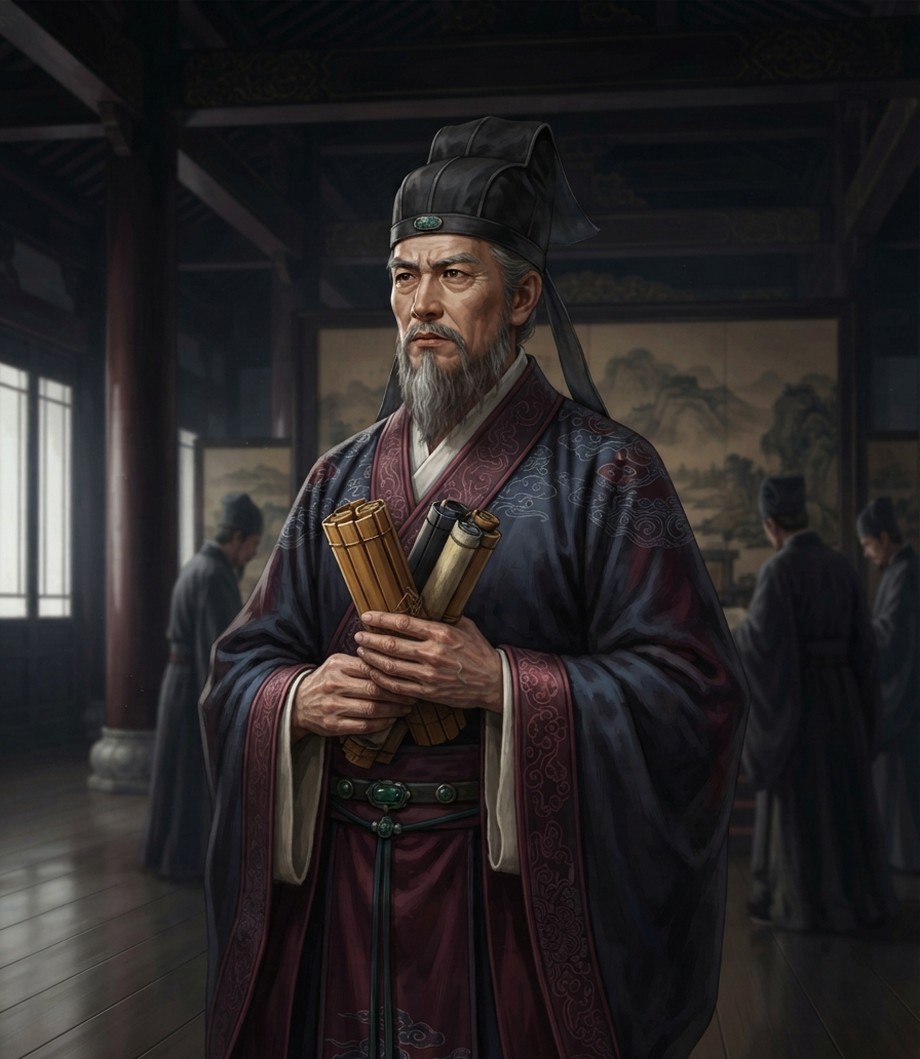
AI-assisted Portrait of Zhang Zhao
The Precedent That Failed Him
Zhang Zhao served three generations of the house of Sun — first Sun Ce, then Sun Quan, then, in his last years, the child-regency of Sun Liang — and for most of that span he was the closest thing the fledgling state of Wu had to an institutional memory. He was the minister who had read the histories, who could cite the fall of past dynasties and the conduct of past ministers, who treated precedent not as decoration but as evidence. Sun Ce, dying young, is said to have entrusted him with the succession itself, telling Sun Quan to lean on Zhang Zhao for internal matters the way he leaned on Zhou Yu for external ones. It was the highest trust the regime had to offer, and Zhang Zhao spent the rest of his life trying to be worthy of it through sheer institutional soundness.
Which makes 208 the cruelest year of his career. As Cao Cao's army swept south toward the Yangtze, Zhang Zhao led the court faction arguing that Sun Quan should submit rather than fight — not from cowardice, by his own lights, but from the same evidence-based caution that had made him indispensable in peacetime. Cao Cao held the Han emperor's mandate; his forces were, by any conventional accounting, overwhelming; resistance looked like recklessness dressed up as principle. Sun Quan overruled him, backed by Zhou Yu and Lu Su, and won at Red Cliffs. Zhang Zhao was right about the danger and wrong about the conclusion, and the record never quite let him forget it.
He did not sulk over the defeat of his position. Once Sun Quan committed to war, Zhang Zhao folded his objection back into service, holding the same administrative posts and the same blunt candor at court for another three decades — a man who could be overruled but not bent, and who never again got the chance to be right at that scale.
An ISTJ built for the long, plodding work of institutions — and undone, once, by the one moment history asked for a gambler instead.
Connected Figures
Further Reading
- Generals of the South — Rafe de CrespignyThe standard modern history of the Wu state and its court.
- Records of the Three Kingdoms (Sanguozhi) — Chen ShouThe primary source for Zhang Zhao's biography and the Red Cliffs debate.
